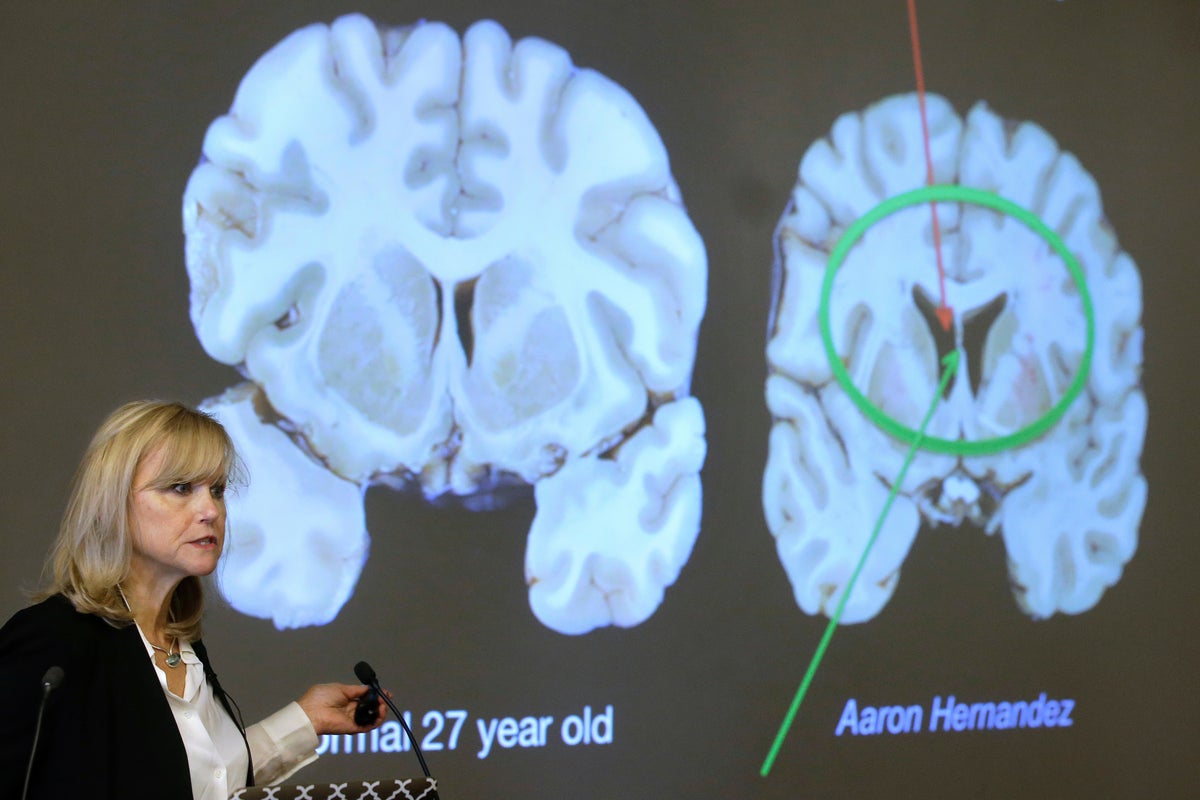
At least one in four former professional football players who died between 2016 and 2021 suffered from chronic traumatic encephalopathy, according to a landmark epidemiological study. This figure establishes a sobering baseline for NFL players and degenerative brain disease. Researchers analyzing death records and brain tissue banks determined that 24.5 percent of all players who died during that multi-year window had verifiable tau protein pathology. Because the disease can only be confirmed post-mortem, this conservative floor shatters decades of institutional denial and reframes the conversation from isolated tragic anecdotes to an undeniable systemic crisis.
For years, apologists and league executives could dismiss the alarming brain bank data as a skewed sample of troubled retirees. After all, families dealing with cognitive decline were far more likely to donate a loved one's brain for science. But this latest research, spearheaded by investigators at Harvard Medical School and Boston University, sidestepped that selection bias. By looking at an entire defined population of deceased players, they calculated the absolute minimum frequency of the disease. The floor is 25 percent. The ceiling stretches past 97 percent. The truth sits somewhere in that terrifying expanse, proving that the physical cost of America's most popular sport is far higher than anyone wanted to admit.
The Flawed Logic of Concentrated Blame
Public outrage usually targets Sunday afternoons. Massive collisions on national television draw the gasps, generate the viral clips, and fuel the hand-wringing over player safety. Yet treating professional games as the primary engine of neurological decay misses the forest for the trees.
The cumulative physics of football tell a different story. Most repetitive head impacts happen long before a player signs a multimillion-dollar contract. Consider a hypothetical athlete who straps on a helmet at age eight in youth tackle leagues, plays four years of varsity high school ball, logs another four years at a major collegiate program, and spends five years as a backup in the professional ranks. That athlete absorbs thousands of sub-concussive blows. The vast majority of those hits occur during Tuesday and Wednesday practices, far away from the television cameras and stadium lights.
Blaming the professional league alone provides a convenient shield for amateur sports administrators. High schools and youth organizations cling to the sport's traditional structure, ignoring the reality that brain tissue does not care about scoreboards or athletic scholarships. The structural damage accumulates silently over decades. By the time an athlete reaches the highest level, the neurological die may already be cast.
Institutional Inertia and the Practice Field Paradox
Real reform requires confronting uncomfortable truths about how football is taught and practiced. Professional franchises have slowly altered their internal rules over the last decade, scaling back full-contact drills during weekly practices under pressure from collective bargaining agreements.
Yet youth and collegiate programs frequently mimic the grueling, old-school preparation methods that professional teams abandoned. Coaches often equate high-intensity collisions during practice with toughness and discipline. This approach ignores basic biomechanics.
- Over sixty percent of all football-related head impacts occur during practice sessions rather than games.
- Eliminating full contact during mid-week preparations drops cumulative exposure dramatically without altering game strategy.
- Elite amateur programs frequently lag behind professional standards regarding independent medical spotters and immediate removal protocols.
Changing these habits requires a cultural shift that grassroots organizers resist. Parents continue enrolling children in tackle leagues, often unaware of the long-term arithmetic. Without sweeping restrictions on contact at the high school and youth levels, future generations of athletes will inherit the exact same baseline risks that plague current retirees.
Living with the Invisible Legacy
The medical community faces a parallel challenge away from the gridiron. Because definitive diagnosis requires examining brain tissue under a microscope after death, living players dealing with memory loss, severe depression, or early-onset dementia navigate a frustrating vacuum.
Specialized clinics track correlations between advanced pathology and clinical impairment, noting that a vast majority of donors with severe stages of the disease also met criteria for clinical dementia before dying. Yet treating the symptoms without being able to halt the underlying degeneration leaves families stranded in uncertainty. Medical professionals can manage behavioral health issues and cognitive therapies, but they cannot reverse the tangled tau proteins choking neural pathways.
The debate has moved past questioning whether the game destroys brains. The numbers are written into the medical literature. The real question is how long sports culture will tolerate a system where a quarter of its workers pay with their minds.