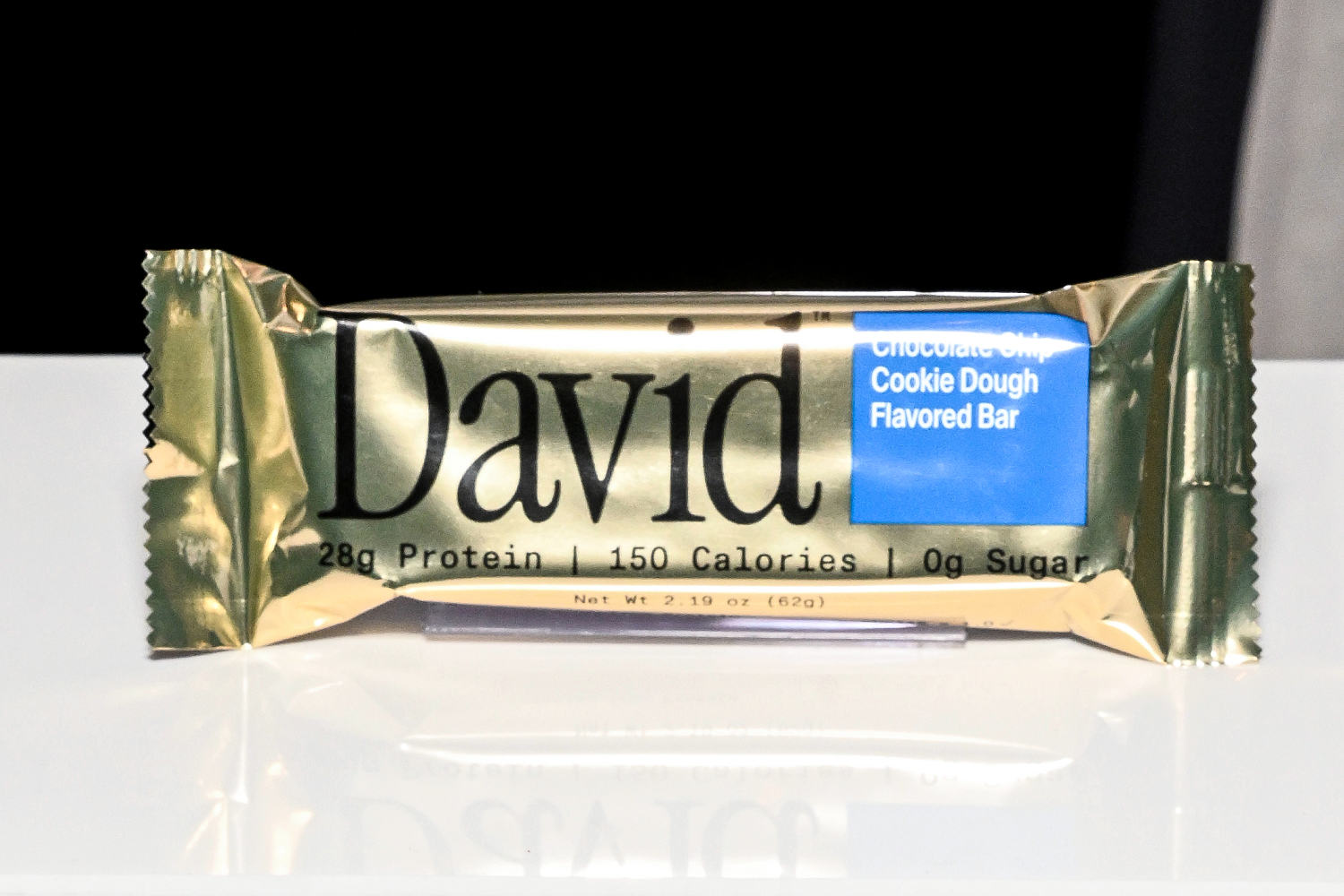
Peter Rahal, the man who built RXBAR into a $600 million exit, is currently fighting a war on two fronts. One is the logistical battle to scale his newest venture, David, a protein bar brand promising a nearly impossible nutritional profile. The other is a class-action lawsuit alleging that his 150-calorie bars actually contain significantly more energy than the labels suggest.
The lawsuit, filed in the Southern District of New York, claims that independent testing found David’s bars contain roughly 25% to 40% more calories than advertised. For a brand marketed on the back of "precision nutrition" and "unparalleled macros," this isn't just a rounding error. It is a fundamental threat to the brand’s integrity. Rahal has dismissed the claims as "baseless" and "shakedown litigation," but the controversy pulls back the curtain on a dirty secret in the functional food industry: the gap between a lab's "theoretical" nutrition and the reality of what ends up in a wrapper.
The Physics of a 150 Calorie Miracle
To understand why David is under fire, you have to look at the math that governs food science. Most protein bars on the market follow a predictable curve. If you want 28 grams of protein, you usually have to accept a caloric load of 200 to 250 calories. This is because protein contains 4 calories per gram, and you still need fats and binders to make the bar edible.
David claims to deliver 28 grams of protein for just 150 calories.
If you do the basic multiplication, 28 grams of protein equals 112 calories. That leaves only 38 calories for everything else—fats, carbohydrates, fiber, and flavorings. It is an extremely tight window. To hit those numbers, a manufacturer must use specific ingredients like allulose (a rare sugar that the FDA allows companies to exclude from total calorie counts in certain contexts) or highly refined fibers that supposedly pass through the body without being absorbed.
The lawsuit alleges that these calculations are more optimistic than accurate. It suggests that when the bars are put through a bomb calorimeter—a device that burns food to measure the heat energy it releases—the results don't match the "calculated" values derived from the ingredients.
Why Food Labels Are Often Legal Fiction
The average consumer views a nutrition label as a scientific absolute. In reality, it is a legal estimate. The FDA allows a 20% margin of error for nutrients listed on food labels. This buffer exists because natural ingredients vary. A batch of almonds might have slightly more fat than the previous one, or a protein isolate might have a different moisture content.
However, in the high-stakes world of "optimized" food, that 20% window is often treated as a target rather than a safety net.
The Calculation Gap
Most companies do not send every batch of product to a lab. Instead, they use database values. They take the known specs of their raw ingredients—whey protein, glycerin, cocoa—and add them up on a spreadsheet.
- The Theoretical Method: You assume your whey is 90% protein and your fiber is zero-calorie.
- The Lab Method: You burn the actual bar and measure the energy.
Discrepancies happen when the "theoretical" ignores the way ingredients interact during processing. When David claims a bar is 150 calories, they are likely relying on the fact that allulose and certain fibers are metabolically "invisible." The lawsuit argues that this invisibility is a myth, or at least that David’s specific formulation isn't as efficient as the spreadsheet says.
The RXBAR Legacy and the Cult of the Founder
Peter Rahal’s reputation is his greatest asset and his biggest liability. When he launched RXBAR, he won over the market with radical transparency. The "No B.S." slogan and the ingredient list on the front of the pack were a direct middle finger to the "Big Food" giants who hid their ingredients behind shiny packaging.
With David, Rahal is attempting to disrupt the industry again, but the strategy has shifted from simplicity to technical superiority.
The brand isn't selling "egg whites and dates" this time. It is selling a highly engineered, high-performance tool for people who track every gram of food. This audience is different from the RXBAR crowd. They are obsessive. They own blood glucose monitors. They use spreadsheets to track their macros. If they suspect they are being lied to, they don't just stop buying the product—they become the brand's most vocal critics.
The Problem with Disruptive Scaling
Startups in the food space often outpace their own quality control. When a brand like David goes from a small pilot run to massive national distribution, the pressure on the supply chain is immense.
- Manufacturing Variability: Large-scale co-packers might struggle to maintain the precise ratios required for a 150-calorie/28g protein split.
- Moisture Loss: If a bar loses more moisture than expected during the baking or cooling process, the density of the calories increases.
- Ingredient Purity: If a supplier provides a protein powder that is even 5% less pure than the spec sheet says, the entire caloric profile shifts.
The Economics of a Lawsuit
We have to talk about the business of class-action suits. There is a cottage industry of law firms that specialize in testing trendy food products and looking for the 20% FDA deviation. If they find it, they sue.
This creates a "guilty until proven innocent" scenario for the brand. Even if David wins the legal battle by proving their labeling complies with FDA’s "calculated" standards, the brand equity takes a hit. For a premium product that costs significantly more than a standard grocery store bar, trust is the only thing keeping the customer from switching to a cheaper alternative.
Rahal’s defense has been aggressive. He hasn't just issued a PR statement; he has gone on the offensive, claiming the testing methods used by the plaintiffs are flawed. He argues that traditional calorie testing doesn't accurately account for the way the body processes low-calorie sweeteners like allulose.
This is where the debate moves from law to biology. If the courts decide that a calorie is a calorie, regardless of whether the body absorbs it, then almost every "keto" or "low-carb" product on the shelves today could be vulnerable to similar litigation.
The Allulose Factor
Allulose is the secret weapon of the modern protein bar. It tastes like sugar and performs like sugar in recipes, but the body excretes most of it through urine.
Because of this, the FDA issued guidance in 2019 allowing companies to exclude allulose from the "Total Sugars" and "Added Sugars" lines on the label. Crucially, it also allows them to use a lower calorie count—0.4 calories per gram—instead of the 4 calories per gram used for regular sugar.
If a lab uses a standard combustion test, the allulose will burn and release 4 calories per gram of energy. The lab will report a "high" calorie count. The company will counter that the lab is measuring energy that the human body never actually sees.
This is the technicality David is likely banking on. They are betting that their "functional" calorie count is more honest than the "combustion" calorie count.
Survival in the Age of Scrutiny
The "David" brand name is a reference to the biblical underdog, but right now, Rahal is the one with the target on his back. The success of David depends on whether consumers believe his version of the math.
In a world of Ozempic and precision health, the margin for error in the food industry is shrinking. People aren't just eating for fuel anymore; they are eating to hit specific biological targets. If a bar says 150 calories and it’s actually 200, a person eating two of those a day is "accidentally" consuming an extra 35,000 calories a year. That is the difference between losing weight and gaining ten pounds.
The David lawsuit isn't just a legal headache for one founder. It is a warning to the entire functional food industry. The era of "close enough" labeling is ending. As testing becomes cheaper and more accessible to the public, the distance between the marketing department and the chemistry lab must disappear.
What to Watch
If this case goes to discovery, we will see David's internal lab reports. We will see exactly how they calculated those 150 calories and whether they were aware of any discrepancies before the product hit the shelves.
For now, the brand continues to ship. But the "No B.S." founder is finding out that in the world of high-tech nutrition, the B.S. is often in the eye of the beholder—and the lab of the plaintiff.
If you are currently using David bars as a primary protein source for a strict weight-loss phase, you should verify your own progress against the scale.