A quiet room in Muscat, Oman, holds a unique kind of silence. For months, this room served as a diplomatic airlock. It was a space where two nations that do not speak to each other could, in fact, communicate. The process was painstakingly indirect. Iranian diplomats sat in one room. American officials sat in another. Omani mediators walked back and forth between them, carrying papers, clarifications, and the fragile weight of global stability.
They call these indirect proxy talks. It sounds clinical. It sounds like a corporate restructuring or a standard bureaucratic procedure.
It is not. It is a high-wire act performed in the dark. Every comma matters. Every sigh by a mediator is analyzed for hidden meaning. This fragile, frustrating telephone line was designed to keep a smoldering cold war from erupting into a global conflagration.
Now, that room is empty. The line has gone dead.
Iranian state media confirmed that Tehran has walked away from the table, suspending the Muscat talks indefinitely. The reason given is simple, yet catastrophic: the escalating Israeli military campaign against Hezbollah in Lebanon.
To understand why a room in Oman empties because bombs are falling in Beirut, you have to look past the official press releases. You have to look at the invisible threads that connect a sniper in a southern Lebanese village to a uranium enrichment centrifuge in Natanz, and ultimately, to a voting booth in Pennsylvania.
The Illusion of the Isolated Conflict
Geopolitics suffers from a persistent flaw in perspective. We tend to view conflicts like channels on a television. We flip to the Gaza channel, then to the Ukraine channel, then to the Lebanon channel, treating each as a separate show with its own cast of characters.
The people living under the drones know better.
Consider a hypothetical family in southern Lebanon. Let us call the father Abbas. He is not a strategist. He does not read intelligence briefings. But he knows the exact pitch of an Israeli drone engine. He knows that when the sky hums a certain way, his children need to sleep in the hallway, away from the windows. Abbas does not think about American election cycles or Iranian regional leverage. He thinks about formula, clean water, and whether the roof will hold.
But Abbas’s reality is entirely dictated by people who do think about those things.
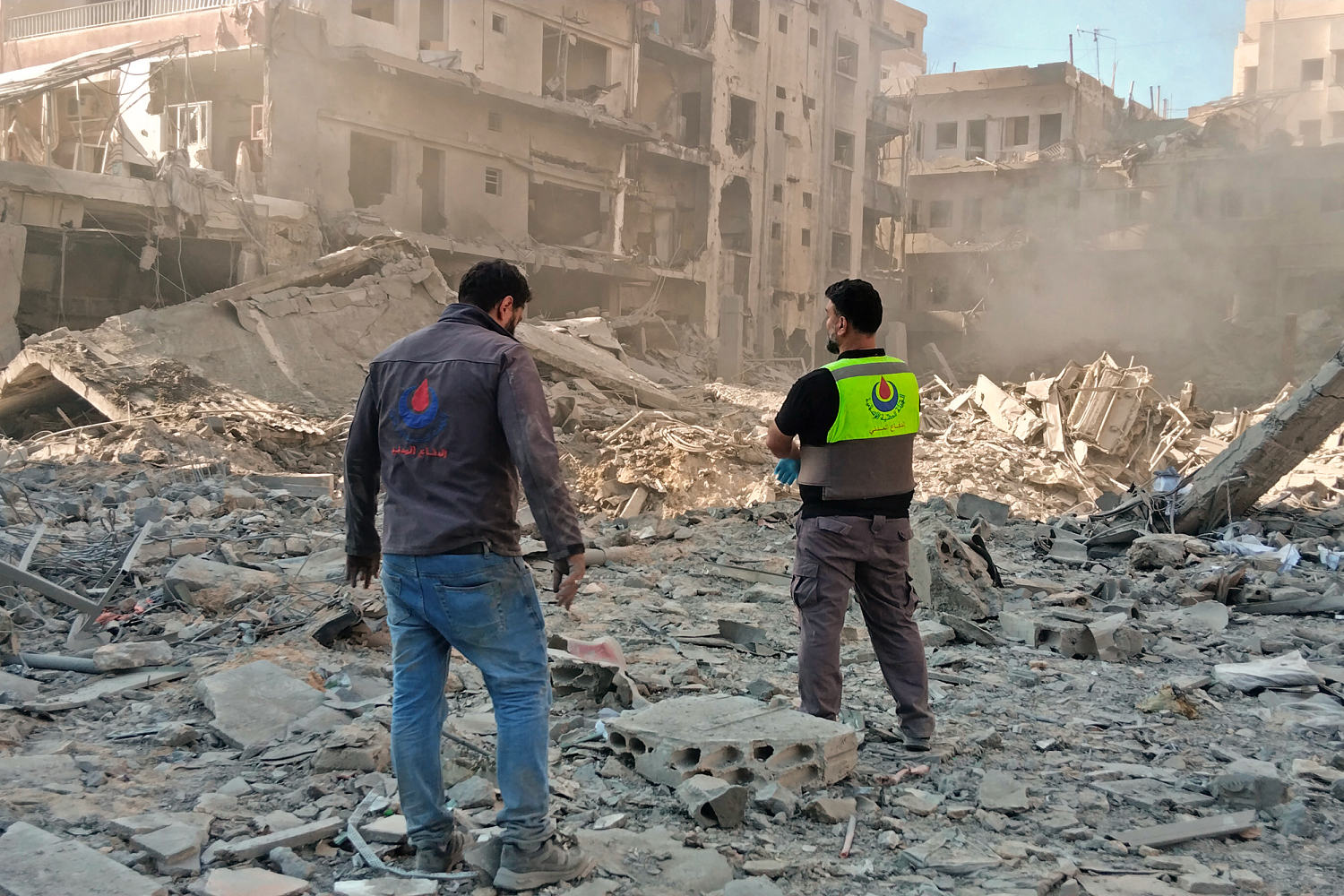
When Israel launched its intense air campaign and subsequent ground incursions into Lebanon, aiming to dismantle Hezbollah, it was not just fighting a border war. Hezbollah is not merely a Lebanese militia. It is the crown jewel of Iran’s "Axis of Resistance." It is Tehran’s primary deterrent against a direct attack on its own soil. For decades, Iran poured billions of dollars, advanced rocketry, and ideological fervor into Hezbollah.
When Israel systematically eliminates Hezbollah's leadership and destroys its missile caches, it is effectively amputating Iran’s right arm.
Imagine standing in that room in Oman under those conditions. The Iranian diplomat receives a notification on his phone. A strike in Beirut has leveled another block. His superiors in Tehran are furious, feeling backed into a corner, their strategic depth evaporating in real-time. Across the hall, the American diplomat represents the nation providing the very munitions used in that strike.
The air in the room turns to concrete. The Omani mediator enters, looks at the faces of the envoys, and realizes there is nothing left to carry across the hallway.
Iran's Foreign Minister, Seyed Abbas Araghchi, made the position clear during a visit to Baghdad. He stated that Tehran sees no basis for these talks until the current crisis is resolved. The channel, he argued, is useless if it cannot stop the violence.
Why the Silence Matters Right Now
It is easy to shrug at this news. After all, the United States and Iran have been adversaries since 1979. They have spent decades trading sanctions, threats, and cyberattacks. What difference does one suspended talk make?
The difference is the margin for error.
During the Cold War, the United States and the Soviet Union maintained a direct hotline. Even during the Cuban Missile Crisis, when the world teetered on the edge of nuclear annihilation, Kennedy and Khrushchev could communicate. They understood that miscalculation is far more dangerous than malice. If a radar screen glitches and shows a false incoming missile, you need a phone to call the other guy and ask, "Did you just fire?"
Without that phone, you have to guess. And in geopolitics, guessing kills.
The Muscat talks were that phone. They were not aiming for a grand peace treaty. No one expected Washington and Tehran to become allies. The goals were much smaller, much more urgent. They were trying to manage the regional temperature. They were discussing how to avoid a catastrophic miscalculation over Iran’s advancing nuclear program. They were trying to ensure that tit-for-tat strikes between US forces and Iranian-backed militias in Iraq and Syria did not accidentally spark a full-scale war.
Now, that buffer is gone.
Consider what happens next when communication ceases. Iran feels increasingly vulnerable as Hezbollah is battered. A vulnerable regime is an unpredictable regime. Some factions within Tehran are already arguing that since their conventional deterrent—Hezbollah—is weakened, they must pursue the ultimate deterrent: a nuclear weapon.
If Iran decides to cross that threshold, Israel has made it clear it will strike Iran's nuclear facilities directly. The United States would inevitably be dragged into the ensuing chaos.
This is the hidden cost of the silence in Oman. It is not just a pause in diplomacy; it is the removal of the safety net while the acrobat is walking the tightrope in a gale-force wind.
The Trap of Absolute Leverage
There is a school of thought in Washington that views this suspension as a sign of weakness. The argument goes that economic sanctions and Israeli military pressure are working, pushing Iran into a corner where it can no longer afford to negotiate from a position of strength.
This view misses a fundamental rule of human and state psychology: a cornered animal does not negotiate; it bites.
When a state believes that its survival is at stake, standard cost-benefit analyses go out the window. Iran’s leadership looks at the fate of Muammar Gaddafi in Libya, who gave up his nuclear program only to be overthrown and killed years later. They look at North Korea, which kept its nuclear weapons and remains untouched.
By suspending the talks, Tehran is sending a message to the international community. It is a declaration that they will not sit quietly in an Omani luxury hotel and talk about regional stability while their most vital ally is being dismantled. It is a high-stakes gamble designed to pressure the West into restraining Israel.
But Washington has its own constraints. With an intense political environment at home, no American administration can afford to look soft on Tehran or disloyal to Jerusalem. The political cost of forcing a ceasefire on an Israeli government determined to alter the Middle Eastern balance of power is too high.
So, the gears of conflict grind on, completely detached from the human lives they crush.
The View from the Concrete
We return to Abbas in Lebanon, or perhaps to a young woman named Sara in Tehran, who is watching the value of her currency plummet as rumors of an impending war spread. Or to an American service member stationed at a remote base in Jordan, looking at the radar screen, wondering if the next drone silhouette heading their way will be the one that breaks through the defense systems.
These are the people who pay the bill for the empty room in Muscat.
Diplomacy is often treated as a reward for good behavior. We talk to our friends, and we stop talking to our enemies to punish them. This is a profound misunderstanding of the tool. You do not need diplomacy to talk to your friends. You need diplomacy to talk to the people who want to destroy you, because that is the only way to prevent them from doing so.
The suspension of the U.S.-Iran talks is a quiet tragedy. It indicates that the actors involved have decided, for now, that the battlefield is a more effective place to communicate than a conference room. They have decided that missiles can convey messages more clearly than diplomats.
The problem with sending messages via missiles is that they cannot be recalled once they are fired. They do not allow for nuance. They do not accept clarifications.
The room in Muscat remains empty. The chairs are aligned perfectly. The water glasses are clean. The Omani mediators wait in the corridors, listening to the news from Beirut, watching the sky, waiting for someone, anyone, to pick up the phone again before the silence becomes deafening.