Sarah sat at her kitchen table in Melbourne, the blue light of her laptop illuminating a face tight with a familiar, modern anxiety. It was 8:58 AM. In two minutes, tickets for a tour she had anticipated for three years would go on sale. She had her credit card out. She had refreshed the page fourteen times. She had cleared her cache. She had done everything the "tips and tricks" blogs told her to do to beat the system.
At 9:01 AM, Sarah was position 42,000 in a digital queue. By 9:15 AM, the tickets were gone. By 9:20 AM, those same tickets appeared on resale sites for five times the original price.
This isn't just bad luck. It is the result of a calculated, global machinery that has turned the visceral magic of live music into a high-frequency trading floor.
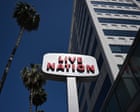
While Sarah stared at her empty cart, news filtered through from across the Pacific that changed the tenor of her frustration. The United States Department of Justice, joined by thirty states, filed a massive antitrust lawsuit against Live Nation Entertainment and its subsidiary, Ticketmaster. The allegation is simple yet devastating: the company has used an illegal monopoly to shut out competition, hike prices, and dictate the terms of the entire live music industry.
Now, the shockwaves are hitting Australian shores. Politicians and consumer advocates are looking at Sarah’s empty cart and asking why the same giants are allowed to stomp through the local market with such heavy boots.
The Invisible Fortress
To understand why a concert ticket costs more than a week’s groceries, you have to look at the "vertical integration" of the beast. Imagine a world—this is a metaphorical scenario—where one company owns the seeds, the tractors, the supermarkets, and the very land the crops grow on. If you want to eat, you pay their price. There is no other farm.
Live Nation doesn't just sell tickets. They manage the artists. They own the promotion companies that book the tours. They own or hold exclusive contracts with the venues where those artists play. And, of course, they own Ticketmaster.
When a company controls every link in the chain, the "market price" becomes a fiction. In the US lawsuit, the government argues that Live Nation uses its vast footprint to pressure venues into long-term exclusive deals. If a venue wants to host a Live Nation-managed superstar, they must use Ticketmaster. If they try to use a different ticketing service, they risk losing the big tours that keep their doors open.
In Australia, the footprint is similarly massive. Live Nation Australia owns or operates iconic spaces like the Palais Theatre in Melbourne and the Fortitude Music Hall in Brisbane. They promote the biggest festivals. When one entity controls the stage, the performer, and the gate, the fan is no longer a customer. The fan is a harvest.
The Mathematics of Heartbreak
Consider the "service fee." We have all seen it—that sudden, inexplicable jump in price during the final stage of checkout. You finally snag a $150 ticket, only to find it has ballooned to $185 once the "handling" and "facility" fees are tacked on.
Economically, these fees often serve as a shield. They allow the base price of the ticket to look lower, while the "hidden" costs flow back into the pocket of the vertically integrated machine. It is a psychological shell game. The US lawsuit alleges that these fees are inflated because there is no competitive pressure to keep them low. If you don't like the fee, where else will you go? The artist is only playing at that one venue. That venue only uses that one ticketer.
The logic is circular. The trap is absolute.
Australian regulators, specifically the ACCC, have been circling this issue for years, but the US verdict acts as a catalyst. It provides a blueprint for how to dismantle a monopoly that has become "too big to fail." The calls for a local inquiry aren't just about high prices; they are about the survival of a fair cultural ecosystem.
The Artist in the Gilded Cage
It is easy to blame the performers. We see the pyrotechnics and the private jets and assume they are the ones laughing all the way to the bank. The reality is more nuanced.
For every Taylor Swift or Bruce Springsteen who has the leverage to push back, there are thousands of mid-tier artists who are caught in the same gears as Sarah. If an artist wants to tour at scale, they often have to play the game. Choosing an independent promoter or a smaller ticketing platform can mean being locked out of the best venues or losing out on the marketing muscle that only a conglomerate provides.
The "Live Nation model" has turned live music into a luxury good. It has stripped away the grit and the accessibility that once defined the industry. When a teenager can’t afford to see their favorite band because a corporate algorithm decided the "dynamic price" should be $400, we aren't just losing money. We are losing the next generation of culture.
The Australian Response
The momentum in Canberra is building. Independent MPs and consumer groups are pointing to the US verdict as proof that the status quo is not inevitable. They are calling for transparency in how many tickets are actually held back for corporate sponsors versus how many go to the general public. They want a crackdown on the "bots" that harvest tickets in milliseconds.
But more than that, there is a push to examine the very structure of the industry. Should a company be allowed to own the venue and the ticketing agency? In many other industries, this would be a clear conflict of interest. In music, it has been the standard operating procedure for a decade.
The Australian market is smaller, which makes the dominance even more suffocating. In a country where touring costs are already astronomical due to the distances between cities, the added weight of monopolistic fees can be the breaking point for a local tour.
The Ghost in the Machine
Back at her kitchen table, Sarah didn't think about antitrust laws or vertical integration. She just felt a hollow sense of defeat. She felt like the thing she loved—the connection, the sweat, the shared roar of a crowd—had been stripped of its soul and sold back to her by a robot.
The US verdict is a signal that the giants can be challenged. It suggests that the "invisible" rules of the game are finally being scrutinized by people with the power to change them.
The stakes are not merely financial. They are about who owns our culture. Is music a public good, a shared human experience that should be accessible to the many? Or is it simply another asset class to be optimized by a boardroom in Los Angeles?
The fight in the US is the opening act. The Australian investigation, if it moves forward, will be the chorus. We are discovering that the "convenience" of a global ticketing giant came at a cost we never agreed to pay. We paid with our access, our fairness, and the simple joy of standing in the front row without feeling like we’d been robbed.
The queue is still moving. The screen is still refreshing. But for the first time in a long time, the people at the back of the line are starting to find their voices. The music hasn't stopped; it's just that the audience is finally tired of paying for the privilege of being ignored.