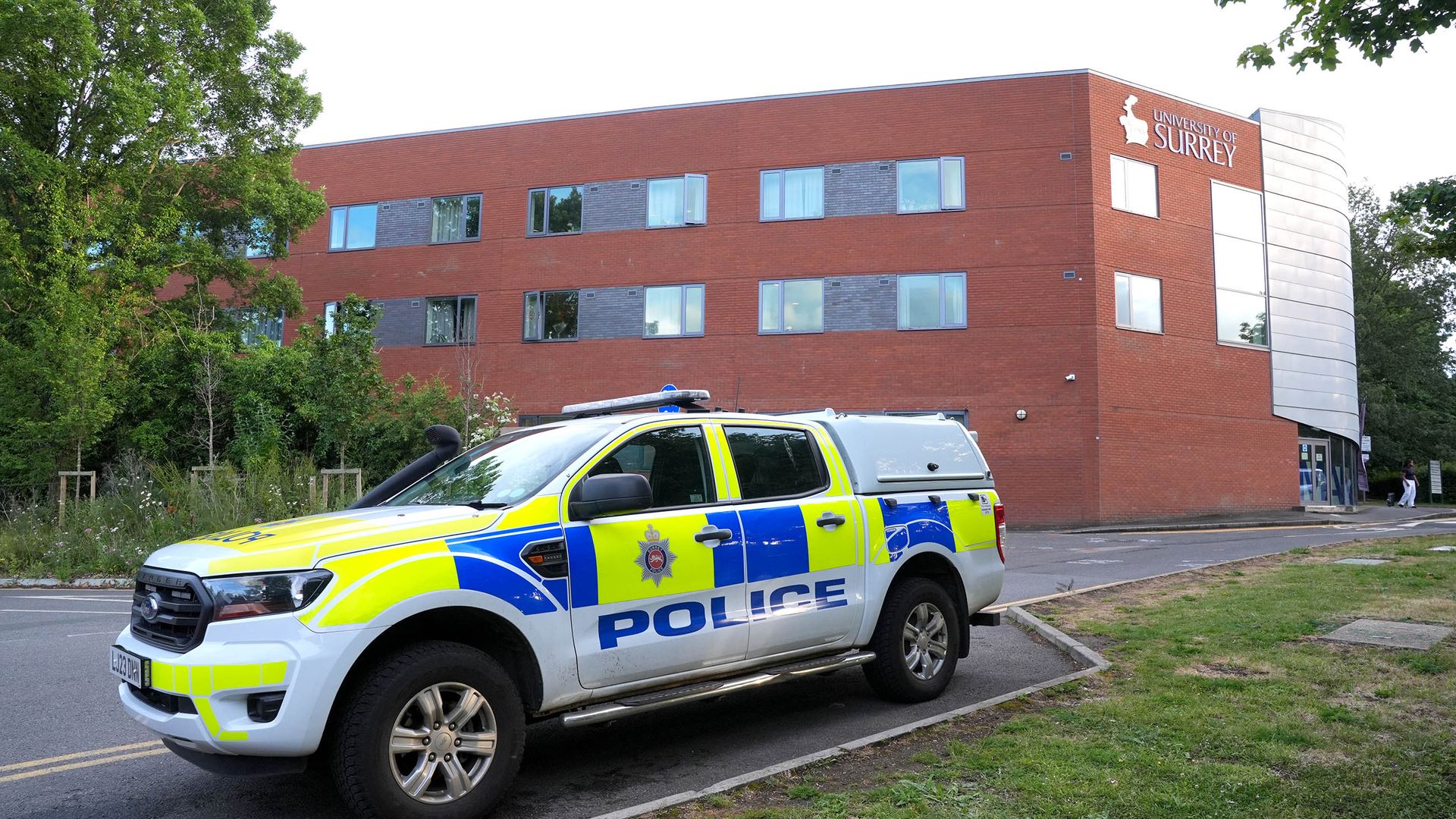
The modern university campus is designed to sound a certain way. It is a symphony of low-humming air conditioners, the rhythmic scuff of sneakers on polished linoleum, the muffled drone of a professor lecturing on nineteenth-century political theory, and the occasional, sharp click of a laptop keyboard. We trust this soundtrack. We invest our savings, our futures, and our children into the safety of its rhythm.
Then comes a sound that does not belong.
It happened on a Tuesday. The air inside the humanities building was thick with the usual mid-semester exhaustion. Students sat with their chins propped in their hands, watching the clock or drifting through digital notes. Nobody was looking for danger. Danger is supposed to be loud, metallic, and instantly recognizable.
Instead, the disruption began with a heavy thud, followed by a gasp that sounded less like terror and more like profound confusion.
When a twenty-six-year-old former student walked back into the halls he had recently left, he didn't bring the familiar terror of modern headlines. He carried a crossbow. It is an archaic weapon, clumsy and deliberate, requiring a specific, chilling kind of intent to cock, aim, and fire. By the time the panic crystallized, two people were bleeding, the quiet sanctuary of higher education was shattered, and a terrifyingly quiet weapon had written its name into the history of school violence.
We look at these events through the sterile lens of police blotters. A name, an age, a list of charges. Attempted murder. Aggravated assault. Possession of an offensive weapon. The court documents lay out the anatomy of the crime with cold precision, but they entirely miss the anatomy of the aftermath. They miss the way the air changes in a room when thirty people suddenly realize they are trapped. They miss the ghost that lingers in a hallway long after the yellow tape is torn down and the blood is scrubbed from the floorboards.
To understand the weight of what happened, you have to look at the invisible lines that connect a university to its community. A campus is an open ecosystem. It thrives on the vulnerability of being accessible. Anyone can walk through the quad. Anyone can sit on the steps. That openness is our greatest cultural achievement, and it is also our most fragile vulnerability.
Consider the perspective of a young woman we will call Sarah—a composite of the terrified students who barricaded themselves inside classrooms that afternoon. Sarah wasn't thinking about criminal statistics or gun control debates when she heard the screaming start down the hall. She was thinking about the heavy oak door of her seminar room. She was thinking about whether the lock would hold, how many desks it would take to block the entrance, and why the room felt suddenly, suffocatingly hot.
Her experience wasn't defined by the legal definitions of a felony. It was defined by the sensory overload of survival: the smell of floor wax as she pressed her face against the tiles, the frantic vibration of her phone as texts from worried parents began to flood the screen, and the agonizing, slow-motion passage of minutes before the tactical teams arrived.
The attacker was captured quickly, tackled by individuals whose names will likely be forgotten in the media cycle but whose courage averted a massacre. The police arrived in waves, sirens cutting through the afternoon traffic, turning a place of higher learning into a active crime scene. The suspect was led away in handcuffs, his face blank, leaving behind a trail of unanswered questions and two victims rushed to the hospital with injuries that will heal long before their minds do.
The immediate reaction to violence is always an obsession with the mechanics. How did he get the weapon? Why a crossbow? Was it a loophole in local regulations?
These are comfortable questions because they have structural answers. We can pass a law. We can ban a tool. We can install more metal detectors or hand out more identification badges. We lean into these debates because they shield us from the much darker, more agonizing truth that sits at the center of every campus attack.
The real terror isn't the weapon. It is the betrayal.
The person behind the trigger, or the bowstring, was not an outside invader. He was a product of the institution itself. He had walked those same halls as a student. He had sat in those same desks, taken those same exams, and eaten in the same cafeteria. He knew the geography of the building, but more importantly, he knew the rhythm of the people inside it. He used his familiarity as a cloak.
When an institution of learning is violated by one of its own, the injury goes deeper than skin and bone. It creates a profound crisis of trust. The lecture hall, which is supposed to be a space of intellectual risk and vulnerability, suddenly becomes a space of physical calculation. Students stop looking at the whiteboard and start looking at the exits. Professors calculate which corner of the room offers the best line of sight if someone opens the door.
This is the hidden tax of violence. It forces us to view our peers not as potential collaborators, but as potential threats. It turns the quiet student in the back row into an interrogation mark.
The legal system will do its work. The former student will sit in a courtroom, clad in a jumpsuit, listening to prosecutors detail the moments he decided to turn his grievance into violence. He will face the full, unyielding weight of the law, and he will likely spend decades behind bars. The state will call it justice.
But true justice is an illusion in the wake of such trauma. You cannot prosecute the fear out of a nineteen-year-old who now flinches every time a heavy door slams shut in a quiet hallway. You cannot mandate peace of mind through a judge’s gavel.
The afternoon sun eventually set over the campus, casting long, distorted shadows across the stone courtyard where the police cars had parked. By evening, the sirens were gone, replaced by the eerie, unnatural silence of a community trying to remember how to breathe. The blood was gone. The crossbow was locked away in an evidence locker, a strange, archaic piece of wood and steel that had carried modern terror into a modern room.
The next morning, the university doors opened again. They had to. The rhythm of life demands that we keep walking into the spaces that scare us, that we refuse to let the madness of an individual dictate the boundaries of our collective life.
But as the students filed back into the humanities building, their steps were different. They walked a little faster. They looked around a little more. And when the professor stepped up to the podium and began to speak, his voice echoed in a room that felt entirely changed, a space where the silence was no longer peaceful, but heavy with the memory of what happens when the soundtrack of our lives suddenly stops.



:max_bytes(150000):strip_icc()/how-many-types-of-dwarfism-are-there-2860725-v1-8dae2c531b4b47d9ae36ae404d3308a0.png)