Concrete does not care about politics. Steel does not read election returns.
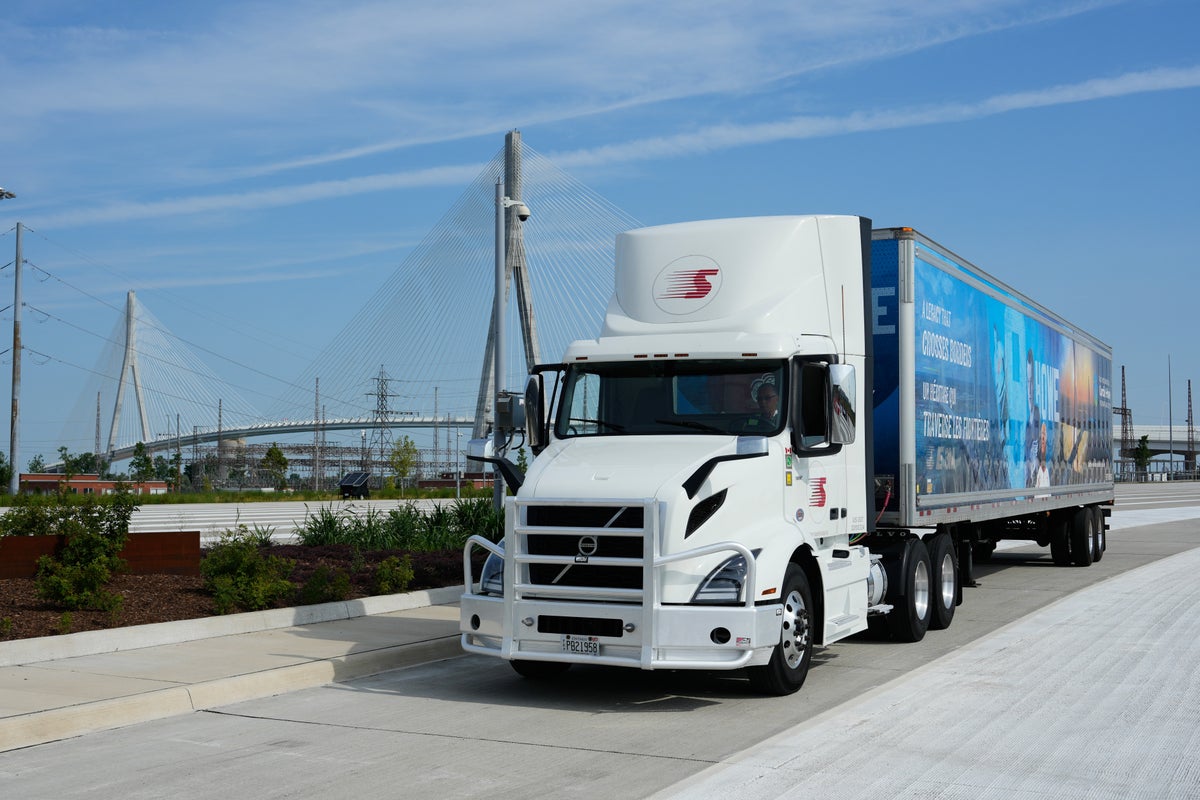
For years, the crossing rose above the water, a massive arc of modern engineering designed to bridge two nations that share the longest undefended border in the world. Millions of drivers, countless trucks hauling automotive parts, fresh produce, and raw materials were supposed to glide seamlessly across this new corridor. It was billed as a monument to partnership.
Then the ribbon was cut. And the air turned cold.
Consider a hypothetical trucker named Marcus, parked just north of the border on a Tuesday morning. In his cab, the radio crackles with breaking dispatches. A new administration in Washington has just slapped sweeping new tariffs on cross-border trade. Overnight, the cost of moving goods between neighbors spiked dramatically. The bridge is physically complete, gleaming under the morning sun, but the economic architecture holding it together has fractured.
Borders are strange lines. They are drawn on maps with ink, but they are felt in the wallet, in the factory, and at the dinner table.
Trade between the United States and Canada is not an abstract spreadsheet. It is an intricate, decades-old dance. When a car is manufactured in North America, its parts cross the border six or seven times before the vehicle ever rolls onto a dealership lot. An engine block is cast in Michigan, machined in Ontario, shipped back to Ohio for assembly, and finally sold in British Columbia.
Tariffs throw sand into those delicate gears.
When a new tax is imposed on imports, companies do not simply absorb the loss. They pass it down. They pass it to the manufacturer, the distributor, and ultimately, the person buying the finished product. The new bridge stands ready to carry that traffic, yet the financial weight of crossing it has suddenly doubled.
History repeats its warnings. Protectionism arrives wrapped in promises of economic defense, but it usually lands as a tax on cooperation. Decades of integrated supply chains cannot be unspoven overnight without tearing the fabric apart. Factories on both sides rely on zero friction. Friction costs time. Friction costs money.
Marcus checks his mirrors, shifts into gear, and pulls forward onto the span. Beneath his tires, the expansion joints click a steady rhythm. He is carrying a flatbed of steel beams destined for a construction site three hours south. He knows that the paperwork in his glove box is different today than it was last week. The duties are higher. The margins are thinner.
Yet the wheels keep turning. Commerce is stubborn. Even under the heavy, lingering shadow of protectionist policy, the sheer momentum of daily life pushes forward. People need goods. Businesses need materials.
The bridge was built to connect people. Whether policy will allow them to stay connected remains the open question hanging in the wind above the river.