The fluorescent tubes overhead do not buzz. They hum, a low, maddening frequency that fills the spaces between heartbeats. At 3:14 in the morning, the corridors of a public hospital in Nairobi smell of stale bleach, cold iron, and the heavy, metallic tang of exhaustion.
Dr. Amina Kiprop knows that smell better than she knows the scent of coffee or rain. She has been on her feet for nineteen hours. Her white coat, once crisp, carries the faint, indelible stains of a twelve-year-old malaria patient who crashed at midnight and a frantic trauma admission from the highway bypass just before dawn. She leans against the nurse's station, her fingers tracing the edge of a chipped metal counter, trying to calculate how many charts are left in the stack.
There are forty-two charts. There is one doctor.
This is not a statistic pulled from an abstract policy brief. This is the arithmetic of survival in a system stretched so thin it has begun to tear at the seams. Across the country, the quiet crisis inside public healthcare facilities has moved past the point of strain. It is fracturing. And the fracture lines are drawing a dangerous, inevitable convergence.
To understand why Kenya's doctors are now poised to join the raging fires of the nurses' strikes, you have to look past the bureaucratic language of collective bargaining agreements and the sterile announcements of labor unions. You have to look at the math of human endurance.
Imagine walking into a room where every single person is asking for a miracle, and you have run out of tools to perform even ordinary medicine.
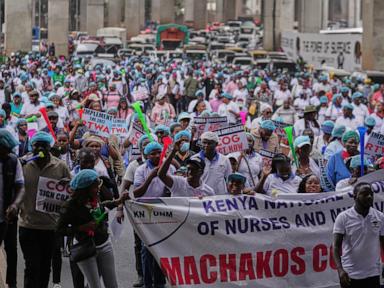
For months, the country's nurses have carried the immediate weight of staff shortages, staging walkouts and protests over unfulfilled promises, delayed allowances, and intolerable patient-to-staff ratios. When nurses leave the floor, the remaining machinery does not slow down. It accelerates. The burden shifts upward, cascading onto the shoulders of resident doctors and medical officers who are already performing the work of three people.
A doctor does not simply write a prescription. In a resource-scarce environment, a doctor becomes a logistics manager, a counselor, a pharmacist, and a triage officer all at once. When there are no nurses to monitor post-operative vitals, the surgeon stays by the bedside. When there is no oxygen technician on duty, the physician hoists the heavy cylinder down the hall themselves.
Amina remembers a Tuesday two weeks ago. A mother brought in a toddler struggling for every breath, chest sinking deep with severe pneumonia. The pediatric ward was at three hundred percent capacity. Cots shared three children to a mattress. The single working nebulizer on the floor was already in use across the room. Amina stood over that child for forty minutes, manually bagging oxygen with a worn rubber resuscitator, while outside her door, a queue of fifty desperate families stretched down the concrete stairwell into the courtyard.
That is the invisible pressure. It is not just the physical fatigue of a twenty-four-hour shift. It is the moral injury. It is the constant, crushing knowledge that you are doing mediocre work in an emergency because excellence requires time and resources that simply do not exist.
When the unions issue threats of a joint strike, armchair commentators in city offices often call them callous. They speak of Hippocratic oaths as if an oath is a magical shield that protects a practitioner from hunger, burnout, and systemic collapse. They treat healthcare workers as infinite resources, machines fueled by altruism that can be driven into the ground without maintenance.
History tells us a different story. In any system where the pressure exceeds the tensile strength of the workforce, the workforce will eventually break. In 2017, and again in subsequent years, Kenya witnessed prolonged medical strikes that paralyzed public health facilities. Those strikes were not born out of sudden malice or political posturing. They were born of desperation. They were the final, deafening scream of professionals who realized that silence was killing their patients just as surely as disease was.
The grievances this time echo the past with haunting familiarity. Unpaid salaries, stalled promotions, lack of basic pharmaceuticals in emergency rooms, and a chronic failure to absorb unemployed medical graduates while existing hospitals drown in unmet need.
Consider the absurdity of the current landscape. Thousands of trained, passionate young doctors sit at home, their degrees framed on walls, unable to find government placement. Meanwhile, inside the wards, doctors like Amina are collapsing from exhaustion, developing chronic hypertension, and watching preventable deaths accumulate simply because there are not enough hands to catch the falling patients.
When nurses strike, the system limps. When doctors join them, the system stops.
The government warns of legal consequences. Officials issue stern press statements urging patience, invoking the sanctity of human life, and accusing medical workers of holding the public hostage. But patience ran out years ago in the crowded waiting rooms where patients sleep on benches and share needles because supplies are rationed like gold.
Amina looks at her phone. A WhatsApp message from the union representative lights up the dark screen. The vote is coming. The collective resolve is hardening. The doctors, long hesitant to abandon their wards because they know who suffers first, are running out of reasons to stay.
The public reacts with a familiar, weary dread. Kenyans know that a strike means closed gates at Kenyatta National Hospital and Pumwani. It means turning away pregnant mothers in labor, redirecting trauma victims to private facilities they cannot afford, and burying people who might have lived if a functioning team had met them at the triage desk.
The tragedy is that both sides of the picket line want the same thing. The doctors want to heal without breaking. The public wants care without financial ruin. Yet, the chasm between policy and reality remains wide, bridged only by the frayed nerves of people like Amina.
Dawn begins to bleed through the unwashed windows of the ward, turning the harsh fluorescent glare into a sickly, grey-blue twilight. A monitor beeps in the corner, a rhythmic, lonely pulse. Amina rubs her eyes, wiping away the grit of another sleepless night, and turns back toward the open door where the morning queue is already beginning to whisper, wait, and hope.