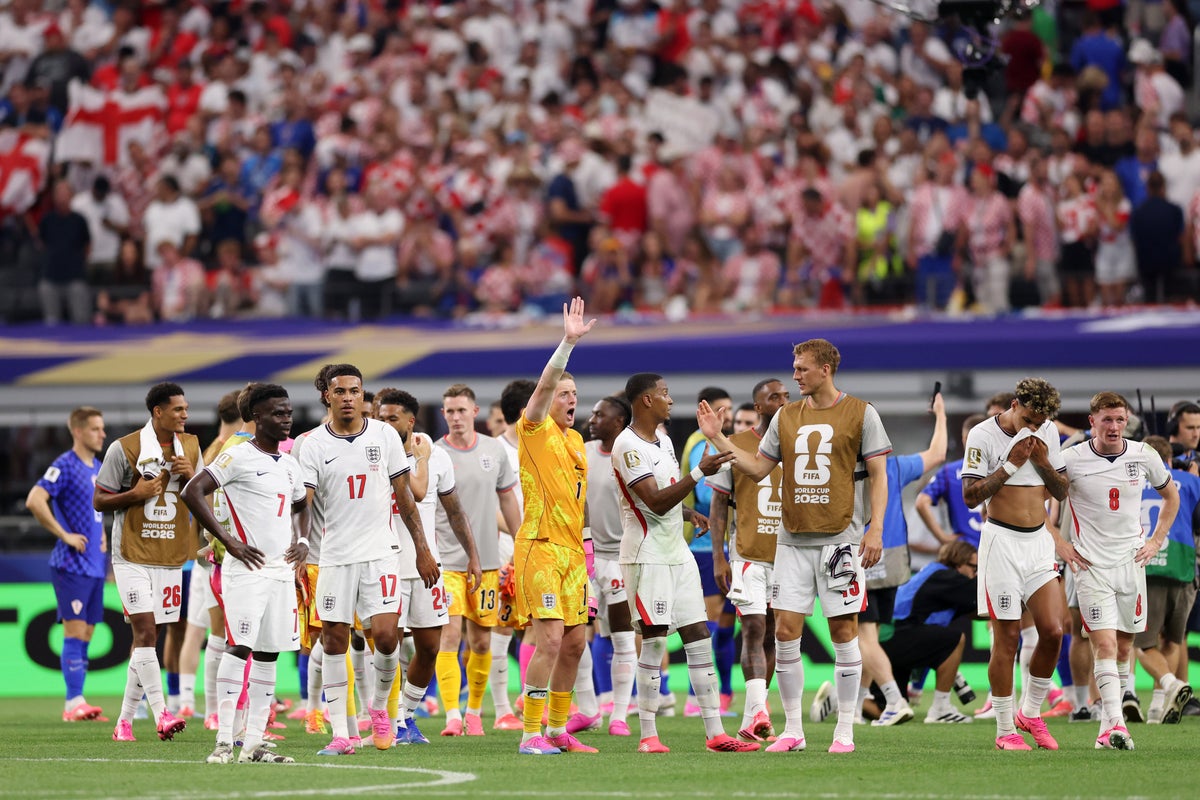
The stadium hums with the residual vibration of eighty thousand screaming voices. Under the blinding Qatar floodlights, the air smells of spilled beer, sweat, and spent adrenaline. The match is over. The giants of international football have walked off the pitch, leaving behind a sprawling, chaotic graveyard of human consumption. Thousands of plastic cups, discarded wrappers, torn match programs, and half-eaten hot dogs carpet the concrete rows.
Then, the shifts begin.
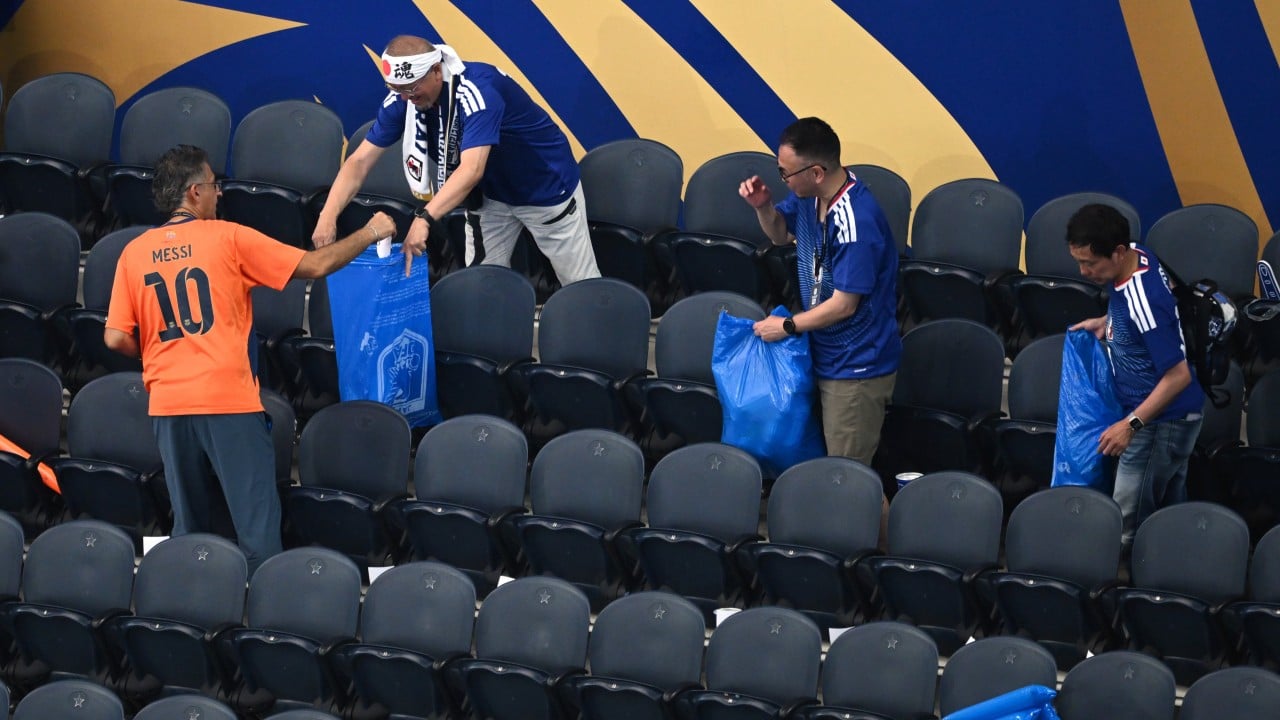
They move in quiet, coordinated lines between the plastic seats. They do not wear high-visibility vests, nor do they carry industrial brooms. They are dressed in the blue jerseys of the Japanese national team. In their hands, they carry large, translucent blue trash bags brought from home. They bend. They scoop. They sort.
To the Western broadcasters leaning out of their commentary boxes, this scene is nothing short of miraculous. Smartphone cameras capture the moment, and within hours, the footage flashes across global screens. The narrative writes itself instantly. It is a story of unmatched civic virtue, an ancient culture of respect exported to the chaotic stage of the World Cup. The world watches, sighs in admiration, and asks why the rest of us cannot be more like them.
But across the ocean, beneath the neon glow of Tokyo smartphone screens, a very different conversation is brewing.
The comments scrolling through Japanese social media do not echo the global standing ovation. Instead, they bite. They mock. They point fingers at an uncomfortable truth that the international cameras entirely missed.
We love a clean narrative. It satisfies our collective desire for simple heroes and clear-cut morality. For a few days during every major tournament, the Japanese fan cleaning the stadium becomes the ultimate symbol of communal responsibility. Yet, if you look past the bright blue plastic bags, you find a messy, deeply human friction between the virtue we perform for strangers and the reality of how we live when no one is watching.
Consider a hypothetical spectator. Let us call him Kenji. Kenji is thirty-two, works sixty hours a week at a financial firm in Tokyo, and flew to Doha to watch his country play. When the final whistle blows, Kenji does not leave. He spends an hour picking up trash dropped by people he has never met, citizens of countries thousands of miles away. He feels a swelling sense of pride. He is representing his nation.
Now, follow Kenji home.
Two weeks later, it is Saturday night in Shibuya. The annual Halloween celebrations have just wrapped up, or perhaps a local festival has ended. The streets are choked with the exact same debris Kenji painstakingly cleared in Doha. Crushed cans, cigarette butts, and fast-food wrappers clog the gutters. Kenji walks past them, his hands deep in his pockets, his eyes fixed on his phone. He does not reach for a blue bag. He does not bend down.
Why? Because the stage is different. The audience is gone.
This is the double standard that ignited furious debates across Japanese digital forums. Critics pointed out a glaring hypocrisy: the very same society praised globally for its spotless stadium etiquette frequently leaves its own urban centers buried in trash after domestic celebrations. The internet culture back home did not see saints in the stadium; they saw a performance. They saw an exercise in national branding that ignored the fractures within their own neighborhoods.
The critique cuts deeper than simple littering. For many women watching the coverage, the global adoration of these stadium-cleaning men felt like a bitter pill to swallow. In a country where the domestic burden still falls overwhelmingly on female shoulders, watching men receive international sainthood for picking up garbage abroad struck a raw nerve.
Silence. That is often what greets the woman cleaning the kitchen counter at two o’clock in the morning while the household sleeps. There are no television cameras filming her. No viral tweets celebrate her dedication to the collective good. Her labor is expected, invisible, and completely uncompensated by social capital.
But when a group of men picks up a plastic bottle in front of a global audience, it becomes an international news event.
This contrast exposes the soft underbelly of public virtue. It raises an uncomfortable question about human motivation. Do we care about the act of cleaning, or do we care about being seen cleaning?
The psychological mechanics of the stadium cleanup are intoxicating. When you clean up after a foreign crowd, you are not just a janitor; you are an ambassador. You are elevating your culture in the eyes of the world. The reward is immediate, global, and intensely validating. It is an act born of a specific cultural concept—kata, the proper way of doing things—but when transplanted into the hyper-visible arena of the World Cup, it transforms into something else. It becomes currency.
Domestic life offers no such currency. Cleaning your own room, your own street, or your own kitchen yields no geopolitical points. It is mundane. It is tedious.
This tension is not unique to Japan, but the country serves as a vivid magnifying glass for a global human condition. We are all guilty of navigating this divide. We post about charitable donations on our profiles while ignoring the unhoused person sitting on the pavement outside our office building. We advocate for systemic change online but refuse to speak to the neighbor who keeps their television turned up too loud.
It is easy to love humanity in the abstract. Loving our immediate community, with all its annoying habits and local political squabbles, is much harder.
The anger directed at the World Cup fans is not really about the trash. It is about the exhaustion of living in a society governed by intense social pressure. In Japan, the concept of meiwaku—not causing trouble for others—is drummed into citizens from kindergarten. It creates a beautifully orderly society on the surface. Trains run precisely on time. Streets are generally pristine. Violence is rare.
But the cost of that order is an immense, invisible psychological weight. You must always monitor your behavior. You must always consider how the group perceives you.
When citizens see their compatriots executing this perfection abroad for the applause of foreigners, it can feel like an extension of that suffocating pressure. It feels like a demand to maintain the mask of the perfect citizen even while on vacation, miles away from the watchful eyes of the neighborhood association. The mockery from domestic commentators is a defense mechanism. It is a collective cry for room to breathe, an admission that being the world's most polite citizens is an exhausting standard to maintain.
Imagine the sheer fatigue of being a symbol.
The Western gaze has a habit of romanticizing Eastern cultures, turning everyday human beings into monolithic archetypes of Zen philosophy or communal perfection. When the media covers the stadium cleanup, they rarely interview individual fans about their personal lives, their jobs, or their struggles. They treat them as a collective unit operating on pure, unadulterated civic duty.
By peeling back that romantic veneer, the domestic backlash actually restores humanity to these fans. It reminds us that they are not robots programmed for neatness. They are flawed, complicated people navigating the same contradictions that plague the rest of us. They can be genuinely well-intentioned in Doha and completely indifferent in Tokyo. Both things can be true at the same time.
The real problem lies in our collective addiction to superficial metrics of goodness. We have built an information ecosystem that rewards the spectacular over the sustained. A one-hour cleanup in a sports arena makes the evening news; a lifetime of quiet, domestic maintenance does not register on the radar of public consciousness.
The next time a major sporting event rolls around, the blue bags will undoubtedly reappear. The cameras will zoom in. The commentators will marvel at the enduring magic of cultural discipline.
But look closer at the edges of the frame.
Notice the exhaustion in the shoulders of the person holding the bag. Remember the empty streets thousands of miles away, waiting for that same energy. Understand that the act of cleaning up after a game is a beautiful gesture, but it is also a complicated, heavy armor worn by people who are just as tired, just as inconsistent, and just as human as the crowds who left the mess behind.
The stadium eventually grows dark. The floodlights click off, one by one, casting long, stark shadows across the empty rows. The last blue bag is tied shut and placed neatly by the exit. The fans walk out into the cool night air, leaving the grand stage behind, stepping back into the quiet, messy, unfilmed realities of their ordinary lives.