The map of the world is drawn in ink, but rewritten in dirt.
Consider a dusty command post in Kiryat Gat, where maps glow under fluorescent lights and tired officers trace lines across a strip of earth smaller than metropolitan London. For months, the conversation about postwar Gaza has been dominated by empty chairs. Western capitals offered ideas; regional giants demurred. Everyone wanted peace, but nobody wanted the boots on the ground.
Then came a knock on the door from a different direction entirely.
Military delegations from Uganda and Burundi quietly arrived in Israel, touring southern checkpoints and walking the perimeter of Rafah. They did not come with grand geopolitical lectures. They came with clipboards, measuring tape, and decades of hard-earned experience in some of the most unforgiving peacekeeping environments on the planet.
Uganda’s parliament had already given its sign-off, and Burundi quickly followed, stepping forward to commit hundreds of soldiers to the nascent International Stabilization Force. In the grand strategy rooms of Washington and Tel Aviv, these African nations represent something vital: a physical bridge between abstract post-conflict planning and brutal on-the-ground reality.
Think of it as an architectural puzzle. When a house is burned down to its foundation, you cannot simply wish the walls back into place. You need masons who have worked in the rain before.
The security architecture taking shape under American and international coordination relies heavily on nations outside the traditional Western and Middle Eastern blocs. While Morocco steps up to handle training elements, and countries like Kosovo, Albania, and Kazakhstan eye support roles, the core reality of putting human lives on the line falls to nations whose soldiers know what it means to patrol hostile streets without losing their footing.
Yet, the tension in the room during these military visits was palpable. Step outside the air-conditioned briefing rooms, and the friction is immediate. On one side sits a political timetable demanding progress, pushed by American envoys trying to force the second phase of a broader peace blueprint. On the other side sits a paralyzed status quo—stalled by deep disputes over disarmament, ongoing military operations, and the stubborn refusal of timelines to bend to political will.
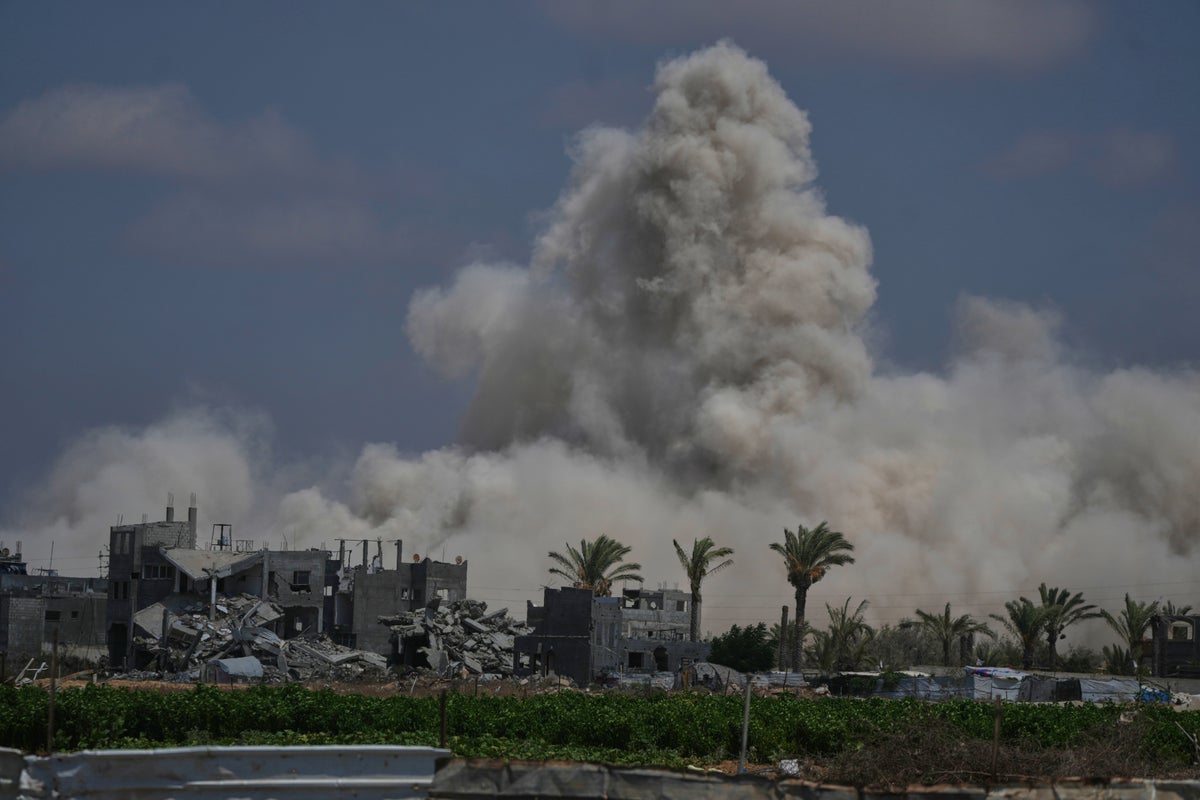
Imagine a hypothetical battalion commander from Kampala standing at the edge of the southern border, looking out over landscapes scarred by architectural ruin and choked by political distrust. He is not thinking about press releases. He is calculating supply lines, medical evacuations, and the sudden, sharp silence that follows an explosion.
This is where diplomacy meets the dust.
The deployment of Ugandan and Burundi troops is not merely a logistical footnote. It is a profound structural shift. For decades, international interventions in the Middle East have followed a rigid script dictated by superpower politics. By decentralizing the peacekeeping burden—inviting nations with extensive African Union peacekeeping credentials in places like Somalia to step into the Levant—the geometry of international security is changing.
Critics will point out the risks. The mandate is fragile. The local politics are explosive. The line between a stabilization force and a permanent target can blur in a single afternoon. If the political leadership fails to secure a lasting framework for disarmament and withdrawal, these incoming troops will find themselves holding the weight of a world that couldn't agree on how to save itself.
And yet, movement has replaced stagnation.
The delegations have gone home to pack. The briefings in Kiryat Gat have concluded. Somewhere in East Africa, boots are being polished and deployment schedules are being pinned to corkboards. In the high-stakes chess match of the Middle East, the pawns are finally moving, carrying the heavy, quiet hope of a peace that has cost too much to abandon.