The Blockade Fallacy
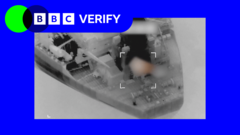
Military strikes on oil tankers make for terrifying headlines. They spark immediate panic in trading pits and send cable news anchors into a tailspin about hyperinflation and WWIII. But viewing kinetic actions against maritime shipping as a simple disruption of supply misses the point entirely.
When a missile hits a crude carrier off a strategic chokepoint, the immediate takeaway pushed by standard media is simple: supply is dropping, prices must spike, and regional conflict is about to choke global commerce.
This reaction is lazy. It treats a complex, multi-layered financial and logistics network as a simple pipeline with a valve that just got kicked open.
Physical destruction of a vessel does not wipe out crude; it reroutes risk. The real war isn't happening in the water. It is happening on paper, inside insurance syndicates, and throughout sanction-evasion corridors that treat military blockades as an operational tax rather than a stop sign.
Insurance, Not Explosives, Drives the Cost
I spent years watching energy desks react to Middle Eastern instability. Every time a drone or missile strikes a hull, retail investors run to buy energy ETFs, expecting a massive supply shortage. They lose money almost every time.
Why? Because the physical loss of a single ocean vessel carrying two million barrels of crude is a drop in the ocean of global daily consumption, which hovers around 100 million barrels. The real mechanism driving market spikes isn't missing crude—it is the War Risk Premium.
[Missile Strike] ➔ [Underwriter Panic] ➔ [War Risk Premiums Soar] ➔ [Rerouting via Cape of Good Hope] ➔ [Capital Lockup & Shadow Fleet Expansion]
When a vessel gets struck in a tactical enforcement zone, Lloyd’s underwriters and marine insurers instantly recalculate risk algorithms for the entire region.
- The Instant Premium Spike: Insurance rates for transit through the targeted zone do not rise linearly; they multiply. A voyage that cost $50,000 in risk coverage yesterday suddenly costs $500,000 today.
- The Owner's Dilemma: Shipowners face a choice: pay extortionate premiums, sit at anchor waiting for political resolution, or take the long way around.
- The Transit Delay: Diverting around major capes adds 10 to 14 days to a journey. That extra time doesn't destroy oil; it temporarily traps capital and ties up global vessel capacity.
The physical supply of oil remains virtually untouched. What changes is the cost of moving it and the time it spends sitting at sea as "floating storage." Treating a blockade strike as a permanent supply drop fundamentally misunderstands marine logistics.
The Indestructibility of the Shadow Fleet
Media narratives surrounding blockades usually assume that targeted nations will simply back down once naval forces assert control over sea lanes. This view ignores the rise of the gray market marine ecosystem.
Over the past decade, economic sanctions and interdiction efforts have created a parallel shipping infrastructure. This "shadow fleet" consists of older, unflagged, or flag-of-convenience vessels operated through opaque shell corporations.
| Standard Fleet | Shadow Fleet |
|---|---|
| Insured by Western P&I Clubs | Self-insured or backed by state guarantees |
| Transponders (AIS) always active | AIS routinely spoofed or turned off |
| High compliance costs, lower margins | High risk tolerance, massive profit margins |
| Subject to Western regulatory seizures | Operates in regulatory gray zones |
When direct strikes occur, Western maritime authorities believe they are projecting decisive power. In reality, they are raising the profit margins for shadow operators.
When risk rises, the discount on illicit crude deepens. Buyers willing to take the reputational and physical risk—often independent refineries operating outside Western jurisdiction—get that crude at bottom-dollar prices. The high-risk premium is absorbed, shipowners profit, and the crude continues to reach market.
The blockade doesn't stop the flow. It merely pushes the trade deeper into the dark, where tracking, environmental safety, and regulatory oversight cease to exist entirely.
You Are Hedging the Wrong Event
Retail traders and geopolitical analysts alike consistently ask the wrong question. They ask: How high will crude go if the blockade holds?
The question you should ask is: How fast will global trade routes adapt, and who profits from the friction?
If you are attempting to protect an investment portfolio or supply chain against naval blockades and maritime strikes, buying crude futures on the first day of headlines is usually a losing trade. The initial panic spike almost always gets sold off as physical deliveries continue through alternative routes.
The Actual Mechanics of Adaptation
- Freight Rate Arbitrage: The real money isn't in crude spot prices; it's in tanker rates (VLCC and Suezmax chartering costs). When transit risk escalates, charter rates skyrocket far faster than the price of the commodity being carried.
- Storage Arbitrage: Strategic reserves and onshore storage exist specifically to buffer against short-term transit delays. A three-week blockade barely scratches the surface of global commercial inventories.
- Pipeline Offramps: Much of the crude targeted in regional blockades can be redirected to bypass vulnerable chokepoints via overland pipelines, albeit at a lower throughput capacity.
The Hidden Risk Nobody Is Talking About
There is a major downside to this reality that cheerleaders of counter-blockade strategies ignore.
While kinetic enforcement fails to permanently cut off oil flows, it creates a far worse long-term problem: the total erosion of maritime safety standards.
By driving a massive percentage of global crude transport into aging, uninsured, and poorly maintained vessels, aggressive blockades guarantee environmental disasters. A 20-year-old, unmaintained tanker hit by a missile or suffering a mechanical failure in a crowded strait isn't just a political crisis. It is an ecological disaster that can shut down commercial shipping for every nation in the vicinity, friend or foe.
In trying to choke off a nation's revenues through naval force, enforcement actions actively accelerate the collapse of the international rules-based order on the high seas.
Stop looking at the smoke rising from a damaged hull as a sign of economic victory or immediate supply failure. It is nothing more than a tax on transit, paid by consumers, collected by gray-market logistics firms, and completely ineffective at stopping the flow of energy.
The navy fires the missile. The insurer writes the bill. The dark fleet picks up the cargo. Business continues.


