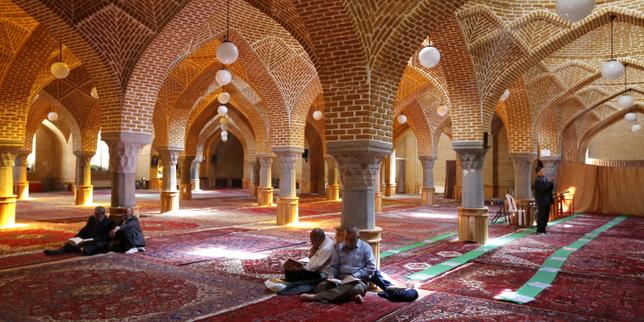
The dust of Tabriz does not settle; it waits. In the summer of 1501, that dust tasted of iron and salt. If you had been standing in the shadow of the city’s Great Mosque, you would have felt a vibration in the soles of your feet before you heard the thunder of the horses. This wasn’t the rhythmic trot of a merchant caravan. It was the frantic, rhythmic drumming of the Kizilbash—the "Red Heads"—seven Turkic tribes united by a singular, terrifying devotion to a boy who was barely old enough to shave.
His name was Ismail. He was fourteen.
He did not look like a world-conqueror. He had the slender frame of a youth and hair the color of a setting sun. But when he spoke, the air seemed to thin. Ismail didn't just want a kingdom. He wanted the soul of a people. On that Friday in Tabriz, he ascended the pulpit and did something that would permanently fracture the Islamic world. He declared that Persia, a land that had been predominantly Sunni for centuries, was now Shiite.
The silence that followed must have been deafening.
The Boy in the Red Cap
To understand how a teenager flipped the religious identity of an entire plateau, you have to look at the scars he carried. Ismail was the product of the Safaviyya, a Sufi order that had morphed from a peaceful mystical circle into a militant powerhouse. His father had been killed in battle. His grandfather had been killed in battle. Ismail himself spent years in hiding, a hunted child moved from house to house in the lush, humid forests of Gilan.
He grew up in the dark. He grew up hearing whispers that he was more than a prince—that he was the Murshid-e Kamil, the Perfect Guide, a direct descendant of the Prophet’s family.
When he finally emerged from the woods of the Caspian, he wasn't leading an army. He was leading a cult. His soldiers, the Kizilbash, wore distinctive red caps with twelve folds, representing the twelve Imams of Shia Islam. They didn't wear armor in the traditional sense because they believed Ismail’s presence made them invincible. They rushed into the fray with a suicidal joy.
Imagine the psychological weight of that. You are a regular soldier in 1501, defending a city. You look across the field and see men who aren't just trying to kill you—they are trying to die for the boy on the white horse. Logic fails in the face of that kind of conviction.
A Choice at the Edge of a Sword
The transition from Sunni to Shia was not a gentle theological debate held in a wood-paneled library. It was a state-mandated earthquake. When Ismail took Tabriz, his advisors warned him that two-thirds of the city’s population were Sunnis. They feared a massacre.
Ismail’s response was chilling in its simplicity. "God and the Imams are with me," he reportedly said. "I fear no one. If the people utter a word of protest, I will draw the sword and leave not one of them alive."
He wasn't bluffing.
The conversion process was brutal and systematic. The khutba, the Friday sermon, was changed. The names of the first three Caliphs—revered by Sunnis—were publicly cursed in the streets. Professional "cursers" were hired to walk through the bazaars, loudly denouncing the Sunni past. If a bystander didn't respond with the appropriate Shia blessing, they could face immediate execution.
Ismail imported scholars from Lebanon and Bahrain to teach the "correct" version of the faith, as the local Persian clergy were largely unequipped for this new reality. He burned Sunni libraries. He transformed the landscape of the mind by force, ensuring that the next generation would know nothing else.
The Invisible Stakes of a New Identity
Why do this? Why invite the chaos of a forced conversion?
Ismail was a master of the "us versus them" narrative. To his west sat the Ottoman Empire, a Sunni titan with a terrifyingly efficient military. To his east lay the Uzbeks, also Sunni. If Persia remained Sunni, it was just a peripheral province waiting to be swallowed by its neighbors.
By imposing Twelver Shiism, Ismail drew a circle around his people. He gave them a unique identity that made them indigestible to the Ottomans. He didn't just build a border of stone and dirt; he built a border of ritual and belief. Being Persian became synonymous with being Shiite. This wasn't about theology alone; it was about survival. It was a geopolitical maneuver disguised as a divine revelation.
The Long Shadow of the 1501 Friday
Walk through the winding alleys of Isfahan today, or stand amidst the turquoise tiles of the Imam Mosque, and you are seeing Ismail’s dream realized. The aesthetics of modern Iran—the obsession with the martyrdom of Hussein, the specific cadence of the call to prayer—all trace back to that 14-year-old’s blood-soaked decree.
The cost was astronomical. Families were torn apart. Ancient traditions were erased. The intellectual center of gravity in the Muslim world shifted, creating a sectarian rift that continues to bleed across the Middle East five centuries later. We often talk about history as a series of inevitable shifts, but 1501 proves that sometimes, history is just the sheer will of a single person who refuses to blink.
Ismail eventually lost his aura of invincibility at the Battle of Chaldiran in 1514, where Ottoman cannons proved more powerful than Safavid mysticism. He spent the rest of his life in a melancholy haze, drinking wine and mourning his lost divinity. But the work was done. The clay had hardened.
Persia had become a fortress of the faith, a turquoise island in a Sunni sea.
The boy who emerged from the woods had changed the map of the human heart forever. He proved that you can force a people to change what they believe if you are willing to burn what they used to know. The tragedy is that once the fire dies down, the new belief feels as natural as the air. We forget the smoke. We forget the 14-year-old with the red hair and the sword. We only see the turquoise tiles reflecting a sky that has seen it all before.
Would you like me to research the specific military tactics the Kizilbash used to overcome the larger Akkoyunlu forces during Ismail's rise?