Thirty-six thousand feet above the Arabian Sea, the air inside a Boeing 737 MAX is recycled every three minutes, scrubbed clean through HEPA filters, and pressurized to feel like a mild mountain afternoon. Everything in that aluminum tube is engineered for predictability. The hum of the CFM LEAP-1B engines is a lullaby. The dim cabin lights are designed to soothe frayed nerves.
Until steel meets flesh behind a locked cockpit door.
Most of us board commercial flights with a quiet, unspoken bargain. We surrender our autonomy, buckle ourselves into narrow seats, and trust that the two strangers up front—separated from us by a reinforced bulkhead—are operating in a state of total, monastic calm. We imagine pilots as human extensions of the autopilot: cool-headed, methodical, insulated from the chaotic messiness of the world below. We rarely stop to ask what happens when the threat isn't wind shear, an engine flameout, or a hydraulic failure, but a fellow aviator snapping inside a space no larger than a walk-in closet.
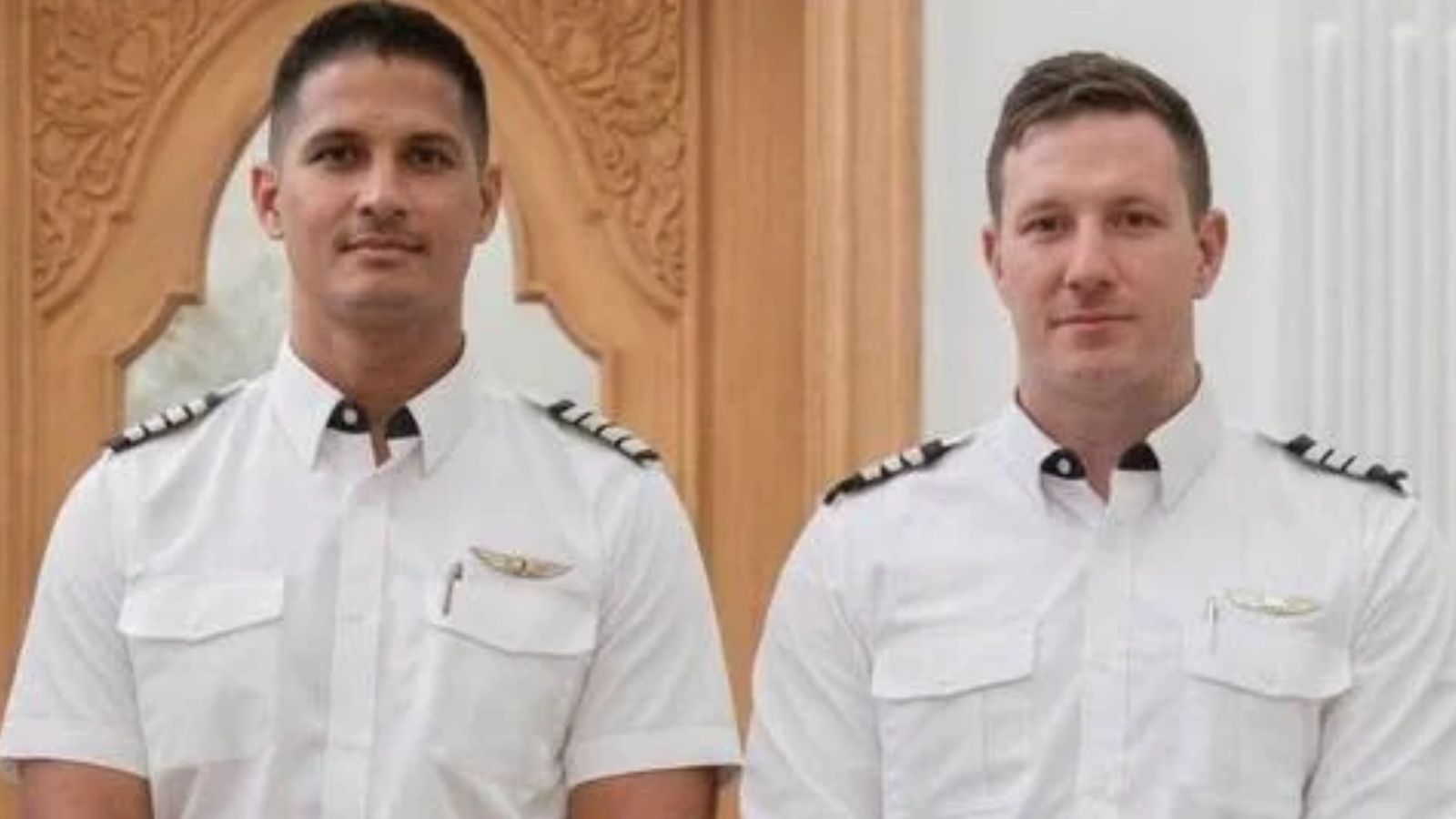
On a night flight bound from Dubai toward the Indian subcontinent, that unspoken bargain was shattered in seconds. When an Indian Flydubai captain was brutally attacked inside the cockpit, the crisis didn't end with the struggle. It migrated immediately into the hands of the man sitting in the adjacent seat—a pilot carrying not just the weight of over a hundred sleeping passengers, but the quiet, heavy inheritance of a father who once faced down fast bowlers on the world’s grandest cricket pitches.
To understand how a commercial airliner survives a violent mutiny in the skies, you have to strip away the sterile language of aviation incident reports and look at the raw human machinery required to keep a seventy-ton machine from falling out of the dark.
The Myth of the Invulnerable Cockpit
For more than two decades after September 11, 2001, global aviation operated under a singular, ironclad doctrine. Keep the bad guys out. Airlines spent billions retrofitting flight decks with ballistic Kevlar doors, deadbolts, and keypad entry systems. The logic was simple and absolute: if the perimeter holds, the plane is safe.
History, however, has a cruel habit of exposing blind spots.
Think of a modern cockpit not as a fortress, but as a submarine. Once the hatch dogs down at ten thousand feet, the crew is locked in an airtight ecosystem where survival depends entirely on mutual trust. In 2015, Germanwings Flight 9525 proved beyond a shadow of a doubt that hardening the door solves only half the equation; if the danger originates inside the glass, that same Kevlar barrier becomes a tomb. Regulators responded with the "two-person rule," mandating that two authorized crew members remain on the flight deck at all times.
Yet rules written in sterile conference rooms in Montreal or Brussels do not account for sudden, visceral human eruption.
I have spent years reporting on aviation safety and interviewing crews who have stared down catastrophic emergencies, and one truth surfaces every single time: training prepares you for mechanical failure, never for betrayal. You run simulator drills for dual-engine flameouts until your hands move on muscle memory alone. You practice rapid decompressions until reaching for the oxygen mask takes less than two seconds. Nobody puts you in a multi-million-dollar full-motion simulator and tells you to fend off a physical assault while maintaining altitude at Mach 0.78.
Consider what happens next when violence erupts at cruising altitude.
There is no room to back away. The flight deck of a Boeing 737 is notoriously cramped—an ergonomic puzzle of center pedestals, thrust levers, overhead circuit breakers, and control yokes. A sudden physical altercation in that space means elbows striking rudder pedals, bodies colliding with sensitive avionics, and the terrifying, immediate risk of disconnecting the autopilot at the worst possible moment.
When the Indian captain aboard the Flydubai jet was attacked, the immediate battle was purely physical—blood, shock, and the desperate instinct to protect the flight controls from inadvertent inputs. In those agonizing moments, the margin between a controlled trajectory and an unrecoverable spiral is measured in inches.
Inherited Composure Under Fire
Once the immediate struggle subsides, an even more dangerous phase begins. The adrenaline crash.
In aviation psychology, this is known as "startle and surprise." When a human brain experiences sudden trauma, blood rushes away from the prefrontal cortex—the region responsible for complex calculation, radio communication, and spatial orientation—and floods the primitive amygdala. Vision narrows into a tunnel. Fine motor skills vanish. Hands shake so violently that dialing a radio frequency or inputting a waypoint into the Flight Management Computer feels like trying to thread a needle during an earthquake.
This is where the second pilot in that cockpit stepped into the void.
Among the pilots who brought that wounded aircraft safely back to earth was the son of a late, renowned cricketer—a man whose name was once synonymous with grace under unbearable sporting pressure. To mention his lineage isn't cheap sentimentality; it is a window into how composure is forged long before an emergency ever happens.
Anyone who has ever watched Test cricket—or stood at the crease facing a leather ball hurtling down the pitch at ninety miles an hour—understands that the sport is less about athleticism than psychological endurance. A batter has less than half a second to read the seam, judge the bounce, and commit to a shot while eleven opponents crowd the bat, waiting for a single lapse in concentration. Panic gets you dismissed. Hesitation gets you hurt.
Picture a young boy growing up in a household shaped by that exact ethos. You absorb the unspoken lessons at the dinner table: Keep your head still. Watch the ball until the very last millisecond. Never let the crowd see you flinch.
Now transplant that conditioning into the right-hand seat of a commercial airliner in the middle of the night.
Inside that cockpit, the captain is injured and bleeding. The cabin crew behind the door is frantic, trying to process why an emergency is unfolding without a warning chime or a depressurization alarm. Air Traffic Control on the ground is demanding answers over static-laced VHF frequencies. And seventy tons of metal, fuel, and sleeping human beings are still hurtling through the dark at eight miles a minute.
You do not get to pause the simulation.
The Anatomy of an Emergency Descent
When a pilot assumes sole command of a compromised flight, the golden rule of aviation takes over: Aviate. Navigate. Communicate.
In that exact order. Never reversed.
First, you fly the airplane. That means gripping the yoke, verifying airspeed, checking the artificial horizon, and ensuring the wings stay level while chaos unfolds inches away. If you let the nose drop even five degrees while trying to talk on the radio, airspeed builds rapidly, threatening structural limits.
Second, you navigate. Where is the nearest suitable runway? Not just any strip of asphalt, but an airport with emergency medical services standing by, adequate runway length for an overweight landing, and favorable winds. You have to calculate fuel burn, weigh whether to dump fuel or burn it off in a holding pattern, and reprogram the arrival route into the flight computer—all while running single-pilot checklists that are explicitly designed to be shared by two sets of eyes and two pairs of hands.
Imagine trying to perform open-heart surgery while simultaneously driving an ambulance through rush-hour traffic at a hundred miles an hour. That is the cognitive load of single-pilot emergency operations in a modern jetliner.
Third, and only when the aircraft is stabilized and pointed toward concrete, do you communicate. Declaring a Mayday or Pan-Pan over international airspace triggers a massive, invisible choreography on the ground. Controllers clear adjacent traffic corridors, vectoring other airliners miles away to give the stricken flight an unobstructed path. Fire trucks roll out of stations along the perimeter fence, their amber beacons flashing against the tarmac long before the landing gear even touches down.
Throughout this entire sequence, the pilot at the controls must keep his voice steady. If panic leaks into his transmission, it infects the controller, the cabin crew, and eventually the passengers. Calmness in aviation is not a personality trait; it is a life-saving instrument.
The Invisible Scars of the Skies
When the wheels finally kissed the runway and the thrust reversers roared to bring the Flydubai jet to a halt, the headlines wrote themselves. A dramatic attack. A brave Indian captain. A cricketer’s son helping steer the plane to safety.
We love clean, heroic narratives because they allow us to close the browser tab and book our next vacation without losing sleep. Yet beneath the surface of this incident lies a deeply uncomfortable reality that the global aviation industry still struggles to confront honestly.
We have built the safest mode of transportation in human history by treating machines as fallible and engineering redundancies for every bolt, wire, and sensor. A modern airliner has triple-redundant hydraulic systems, backup inertial reference units, and ram air turbines that drop out of the belly to generate emergency power if every engine fails.
Yet we still treat the human mind inside the cockpit as an infinite, self-healing resource.
The post-pandemic aviation boom has stretched flight crews thinner than ever before. Rapid fleet expansions across the Middle East and South Asia, grueling circadian-rhythm flips—flying west at midnight, east at dawn—and the silent stigma surrounding mental health in aviation have created an invisible pressure cooker. In almost every aviation jurisdiction on earth, a pilot who admits to severe anxiety, burnout, or depression risks immediate grounding, loss of income, and a bureaucratic nightmare to regain a medical certificate.
So pilots stay silent. They swallow the exhaustion. They carry personal trauma, financial stress, and sleep deprivation up the jet bridge and into the flight deck, wearing crisp white shirts with gold stripes that project absolute invincibility.
I have spoken to veteran captains who confess they lie on their annual medical questionnaires—not because they are reckless, but because the system punishes honesty far more harshly than suppression. When an industry builds walls so high that vulnerable human beings feel trapped inside their uniforms, rare, catastrophic fractures become inevitable.
What Survives When Everything Breaks
Still, when the worst happened high above the water, the system held—not because of a software patch or a reinforced door, but because of the caliber of the human beings sitting in those seats.
Think about the passengers in rows 14 through 30. Most of them likely had no idea that violence had erupted just feet ahead of the forward galley. Some were probably watching movies on seatback screens, annoyed by a slight delay or an unexpected turn in the flight path. Others were asleep, their heads resting against cold plastic window shades, dreaming of homecomings, business meetings, or family weddings.
They stepped down the airstairs onto solid ground, collected their luggage, and walked out into the humid night air entirely unaware of how close their lives had come to unraveling.
In the quiet aftermath, after the police reports are filed and the aviation authorities launch their formal inquiries, one image refuses to fade. It isn't the flashing red lights of the emergency vehicles on the apron, or the official statements issued by airline spokespeople.
It is the picture of a son sitting in a darkened cockpit, his captain wounded beside him, holding seventy tons of roaring metal steady against the night—proving that the finest legacy a father can leave behind isn't a record in a dusty almanac, but the quiet, unbreakable nerve to hold the line when the sky begins to fall.