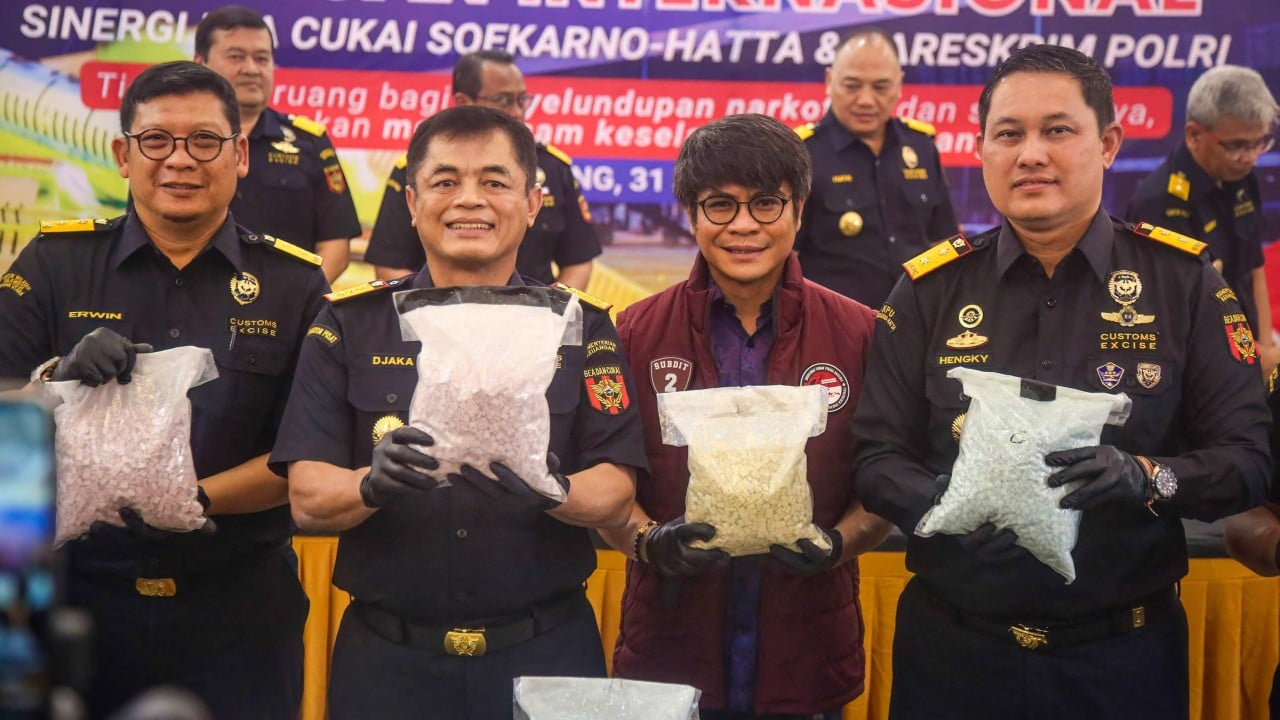
When a 39-year-old second officer for Malaysia Airlines landed at Jakarta's Soekarno-Hatta International Airport carrying twenty-six kilograms of MDMA, he did not just break international narcotics laws. He exposed the fragile underbelly of global aviation security infrastructure. The arrest, which revealed the pilot was actively under the influence of both cocaine and methamphetamines, triggered an immediate corporate scramble. Malaysia Aviation Group (MAG) responded by ordering mandatory drug screenings for all 1,260 of its pilots, threatening immediate grounding for anyone failing to meet an August 15 deadline.
Yet focusing solely on corporate drug testing protocols misses the structural failure that allowed twenty-five kilograms of ecstasy pills to slip past airport authorities in the first place. How an active aviator managed to pass through four stringent security checkpoints at Kuala Lumpur International Airport (KLIA) without his luggage being flagged points to systemic vulnerabilities. Security privileges built on trust are breaking down under the weight of transnational smuggling syndicates. Read more on a connected topic: this related article.
The Privilege of the Uniform
Aviation security operates on a paradox. Airports spend billions screening passengers down to their shoe laces while affording flight crews expedited lanes based on professional credentials. Crew members walk through dedicated staff channels where baggage inspections rely heavily on random checks or profiling risk indicators rather than exhaustive secondary searches.
Syndicates know this. They exploit the inherent blind spots of institutional trust. Additional journalism by NPR delves into comparable perspectives on the subject.
When investigators in Malaysia later identified an airport security employee of interest, it became clear that the breach was not merely an individual failure of judgment by a rogue aviator. It was a breakdown in cross-agency coordination. Crew luggage tags carry a distinct weight, signaling to ground staff that a bag belongs to someone vetted, cleared, and authorized to sit on the flight deck. That credential, designed to ensure efficient global transit, was repurposed as a smuggling vector.
The detained second officer was not even operating the aircraft on the flight into Jakarta; he was traveling in the cockpit jump seat as an observer, off-duty for days prior. This detail transforms the narrative from an immediate mid-air safety crisis into something more insidious. It highlights an individual embedded deeply enough within a criminal network to treat an international commercial flight as a courier run.
Behind the Corporate Mandate
MAG’s swift announcement of mandatory testing for all pilots, followed by planned expansions to cabin crews, is a necessary crisis-management response. Public confidence in commercial aviation requires absolute certainty that the flight deck is clear of chemical impairment. Urine screenings covering over a thousand pilots in less than two weeks demand an intense administrative effort.
However, mandatory drug tests catch chemical presence after the fact. They do not prevent a compromised employee from walking past an X-ray machine with contraband.
The psychological profile of modern aviation professionals is shifting under economic and social pressures. Long-haul fatigue, irregular schedules, and financial vulnerabilities create fertile ground for external criminal networks seeking clean conduits across borders. When syndicates offer tens of thousands of ringgit for a single courier trip, the temptation targets the exact cracks where institutional oversight wears thin.
Redesigning Border Controls
Border control agencies and airport operators are now forced to re-evaluate whether internal security lanes require a complete overhaul. Discussions within the Malaysian transport sector point toward a harsh realization. Narcotics and smuggled contraband must be prioritized alongside traditional threats like explosives and firearms during outbound staff screenings.
Treating crew baggage as inherently low-risk is a policy luxury the industry can no longer afford.
If security protocols are tightened to subject pilot and cabin crew luggage to the same rigorous secondary profiling applied to high-risk commercial cargo, operational turnaround times will suffer. Queues will lengthen. Friction will increase. Yet the alternative is an erosion of international trust that takes decades to rebuild.
The fallout from the Jakarta arrest extends far beyond the corporate boardrooms of Malaysia Airlines. It serves as a sharp wake-up call for global carriers who rely on legacy security assumptions. Uniforms and ID lanyards remain powerful symbols of authority, but in an era of sophisticated transnational cartels, symbols are no longer enough to protect the skies.