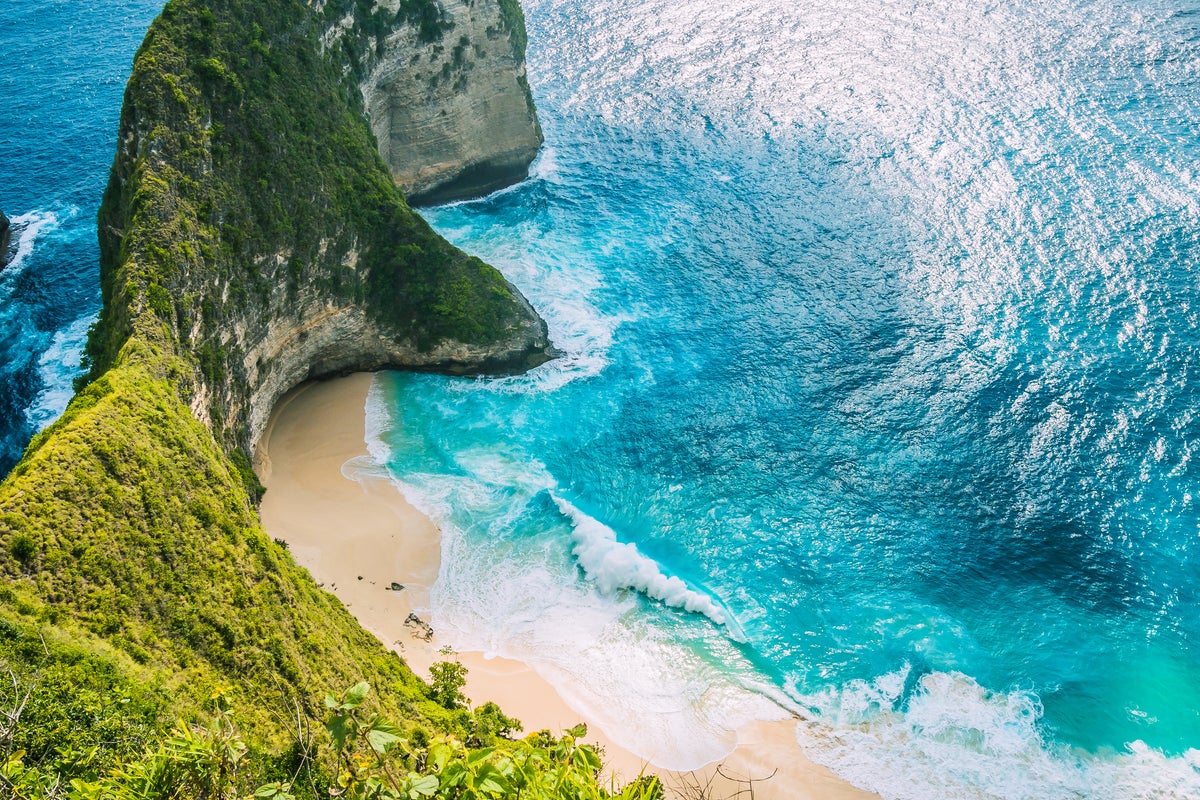
Every time a foreigner tumbles off a precipice in Southeast Asia, the media machine whirs into predictable motion. Headlines scream about dangerous tourist hotspots, lax local infrastructure, and the reckless abandon of youth drawn to the tropics. Condolences pour in. Safety advocates demand guardrails, warning signs, and heavy-handed government intervention. When a young Australian ecologist recently plummeted to her demise from a popular cliff on an island near Bali, the narrative followed the exact same exhausted script.
Let us stop right there and dismantle the lazy consensus.
The tragedy of an avoidable death is real. The grief felt by family and friends is absolute. But pretending that this fatality was a systemic failure of tourism management or a lack of hazard warnings is intellectually dishonest. Grown adults do not need neon signs to tell them that standing on the edge of an unprotected, sheer vertical drop above churning ocean water is a bad idea. We have sanitized the planet to such a degree that people have forgotten basic physics and common sense.
I have spent decades navigating remote regions, high-risk terrain, and chaotic frontier destinations. I have watched tourists climb over waist-high barriers, bypass clearly marked warning signs, and ignore verbal commands from local guides all for the sake of a better smartphone photograph. The problem is not a lack of safety infrastructure. The problem is an epidemic of willful blindness bred by a culture that treats nature like a theme park ride with soft padding at the bottom.
The Illusion of Protected Wilderness
We cling to the comforting myth that if a place is popular, crowded, or heavily touristed, it must inherently be safe. This is a fatal misconception. A destination does not transform into a controlled indoor environment just because thousands of people visit it every year. Gravity does not suspend its laws for Instagram influencers or field ecologists.
When an accident happens, the immediate demand is always for more bureaucracy. Local authorities are pressured to erect fences, hire park rangers, and plaster every scenic overlook with liability disclaimers. But physical barriers change human behavior in perverse ways. Psychologists call it risk compensation. When you make an environment look safer with handrails and warning tape, people dial up their risk-taking behavior to compensate. They step closer to the edge. They lean out further. They assume the barrier is proof against their own poor choices.
Take the specific geography of these cliffside attractions near Bali. These are rugged limestone formations battered by relentless ocean swells. Erosion is constant. Edges are unstable. That is the literal definition of the natural world. If you want pristine safety, stay inside a concrete box. If you venture onto a cliff edge for a panoramic view, you accept sole custody of your own physical safety. Passing the buck to local tourism boards is a cop-out that infantalizes adults.
The Real Crisis Is Performative Risk
We need to talk about the psychological engine driving these incidents. Nobody travels halfway across the world to stand quietly ten feet back from a precipice and look at the view with their own eyes. They do it to capture proof of their daring. The pressure to produce visually arresting content for digital validation has warped risk assessment.
Consider a scenario where a cliffside viewpoint has zero safety barriers versus one fortified with reinforced steel railings and warning guards. Statistically, the sheer, unmarked cliff often sees fewer catastrophic accidents because the explicit danger triggers a primal, healthy sense of caution in the human brain. The moment you sanitize that same cliff with a waist-high fence, you invite tourists to treat it like a balcony, encouraging leaning, sitting on ledges, and turning backs to the drop for portrait mode.
The victim in this recent case was an ecologist. People find irony in that, assuming someone trained in environmental sciences should possess an innate radar for natural hazards. That assumption misunderstands modern specialization. Knowing the migratory patterns of marine life or the soil composition of a rainforest does not grant you telepathic insight into eroding limestone crusts or rogue wave dynamics. Field science is messy, and academic credentials do not inoculate anyone against hubris or simple missteps.
Dismantling the Safety Industrial Complex
The knee-jerk reaction from foreign governments and insurance lobbies is always to call for international safety standards across developing nations. This is economic imperialism masquerading as altruism. You cannot blanket-code a volcanic archipelago with European regulatory frameworks. More importantly, trying to bulletproof every scenic viewpoint destroys the very raw, untamed beauty that travelers journey thousands of miles to experience in the first place.
If we pave every cliff, cage every viewpoint in chain-link fencing, and station a guard at every natural wonder, we end up with a sterile, homogenized travel ecosystem that protects people from themselves while robbing travel of its soul.
Accepting personal responsibility means admitting that sometimes, tragedies occur because humans make poor calculations in high-stakes environments. No amount of signage, legislation, or hand-wringing will legislate away individual misjudgment.
Stop demanding that the world wrap itself in bubble wrap to accommodate a generation raised on screens and detached from physical consequence. Respect the raw edges of the earth, or stay away from them.


