Every time an outbreak hits the headlines, the predictable chorus begins. The international response was too slow. Bureaucrats moved too late. Planes were grounded, funds were locked in committee rooms, and the global health machinery failed to react with the required speed.
It is the standard narrative written by journalists who have never coordinated a ring vaccination in a remote rainforest and repeated by organizations whose entire operational model depends on panicking donors into writing bigger checks.
The lazy consensus says that if Geneva had moved faster, the crisis would have been averted.
That is entirely backwards.
The core failure during major Ebola flare-ups is not that the international response takes too long to arrive. The failure is that we rely on an international response in the first place. When you treat a localized hemorrhagic fever like an international military deployment, you guarantee failure. You create a logistical behemoth that moves at the speed of diplomacy while the virus moves at the speed of human contact.
I have watched public health millions get swallowed by bureaucratic inertia, cargo planes sitting on tarmacs waiting for customs clearances that take weeks, and central planners sitting thousands of miles away designing strategies that completely ignore local social structures.
Stop asking how to make the global machinery move faster. The machine is the problem.
The Myth of the Centralized Cavalry
Let us look at the mechanics of how global health emergencies are traditionally managed. A pathogen jumps the species barrier in a rural district. Weeks pass before local clinics identify the anomaly. More weeks pass while samples travel to national capitals. Months pass before international bodies declare a public health emergency of international concern.
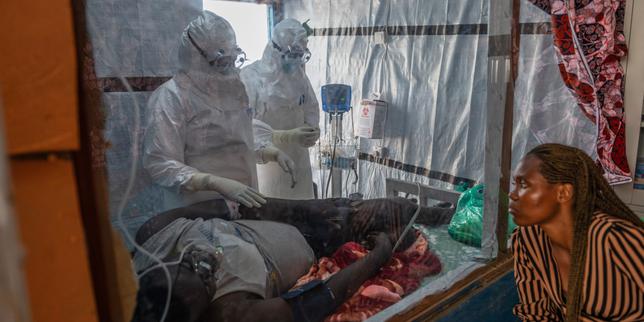
By the time the global cavalry arrives with its prefabricated treatment centers and high-tech containment gear, the epidemiological reality has already shifted.
The fatal flaw in the internationalist model is the assumption that top-down directives can outpace grassroots transmission. Pathogens do not care about multi-lateral coordination meetings. They spread through touch, grief, and community ritual.
When you parachute foreign experts into a region with zero cultural integration, you trigger immediate panic. People hide their sick relatives. They flee contact tracers. They attack burial teams because the foreign protocols violate every custom they hold sacred regarding the dead.
Speed from the outside is useless if the inside rejects you.
What Actually Stops the Spread
Look at the outbreaks that burned out quickly versus the ones that spiraled out of control. The difference was never the speed at which a UN agency deployed personnel. The difference was indigenous trust and localized adaptability.
During the tenth Equateur outbreak in the Democratic Republic of Congo, traditional containment metrics were failing. Local populations viewed the response teams as hostile occupiers. The turning point did not come from a massive influx of international aid. It came when authorities radically decentralized the response. They handed power, resources, and communication channels directly to local leaders, traditional healers, and youth groups.
Communities do not need a foreign NGO to tell them how to wash their hands or isolate the sick. They need the tools, the autonomy, and the respect to do it themselves.
When you centralize a crisis, you bottleneck information. When you decentralize, you create thousands of micro-responses operating simultaneously. A virus cannot outmaneuver a population that is policing itself.
The Perverse Incentives of the Emergency Industry
Why do we keep pretending that sluggish international bureaucracy is the main bottleneck? Because pointing the finger at institutional sluggishness protects the existence of the institutions.
If the problem is simply that the World Health Organization or national governments need better logistics, then the solution is obvious: give them more money, more authority, and more staff. It is a self-serving diagnosis that results in bloated budgets and recurring structural failures.
Imagine a scenario where global health funding is entirely stripped from centralized emergency pools and instead distributed directly into micro-grants for rural health districts years before an outbreak occurs. No grand announcements. No emergency summits. Just boring, unglamorous investments in baseline water sanitation, local refrigeration, and community health worker salaries.
The emergency industry hates this approach because you cannot hold a glossy press conference for a well-funded local clinic that quietly prevents an outbreak from ever leaving a village. They need the dramatic crisis. They need the slow response narrative because it justifies the next big fundraising cycle.
Reengineering Public Health Around Reality
If we want to stop treating recurring epidemics like perpetual surprises, we have to abandon the colonial mindset of global health intervention.
First, stop measuring response readiness by the number of cargo planes dispatched from Geneva or Washington. Measure it by the density of trained local health workers embedded in communities who can isolate a case within twenty-four hours of symptom onset without waiting for permission from a capital city.
Second, accept that external intervention should only ever act as a logistics backstop, never as the operational brain. The moment foreign actors take over the narrative on the ground, local ownership evaporates, and resistance spikes.
The international response was never taken by surprise. It was built to operate this way. Until we dismantle the myth that salvation arrives on a UN flight, we will keep fighting tomorrow's outbreaks with yesterday's failed architecture.
The cavalry is not coming to save you. Build your own fence.