Every time bodies stack up in Nigeria's Plateau State, the international press reaches for the same tired script. They call it a farmer-herder clash. They call it a religious war between Muslim pastoralists and Christian farmers. They print the casualty count, nod sagely at centuries-old ethnic hatreds, and move on to the next crisis.
It is neat. It is digestible. And it is fundamentally, dangerously wrong.
I have spent years tracking supply chains, land registries, and mineral exploitation rights across the Middle Belt. When you strip away the comforting fiction of primordial religious warfare, you find a very different machine operating in the shadows. You find a resource grab, a structural collapse of local governance, and an institutional vacuum that actors of every ethnic and religious stripe exploit with absolute impunity.
Stop reducing mass murder to a Sunday school argument. The real engine driving the bloodletting in Plateau State has nothing to do with God and everything to do with soil, steel, and state failure.
The Lazy Consensus Must Die
The standard media narrative relies on a static view of human behavior. It assumes that Hausa-Fulani herders and Berom farmers wake up every morning desperate to kill each other because their great-grandparents did.
This ignores basic economic reality. Climate change, shifting rainfall patterns, and the rapid expansion of the Sahara have squeezed the Sahel. Traditional grazing routes mapped out decades ago are now blocked by tarmac, real estate developments, and intensive farming. Herders are not moving south out of malice; they are moving south because the north is turning into dust. At the same time, farmers are digging trenches and expanding cultivation plots to protect shrinking arable land, effectively fencing off the cattle corridors.
When you trap two populations in a zero-sum game over dirt and water, violence is not an anomaly. It is a mathematical certainty. Yet, mainstream reports treat these structural pressures as mere backdrop, focusing instead on the theological dressing of the combatants.
Follow the Water and the Mineral Veins
If you want to understand why a specific village in Mangu or Bokkos gets torched tonight, stop looking at religious texts and start looking at land titles.
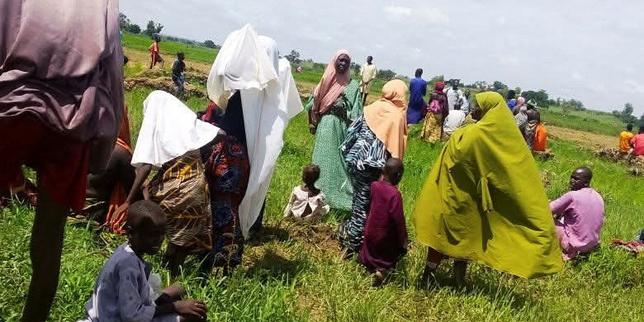
Plateau State is a misnomer for a geopolitical flashpoint sitting atop rich deposits of tin, columbite, and gold, alongside some of the most fertile agricultural soil in West Africa. When an entire community is displaced from a strategic corridor, someone else moves in. Often, those who return or take over are backed by powerful political and commercial interests operating out of Abuja or Jos, operating through proxy militias.
I have seen local administrators look the other way while land grabs occur under the cover of night-time raids. These attacks are organized. They utilize coordinated communications, modern weaponry, and logistics that simple, impoverished herdsmen cannot afford on their own. Someone is funding the logistics. Someone is profiting from the displacement.
When you frame this as a community clash, you let the architects of these land acquisitions off the hook. You turn a corporate and criminal enterprise into a tragic, unstoppable cultural clash.
The Failure of the Security Monopoly
No discussion of Plateau State holds any water without confronting the complete abdication of duty by the Nigerian security apparatus.
A functioning state possesses a monopoly on the legitimate use of force. Nigeria lost that monopoly in the Middle Belt years ago. Security forces arrive hours after a massacre concludes, count the dead, issue condolences, and retreat to fortified barracks. Response times are measured in days, not minutes.
This creates an environment of total impunity. When the state fails to protect citizens, communities realize they are on their own. They form vigilante groups. Those vigilantes quickly morph into death squads. What starts as a defensive measure turns into preemptive slaughter.
Imagine a scenario where your local police station is forty miles away, underfunded, corrupt, and structurally incapable of deploying fuel for their patrol trucks. If your neighbor's village was burned down last week, and you know the authorities will do nothing, your logical incentive is to strike first. The escalation ladder is built by state absence.
The Dangerous Myth of Simple Solutions
Politicians love to call for peace summits. They fly in, shake hands, sign meaningless communiques, and pose for photographs while sipping bottled water in air-conditioned hotels in Jos.
These summits are theater. They address the symptoms while ignoring the infection. You cannot talk away the degradation of grazing reserves with a handshake. You cannot legislate away the proliferation of illicit small arms flooding across porous borders from the Sahel.
Fixing Plateau State requires dismantling the current incentive structure of land ownership and local governance. It requires clear, enforceable land-use policies that protect both nomadic pastoralism and settled agriculture through modern ranching infrastructure and demarcated stock routes. It requires prosecuting the financiers and corrupt officials who weaponize ethnic militias for economic gain, regardless of their political connections.
Until the Nigerian state stops treating these massacres as natural disasters or religious inevitabilities, and starts treating them as organized crimes fueled by systemic corruption and ecological stress, the body count will continue to climb.
Stop buying the narrative. The blood on the plateau is paid for in land, power, and profit.