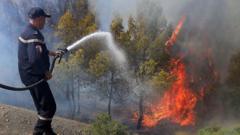
Every single summer, the headline drops with mechanical predictability. A tragic death toll, weeping relatives, scorched hillsides, and a uniform chorus from international media outlets pointing an accusing finger at global carbon emissions. The lazy consensus writes itself. Algeria burns, people die, and commentators nod sagely while blaming the thermometer.
It is a neat narrative. It is also dangerously incomplete.
When a dozen or more people perish in northern Algeria during seasonal blazes, the standard wire reports treat the disaster as an act of divine, meteorological wrath. They point to dry brush, rising temperatures, and shifting wind patterns. What they routinely omit is the decades-long institutional failure of forest management, the catastrophic abandonment of rural economies, and a bureaucratic state apparatus that treats wildfire prevention as an afterthought rather than an emergency protocol.
I have walked through these scorched Mediterranean scrublands. I have spoken with local agricultural engineers who have spent years screaming into the void while state funding for controlled burns and access infrastructure vanished into bureaucratic black holes. Blaming weather alone lets every single incompetent policymaker off the hook.
The Myth of the Unstoppable Natural Disaster
Let us clear up the terminology immediately. These events are routinely called natural disasters. That label is a lie.
A natural hazard is a weather event. A disaster is the intersection of that hazard with human vulnerability and administrative failure. When you strip rural populations of their economic viability, drive young workers into urban centers, and leave ancient cork oak forests choked with undergrowth, you are not victims of climate. You are victims of neglect.
For generations, rural communities in northern regions like Tizi Ouzou and Béjaïa managed these ecosystems through grazing, small-scale agriculture, and traditional brush clearing. That delicate human-nature feedback loop kept fuel loads manageable. When governments centralize control, outlaw traditional land management practices under the guise of conservation, and fail to replace those practices with professionalized state intervention, the forests transform into tinderboxes.
Imagine a scenario where a match is thrown into an empty warehouse filled with old dry paper versus a clean, monitored facility. The match is the same. The outcome is entirely determined by how the space was maintained before the spark arrived.
Focusing exclusively on temperature spikes ignores the mechanics of fire propagation. Fire does not care how hot it is if there is no continuous fuel ladder to carry flames from the ground into the canopy. By ignoring fuel management and focusing entirely on global macro-trends, mainstream reports ensure that next year's fires will be just as destructive.
Why the State Apparatus Fails the Ground Game
The structural rot goes deeper than missed brush clearances. Emergency response frameworks in the region suffer from a top-down command structure that stifles local initiative.
When a blaze breaks out in the rugged terrain of the Kabylie mountains, every minute counts. Yet, local civil protection units often find themselves bottlenecked by centralized procurement delays, aging aerial firefighting fleets, and poor coordination between municipal authorities and national forestry bodies.
I have seen regional firefighting budgets slashed while prestige projects receive uninterrupted funding. Experts in disaster risk reduction know this pattern well. Governments love ribbon-cutting ceremonies for new infrastructure, but nobody wins votes by funding a boring, unglamorous network of firebreaks and water cisterns tucked away in a mountain pass.
The media accepts these systemic failures because reporting on atmospheric conditions requires zero investigative effort. Digging into procurement records, municipal staffing shortages, and land-use policies requires actual work.
The Dangerous Downside of the Climate Monoculture
Pinning every crisis on a single global variable creates a dangerous form of fatalism. If northern Algeria is burning solely because the planet is warming, then local authorities have zero agency. They become helpless bystanders waiting for international climate treaties to take effect decades from now.
This fatalism kills. It tells villagers that preparation is futile. It tells governments that investment in local infrastructure is a waste of money because the weather will always win.
The truth is much more empowering, even if it is uncomfortable for the political class. Fires can be mitigated. Ignition sources can be managed. Fuel loads can be reduced through aggressive, targeted clearing and the revival of pastoral grazing rights.
Look at successful mediterranean forestry models in parts of Southern Europe that faced similar crises decades ago. They stopped waiting for the weather to change and started changing how they managed the landscape. They empowered local municipalities. They invested in decentralized rapid-response teams. They recognized that a forest is not a museum piece to be left untouched; it is a dynamic ecosystem that requires active, intelligent stewardship.
The Accountability Vacuum
When twelve or more lives are snuffed out in a matter of hours, demanding structural accountability should be the baseline of journalism. Instead, we get emotional retrospectives and recycled statistics about carbon parts per million.
The people who lost their lives in the mountains of northern Algeria did not die because of a statistical shift in global climate models. They died because escape routes were blocked by overgrown brush, because early warning systems failed, and because the institutional guardians of their land prioritized optics over operations.
Stop accepting the weather excuse. Demand better management, localized emergency readiness, and an end to the administrative complacency that turns seasonal heat into national tragedy.
Stop reading the obituaries and start auditing the agencies responsible for the fuel load.