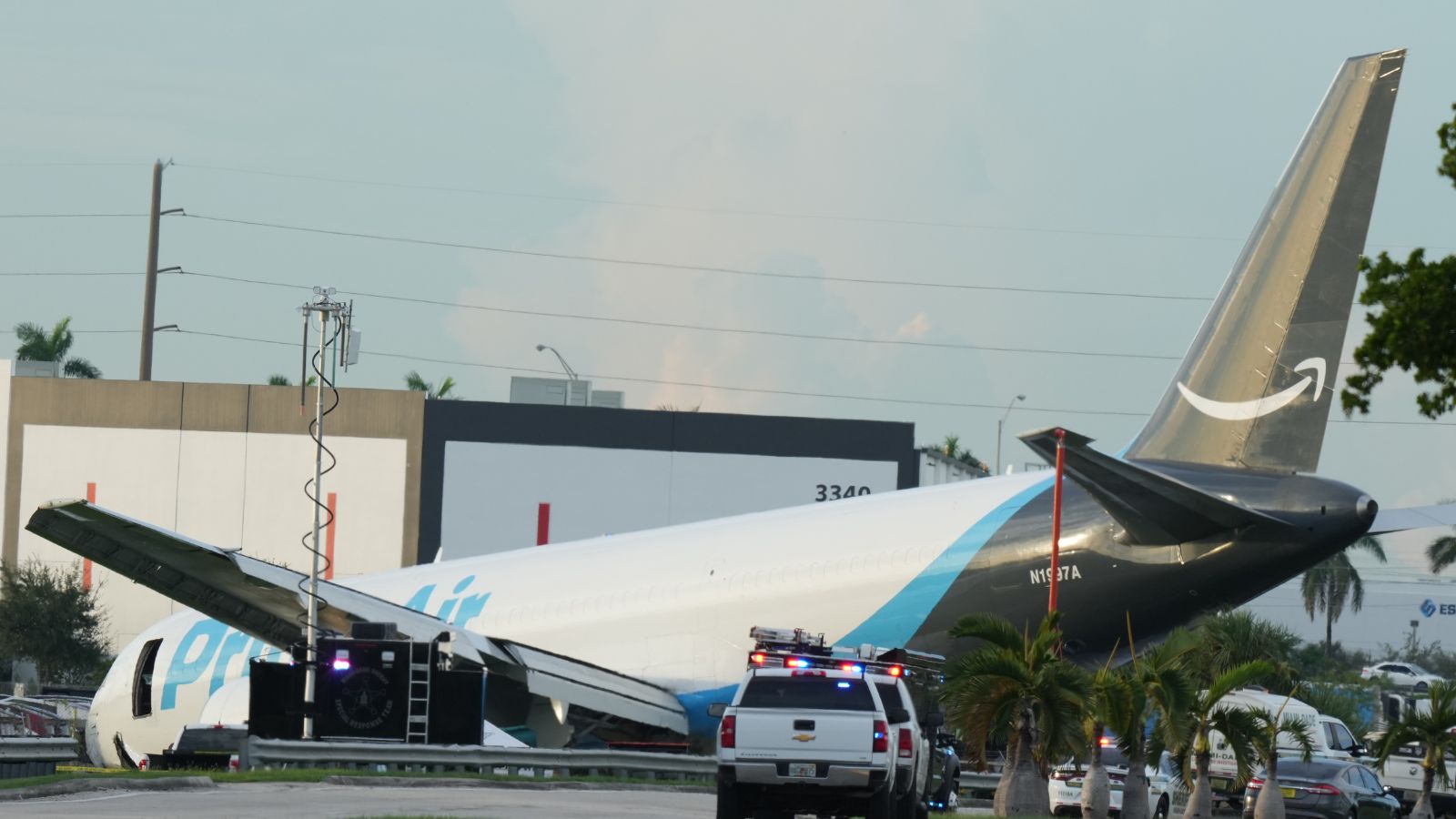
The aviation commentariat loves a simple villain. When an Amazon Air Boeing 767 freighter operated by Atlas Air suffered a catastrophic engine failure shortly after takeoff from Miami International Airport, the headlines wrote themselves. The media immediately dragged the aging airframe into the spotlight. Critics blamed vintage manufacturing, decades-old designs, and the perceived rust of an older generation of widebody jets. It is lazy, predictable, and entirely wrong.
I have spent decades watching aviation safety boards chase shadows while ignoring the invisible mechanics keeping the global supply chain duct-taped together. The obsession with the calendar age of an aluminum tube obscures the true operational pressures fracturing modern cargo logistics. Blaming a 767 for a sudden mechanical failure is like blaming a pickup truck for blowing a tire when it was overloaded and driven over debris at highway speeds. For a more detailed analysis into similar topics, we suggest: this related article.
Let us dismantle the prevailing narrative.
The Fallacy of Aircraft Chronology
Every time an older airframe experiences an anomaly, armchair analysts dust off arguments about retirement dates and structural fatigue. This reflects a fundamental misunderstanding of how commercial aviation works. An airplane is not a carton of milk with a hard expiration date. It is a modular system of replaceable parts, maintenance checks, and structural overhauls. For further details on the matter, in-depth analysis is available on CNET.
A Boeing 767 freighter operating today is structurally and electronically distinct from the version that rolled off the assembly line in the 1980s or 1990s. Heavy maintenance cycles strip these aircraft down to their bare frames. Avionics are upgraded, wiring bundles are replaced, and engines undergo complete tear-downs.
The lazy consensus claims that newer planes equal safer planes. History repeatedly punches holes in that theory. Design flaws in brand-new flight control software or composite manufacturing defects often cause more headaches than mature, thoroughly understood airframes that mechanics have spent forty years learning how to fix blindfolded.
The Miami incident involved an engine anomaly—specifically, a failure within the General Electric CF6 powerplant family. Focusing on the fuselage registry number while ignoring the hyper-accelerated operational tempo of e-commerce cargo networks is a category error of the highest order.
The Amazon Effect and the Maintenance Crunch
To understand what happened in the skies over Miami, you have to look at who was paying the bill and what schedule that aircraft was keeping. Amazon Air disrupted global logistics by demanding overnight delivery speeds that mirror passenger airline networks, but with a crucial difference: freight does not complain, and cargo hubs operate on relentless, punishing clocks.
Imagine a scenario where a regional sorting facility faces a backlog of half a million packages. Every minute an aircraft sits on the ramp for preventative maintenance, supply chain velocity drops.
Contract carriers like Atlas Air operate under immense economic pressure to maximize utilization rates. While commercial airlines balance their schedules to allow for scheduled down-time at major maintenance hubs, the cargo sector often pushes aircraft to the ragged edge of their regulatory inspection intervals.
This is where the real vulnerability lies. It is not about a metal fatigue crack on a wing spar; it is about the margin for error shrinking as turnaround times compress. When you demand 24/7 utilization from high-bypass turbofan engines, you accelerate wear on high-stress components like turbine blades and fuel manifolds.
Dissecting the CF6 Powerplant Reality
Let us talk about the engine. The General Electric CF6 is one of the most reliable, thoroughly engineered powerplants in aviation history. It has logged tens of millions of flight hours across the 747, 767, and A300 fleets. It is a workhorse.
When a mature engine like the CF6 experiences a catastrophic uncontained failure or sudden shutdown, investigators do not immediately cry obsolescence. They look at three specific vectors:
- Supply Chain Parts Integrity: The aftermarket parts industry for vintage engines has faced severe scrutiny over counterfeit or out-of-spec PMA (Parts Manufacturer Approval) components finding their way into overhauls.
- Inspection Sign-Offs: The human element in maintenance hangars. Are mechanics stretched too thin by contractor staffing shortages?
- Operational Over-Temping: The cumulative thermal fatigue caused by rapid takeoff thrust applications under heavy payload conditions.
None of these factors have anything to do with the age of the Boeing 767 wing the engine was bolted to. They have everything to do with industrial economics, supply chain shortcuts, and the relentless demand for speed.
The Dangerous Myth of Predictive Perfection
People look at modern aviation and assume every engine failure can be predicted by an algorithm. Data analytics, condition monitoring, and digital twins are supposed to catch every micro-fracture before it propagates.
That is a comforting fairy tale. I have seen companies blow millions on predictive maintenance software that generates endless noise while missing the physical realities of metal exposed to thousands of pounds of thrust and temperature extremes. Sensors lie, algorithms get miscalibrated, and physical wear often outpaces digital monitoring capabilities.
When an engine lets go mid-flight, the flight crew relies on procedural discipline and raw muscle memory, not software dashboards. In the Miami case, the flight deck crew executed their emergency procedures precisely as trained. The plane landed safely. Nobody died. No cargo handlers were injured on the ground.
By every metric of aviation safety, the system worked. The redundant engine kept the aircraft flying, the crew managed the emergency checklist, and the safety net held. Yet, the public post-mortem focused on the age of the plane rather than celebrating the fact that dual-engine redundancy successfully managed a worst-case scenario.
What the Industry Refuses to Admit
The uncomfortable truth is that the logistics boom has outpaced the institutional knowledge of the workforce maintaining these legacy fleets. As veteran mechanics retire in droves, the institutional memory of how to wrench on older powerplants is evaporating.
We are replacing experienced hands with digital checklists and young technicians who have spent more time on tablets than under cowlings. When you combine older, high-hour engines with compressed maintenance windows and a less experienced mechanical workforce, you do not get an unsafe airplane—you get a system that requires hyper-vigilance, not scapegoating.
Stop worrying about the vintage of the aluminum. Start asking questions about the shop-floor conditions in contract maintenance facilities and the turnaround times demanded by logistics monopolies.
The next time a cargo jet blows an engine, do not look at the calendar. Look at the clock.