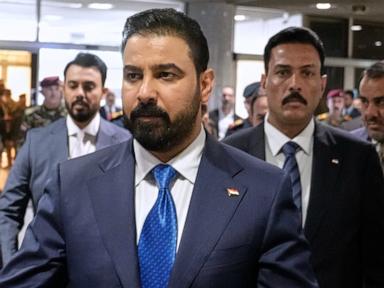
He does not look like a man who spent his career dodging car bombs or building backroom political coalitions. At just forty-one, Ali al-Zaidi possesses the clean-shaven, tailored sharpness of a Gulf executive. He has a degree in finance, a hypermarket empire, and a sprawling conglomerate that deals in everything from livestock to electronics.
Yet, today, he sits in the most dangerous office in the Middle East.
To understand how a civilian billionaire became the Prime Minister of Iraq, you have to understand the sheer exhaustion of a nation. For decades, Iraq’s leadership has been a carousel of the same tired faces: sectarian block leaders, exiled ideologues, and militia commanders. The country was stuck. Then, a sudden, hard block occurred.
The dominant parliamentary coalition in Baghdad, heavily backed by Iran, wanted to install Nouri al-Maliki—a veteran politician deeply hostile to American interests. From Washington, Donald Trump sent a characteristically blunt warning: appoint Maliki, and the United States walks. No more aid. No more security umbrella. Zero chance of success.
Faced with a sudden, existential cutoff, Iraq's warring factions did something they had never done before. They looked outside their circle. They chose a businessman.
Now, al-Zaidi is traveling to Washington for a high-stakes meeting at the White House. It is an encounter between two men who believe they can run a country like a corporation. But the balance al-Zaidi has to strike is so delicate that a single misstep could plunge his country back into civil war.
The Hostage and the Highway
Consider a hypothetical merchant in Baghdad. Let’s call him Samir.
Samir runs a small appliance shop on the outskirts of the city. He pays his taxes to the state. But every Tuesday, a young man with an assault rifle slung over his shoulder walks into his shop and demands "protection money." This young man does not represent the Iraqi police. He belongs to one of the dozens of heavily armed, Iran-backed militias that operate entirely outside state control.
If Samir refuses to pay, his shop burns. If the police intervene, the police officer’s family is threatened.
This is the invisible reality of Iraq. The state has a flag, an army, and a seat at the United Nations. But it does not have a monopoly on violence.
For Washington, this is the ultimate red line. Trump has made it clear that continued American partnership depends entirely on al-Zaidi's willingness to disarm these militias.
But in Baghdad, those militias are not just fringe groups. They are political parties. They sit in parliament. They control ministries. They helped put al-Zaidi in office. If the new Prime Minister moves too aggressively against them, they will not quietly hand over their weapons. They will turn those weapons on his government.
It is a classic, brutal trap. Washington demands disarmament as the price of admission. Tehran, lurking just across the border, demands accommodation as the price of survival.
Playing the Mirror Card
How does a political novice navigate a trap that has broken seasoned diplomats?
You speak the language of the man across the desk.
Al-Zaidi's strategy for his White House meeting is simple: sell Iraq not as a charity case, but as an investment opportunity. He is bringing a massive delegation of Iraqi business leaders to Washington. He wants to talk about natural gas, infrastructure, and technology. He wants to offer American corporations lucrative contracts to rebuild a country starves for modernization.
In private conversations, Iraqi insiders have already begun referring to al-Zaidi as "the Trump of the Middle East." It is a calculated piece of flattery, but it also reflects a genuine shift in perspective. Al-Zaidi is betting that a transaction-focused American president will respond better to a pitch about mutual profit than a plea for democratic values.
But the shadow of the past is long.
In 2024, the United States pressured Iraq’s central bank to ban several local financial institutions from dealing in US dollars to prevent money laundering and capital flight to Iran. One of those banned institutions was Al-Janoob Islamic Bank.
The chairman of that bank? Ali al-Zaidi.
It is a detail that highlights the messy, compromising reality of doing business in Baghdad. In Iraq, you do not build a multibillion-dollar empire by staying entirely pure. You survive by navigating the gray spaces. Now, the man who once managed those gray spaces is tasked with bringing Iraq’s economy into the light.
The Crackdown in the Dark
To prove he means business before arriving in Washington, al-Zaidi has initiated a high-profile domestic purge.
Last month, elite Iraqi special forces swept into Baghdad's heavily fortified Green Zone. They bypassed the local police, ignored political phone calls, and arrested forty-seven high-ranking government officials on charges of corruption. Among those taken into custody was the country's deputy oil minister.
It was a stunning display of force. It sent a clear message to both the local political class and the watching Western observers: the businessman is willing to break the old rules of elite impunity.
But a theatrical anti-corruption raid is a world away from dismantling heavily armed paramilitaries. The real test will occur when the cameras are off, the White House handshake is over, and al-Zaidi returns to Baghdad.
He has promised a new chapter, a sovereign Iraq that refuses to be a battleground for foreign proxy wars. It is a beautiful vision. But in the Middle East, hope is a dangerous currency to trade in.
As the prime minister prepares to walk into the Oval Office, he carries the weight of a country that has forgotten what peace feels like. He is betting his career, and his country's future, on the belief that everything—even peace—has a price.
But some debts cannot be settled with a check.