Concrete does not care about ambition. It only cares about weight.
Stand at the edge of the tarmac when a wide-body aircraft touches down, and you feel it before you hear it. A low, subterranean thrum that vibrates up through the soles of your shoes, rattling teeth and shaking the air until it tastes of jet fuel and hot rubber. Millions of pounds of metal, fuel, and human expectation slamming into solid ground at two hundred miles an hour.
Now, imagine building an empire right next to that noise.
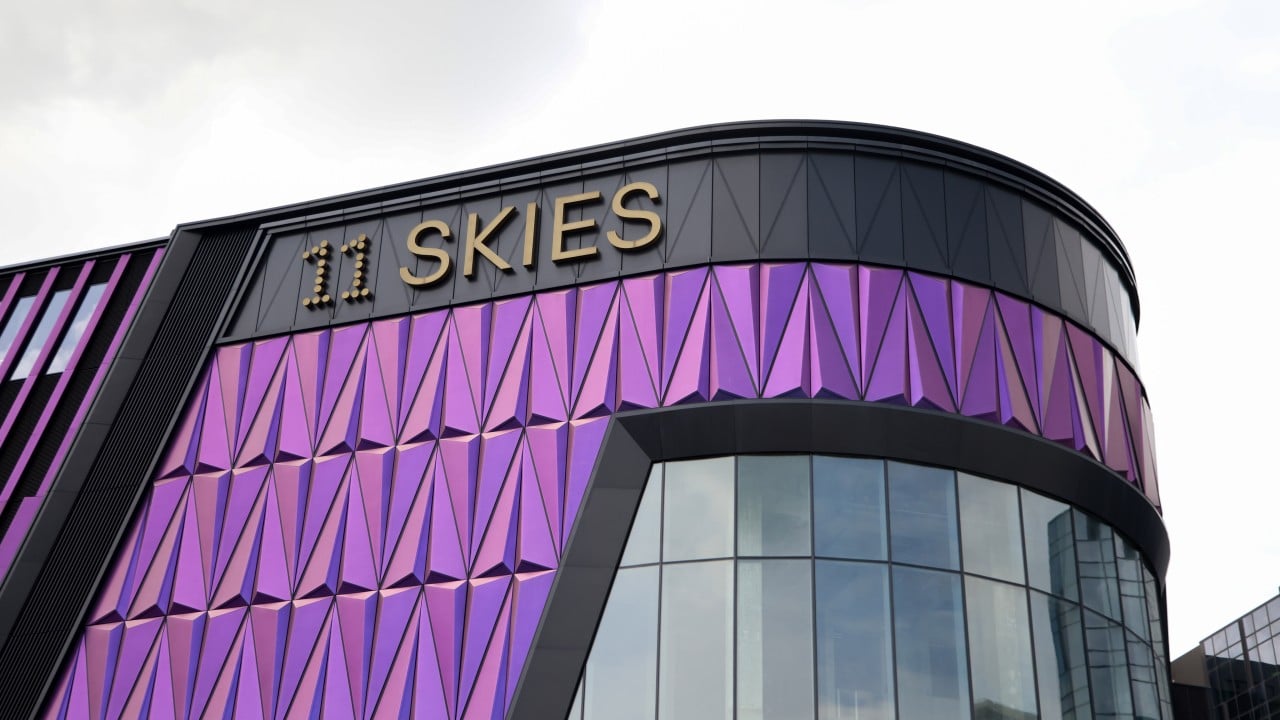
For years, planners looked at the land stretching out across the bay with a specific kind of feverish hunger. They drew lines on maps. They rendered glass towers that shimmered in the subtropical sun, futuristic hubs where travelers could step off a plane and slide straight into a metropolis of retail, entertainment, and leisure. They called it 11 Skies. It was supposed to be the crown jewel of New World development, an architectural monument to endless connectivity. A bridge between the traditional heartbeat of the city and a hyper-modern playground designed to separate transit passengers from their money before their next boarding call.
There is only one problem with drawing lines on maps. Reality always ruins the drawing.
Economics does not care about renderings. When market conditions shift, the math changes. The gravity of a deal stops pulling and starts crushing.
We forget how fragile these massive undertakings really are. We see the steel skeletons rising against the skyline, the press releases filled with bright corporate optimism, the billions of dollars traded like poker chips in air-conditioned boardrooms. We assume someone has looked at the ledger and found it balanced. But beneath the polished corporate veneer, panic often wears a very expensive suit.
Consider the Airport Authority. Day after day, they manage the veins and arteries of global transit. They watch the passenger numbers rise and fall like a fever chart. They know when the cargo holds are full and when the terminals echo with empty footsteps. When a project of the magnitude of 11 Skies starts straining against the fiscal reality of a post-pandemic world, someone has to look at the board and decide whether to keep doubling down on a losing hand or walk away before the house takes everything.
Cutting ties is never clean. It is a messy, expensive surgical procedure performed with a meat cleaver.
The phrase "lose-lose deal" gets thrown around in boardrooms like a soft pillow to cushion bad news. It sounds professional. It sounds clinical. But translated into human terms, a lose-lose deal means hundreds of millions of dollars evaporating into the humid air. It means contractors left wondering if their invoices will clear. It means reputations dented, stock prices twitching downward, and executives staring into their morning coffee wondering how their brilliant vision turned into a legal quagmire.
To understand why the Airport Authority pulled back from its New World entanglement, you have to look past the balance sheets and into the psychology of risk.
In high-stakes development, momentum is everything. As long as everyone pretends the momentum is real, the illusion holds. Money flows. Cranes swing through the haze. Press conferences are held with giant golden scissors and oversized ribbons. But the moment one major player blinks—the moment someone asks the quiet question, "What happens if nobody actually comes?"—the spell begins to crack.
The New World partnership was built on an old assumption: that the future would always look like an extension of the boom years. More travelers. More consumption. More sprawl. But the world pivoted. Travel habits mutated. Consumer spending grew cautious. The colossal retail footprint planned for 11 Skies started to look less like a destination and more like a ghost town waiting to happen.
Stepping back required a rare kind of corporate courage. It is far easier to throw good money after bad, hoping that the next quarter will magically correct the trajectory of a sinking ship. Sunk cost fallacy is the invisible god that runs modern commerce. We finish the meal even when we are stuffed, simply because we paid for the plate. We stay in the marriage because of the wedding album.
Yet, walking away from a catastrophic miscalculation is the ultimate fiduciary act.
By severing the ties, the Airport Authority did something radical. They accepted short-term pain to prevent long-term hemorrhage. They looked at the sprawling ambition of 11 Skies and decided that protecting the core engine of regional transit was more important than preserving a bloated real estate fantasy.
The concrete on the waterfront remains. The glass panels still reflect the shifting clouds. But the philosophy has changed.
When you strip away the corporate nomenclature, the press releases, and the defensive posturing, this story is about the painful necessity of limits. We live in an era that worships endless expansion, as if trees can grow straight up into the stratosphere without roots snapping. We build bigger, wider, taller, assuming the sky is literally the limit.
Sometimes, the smartest move on the board is to let go of the piece before it tips the whole table over.
The jets will keep landing. The ground will keep shaking beneath our feet. And somewhere out there, planners are already drawing new lines on new maps, dreaming of the next great monument to human cleverness. Hopefully, next time, they will remember that the hardest thing in business is not knowing how to start, but knowing when to stop.