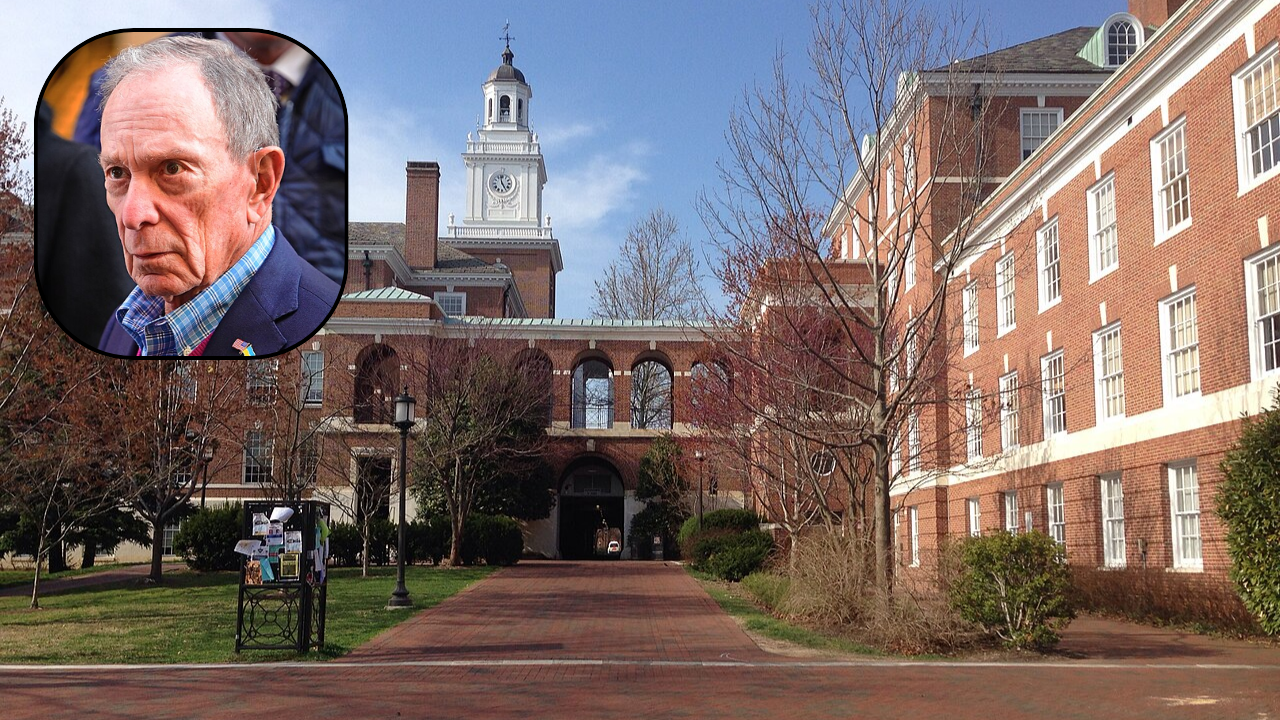
When Michael Bloomberg announced a one billion dollar endowment channeled directly into financial aid at the Johns Hopkins University School of Medicine, the corporate media treated it as a fairy tale. The headlines echoed a simple, comforting narrative: starting in the fall of 2024, medical tuition became entirely free for students hailing from families earning under $300,000, while living expenses were wiped out for those making under $175,000. To the casual observer, philanthropy had single-handedly solved the crushing debt burden that locks working-class and middle-class aspirants out of elite healthcare careers.
The reality of American medical training is far more brutal than a press release admits. Pumping billions into tuition relief at a single prestigious institution does not fix a broken professional pipeline. It merely inflates the pedigree of an already insulated upper tier while leaving the structural rot of the broader medical economy completely untouched.
To understand why this massive infusion of capital fails to trigger a systemic revolution, one must examine the mathematics of modern physician training. Prior to the Bloomberg intervention, the average debt for a graduating Johns Hopkins medical student hovered around $104,000. While significant, this figure was actually lower than the national average for private medical institutions, thanks to earlier donor efforts. Yet the true barrier to entry has never been exclusively about the tuition sticker price. It is about the opportunity cost of an unpaid or underpaid decade of youth, compounded by the hyper-competitive undergraduate prerequisites that systematically filter out students who cannot afford to work for free in research labs or study uninterrupted for board exams.
Free tuition does nothing to alter the undergraduate arms race. A student from an underfunded rural high school or an inner-city public school faces stacked odds long before they ever fill out an application for medical school. They must compete against peers who have enjoyed private tutoring, unpaid internships at biotech firms, and parents who can bankroll their living expenses during undergraduate years. By focusing monumental philanthropic wealth on the final finishing school rather than repairing the foundation of American public education, institutions like Johns Hopkins draw from a talent pool that has already been heavily sanitized by socioeconomic privilege.
Furthermore, the income threshold of $300,000 is a revealing metric. In the context of American household income, an annual salary of $300,000 places a family firmly in the top tier of earners nationally, capturing roughly 95% of the country. Subsidizing the education of children from wealthy households under the banner of working-class salvation is a masterclass in public relations. While the policy genuinely helps families in the middle brackets, it also guarantees that a substantial portion of the subsidy flows to households that could have afforded the training without facing financial ruin. This is not redistribution. It is elite preservation with a philanthropic coat of paint.
Consider how this dynamic distorts specialization choices within medicine. For decades, industry analysts have pointed out a severe shortage of primary care physicians, geriatricians, and pediatricians, especially in rural and underserved urban pockets. These specialties routinely lose out to lucrative surgical subspecialties like orthopedic surgery, dermatology, and plastic surgery. The traditional argument was that students were forced to chase high-paying specialties simply to service their six-figure student loans.
Now, look at what happens when that debt is erased at an institution like Johns Hopkins. Graduates leave with clean slates. Does
The Billion Dollar Shielding of Johns Hopkins And Why Medical School Debt is Still a Trap
health, news, business
Bloomberg's $1 billion gift to Johns Hopkins University erased tuition for medical students from families earning under $300,000, masking a deeper structural fracture in American healthcare education. The headline celebrated a philanthropic triumph. It obscured the underlying financial engine that forces aspiring physicians into six-figure debt before they ever touch a patient. When Michael Bloomberg funneled one billion dollars into the endowment of Baltimore's premier medical institution, the press framed it as a charitable stroke of genius that would democratize the stethoscope.
Look closer at the ledger.
Medical school debt is not an accidental byproduct of higher education inflation. It is a calculated filter. For decades, the cost of an M.D. has operated as an economic barrier, keeping working-class aspirants out of high-status specialties while driving graduates toward lucrative sub-specialties simply to service their loans. Free tuition for families making under $300,000 sounds revolutionary until you realize that three hundred thousand dollars covers a vast swathe of the American upper-middle class. A household earning $290,000 in suburban Maryland or Connecticut is hardly scraping by. Yet, the policy leaves out the structural reforms required to fix the actual pipeline: the residency bottleneck, the predatory interest rates on federal graduate loans, and the administrative bloat devouring hospital budgets.
The Endowment Illusion
Johns Hopkins did not suddenly become a philanthropic charity out of the goodness of its trustees' hearts. Major medical institutions function as corporate entities with heavy academic subsidiaries. A billion-dollar influx into an endowment does not just pay for textbooks. It acts as a permanent yield-generating asset. The interest alone covers the lost tuition revenue while freeing up institutional capital for research grants, facility expansion, and administrative expansion.
Consider the math behind elite medical training. The Association of American Medical Colleges reports that the average graduating medical student carries over $200,000 in debt. At Johns Hopkins, prior to the Bloomberg injection, total cost of attendance routinely breached $100,000 per year when factoring in living expenses in Baltimore. By wiping out tuition for a large percentage of its student body, Hopkins effectively bought insulation from the growing public anger over spiraling educational costs.
Yet, this creates a two-tier ecosystem. Johns Hopkins can afford to eliminate tuition because its endowment hovers near nine billion dollars. What happens to the mid-tier state university in the Midwest or the community-adjacent medical school in Appalachia? They cannot compete. They cannot attract the same caliber of donors. Consequently, their students graduate into debt peonage while Hopkins graduates walk out unburdened, ready to populate elite academic medical centers.
The Specialty Drain
Debt dictates destiny in modern medicine. When a young doctor finishes residency facing a quarter-million-dollar balance with a six percent interest rate, primary care is a financial trap. General practitioners, pediatricians, and geriatricians make a fraction of what orthopedic surgeons, dermatologists, and cardiologists pull in.
The $300,000 income threshold for the Bloomberg grant was supposedly designed to keep students from choosing specialties based solely on earning potential. If you do not have to pay back loans, the argument goes, you will freely choose family medicine in a rural clinic.
That theory collapses against the reality of institutional culture.
Elite institutions like Johns Hopkins are research powerhouses. They do not train doctors to be rural general practitioners; they train them to be academic chairs, sub-specialists, and biotech entrepreneurs. Removing tuition reduces the pressure to pick a lucrative specialty to pay off loans, but it does nothing to alter the prestige hierarchy within the hospital walls. Students surrounded by world-class cardiothoracic surgeons will continue to gravitate toward cardiothoracic surgery. The cultural gravity of the medical center remains unchanged.
Where the Money Really Goes
To understand why medical education costs what it does, you have to look past the lecture halls and into the hospital administration wing. Over the past thirty years, the ratio of administrators to medical staff has exploded. Compliance officers, diversity coordinators, risk management specialists, and billing optimization experts now populate entire floors of teaching hospitals.
Tuition hikes have historically served as the ATM for this administrative sprawl. When schools charge $80,000 a year, they are not spending it exclusively on cadavers and microscopes. They are funding institutional bloat. Bloomberg’s billion dollars is a massive band-aid over a severed artery. It pays the bills without stopping the bleeding.
If Johns Hopkins wanted to truly revolutionize medical education, it would use its immense leverage to force a reckoning with the systemic inflation of healthcare training costs. Instead, it created a private sanctuary of debt-free learning financed by a billionaire's checkbook. It is a wonderful deal for the fortunate few who secure a spot in East Baltimore. For the rest of the country, the system grinds on unchanged.
The Pipeline Problem
The applicant pool for medical school is already heavily skewed toward wealth. Preparing for the MCAT requires expensive prep courses. Taking unpaid clinical volunteer shifts requires a safety net. Applying to twenty different schools costs thousands of dollars in fees.
By setting the cutoff at $300,000, the Bloomberg grant continues to subsidize families who could afford to pay for college without plunging into destitution, while doing little for the kid whose parents make $45,000 a year and have zero generational wealth to fall back on. True equity would mean prioritizing applicants based on socioeconomic disadvantage rather than parental income brackets that still favor the top twenty percent of earners.
Philanthropy is not public policy. Relying on the whims of billionaire fortunes to fund the basic infrastructure of physician training leaves the nation's health at the mercy of stock market valuations and personal eccentricities.
When the next economic downturn hits and endowment returns flatten, what happens to the free tuition promise? The fine print usually includes escape clauses. The burden shifts back to the student. The debt trap snaps shut once more.
The applause for the billion-dollar gift drowned out the more urgent question. Why does it take a billionaire's charity to make medical school accessible in the wealthiest nation on earth? Until we dismantle the administrative bloat, reform the predatory lending mechanisms, and restructure the incentives driving students away from primary care, these mega-donations are nothing more than high-society PR campaigns.
The debt remains. The system remains. Only the branding has improved.