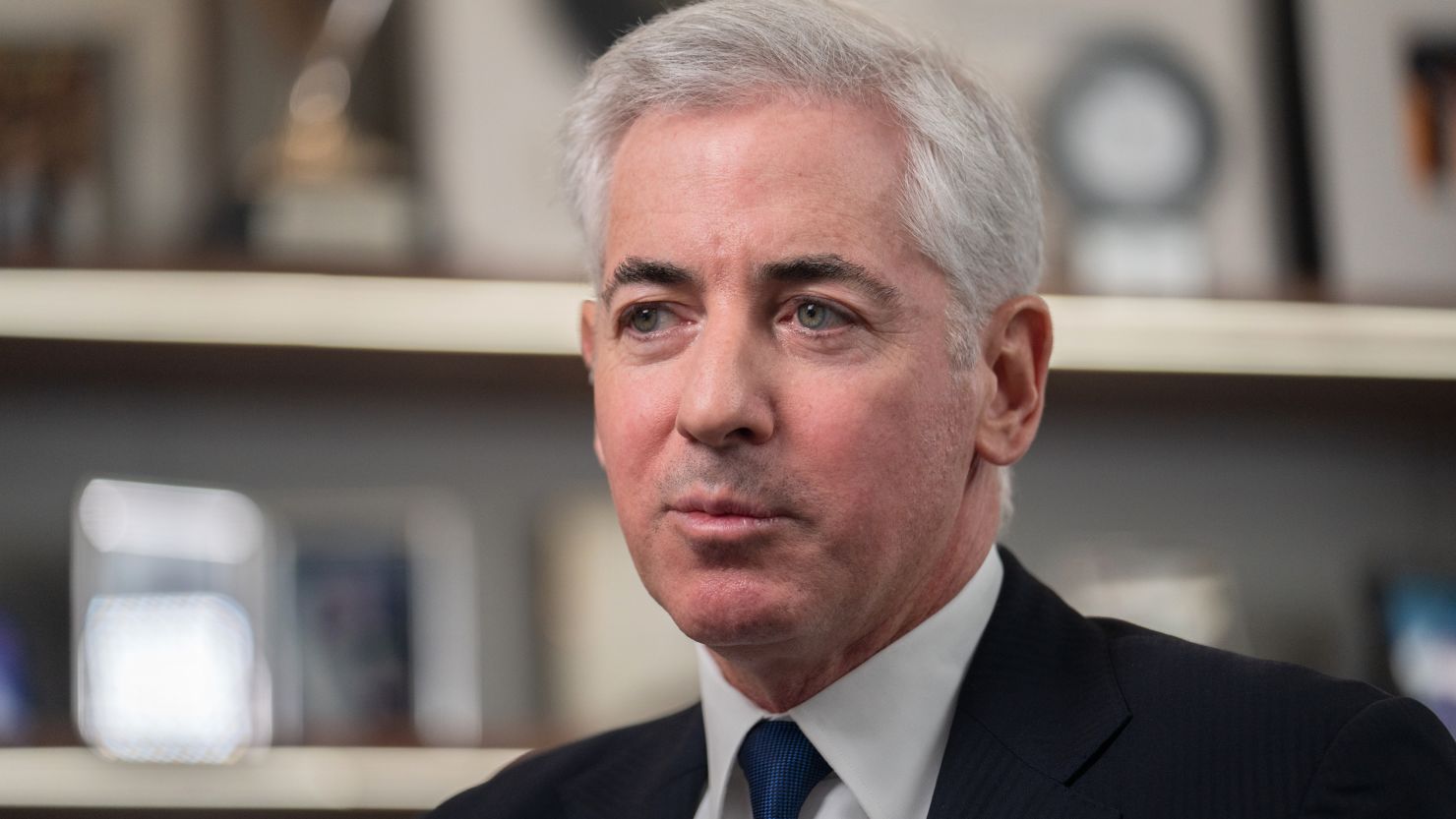
Wall Street loves a sequel, especially when the script promises "the next Warren Buffett." But Pershing Square USA (PSUS) isn't a sequel to Berkshire Hathaway. It’s a high-fee remix of a closed-end fund structure that favors the manager over the shareholder from the moment the opening bell rings. The financial press is currently obsessed with the scale of this $5 billion IPO, treating it as a referendum on Bill Ackman’s celebrity. They are asking if he can raise the money. They should be asking why any rational investor would give it to him under these terms.
The "Berkshire-style" comparison is a marketing hallucination. Warren Buffett built Berkshire Hathaway through the acquisition of cash-generating insurance businesses that provide "float"—capital that costs less than zero to use. Ackman is raising a pile of cash from retail investors to buy large-cap US equities that are already sitting at record valuations. One is a structural masterpiece of compounding; the other is a liquid investment vehicle with a 2% management fee. If you can’t spot the difference, you’re the liquidity.
The Fee Mirage and the 2% Tax on Your Future
The most offensive part of the consensus narrative is the idea that this fund is "low cost" because it lacks a performance fee for the first year. Let’s look at the math. A 2% management fee on a $5 billion fund means Ackman’s firm pockets $100 million annually just for existing. In the world of institutional investing, a 2% flat fee on a multi-billion dollar long-only fund is an atmospheric anomaly.
Compare this to the S&P 500 trackers that retail investors can access for 0.03%. To justify that 197-basis-point spread, Ackman doesn’t just need to beat the market; he needs to crush it consistently while fighting the drag of his own overhead. Berkshire Hathaway doesn’t charge its shareholders a management fee on the net asset value (NAV) of the company. Buffett gets paid as a shareholder. Ackman gets paid as a landlord.
The Closed-End Trap
Closed-end funds (CEFs) are notorious for a specific pathology: they almost always trade at a discount to their Net Asset Value. You buy in at $50 a share, but the secondary market decides it’s only worth $45, regardless of what the underlying stocks are doing.
Ackman claims the "brand" of Pershing Square will cause the fund to trade at a premium. This is ego masquerading as a financial strategy. History is littered with "celebrity" CEFs that launched with fanfare and collapsed into 10% or 15% discounts within twenty-four months. When a fund trades at a discount, your capital is trapped. You can't redeem at the NAV like you can with a Mutual Fund or an ETF. You are forced to sell to another investor who wants a bargain.
By launching PSUS, Ackman isn't creating a permanent capital vehicle for your benefit. He is creating a permanent fee stream for his management firm that cannot be pulled out when he has a bad year. It is a brilliant move for Pershing Square’s own IPO aspirations, and a mediocre one for the people funding it.
The High-Yield Concentration Risk
The strategy is simple: 12 to 15 "high-quality" large-cap companies. In theory, concentration builds wealth. In practice, concentration in a high-interest-rate environment—where the "Magnificent Seven" already dominate the indices—means Ackman is essentially running a shadow index fund with higher risk and exponentially higher fees.
If he buys Alphabet or Chipotle (long-time Pershing favorites), he is buying at multiples that leave zero room for error. If one of those 15 positions craters, the fund bleeds out. In a standard diversified portfolio, a 20% drop in one stock is a bruise. In PSUS, it’s a compound fracture.
The Activism Paradox
Ackman rose to fame as an activist. He took stakes in companies and screamed at management until they changed. But $5 billion is both too much and too little. It’s too much to move the needle in mid-cap companies without triggering massive regulatory hurdles, and it’s too little to bully the board of a $500 billion mega-cap.
The "activist alpha" that investors think they are buying is diluted the moment the fund hits this scale. You aren't getting the hungry Ackman who hunted General Growth Properties from the wreckage of 208. You are getting the institutionalized Ackman who writes long posts on social media and buys blue chips.
Why the Market is Wrong About "Permanent Capital"
The term "permanent capital" is used as a badge of honor. For the manager, it is. It means no redemptions. It means the "dumb money" can't leave when things get ugly. But for the investor, "permanent" is another word for "illiquid."
If the US economy hits a recession and you need your cash, you are at the mercy of the market price of PSUS. If the fund is trading at a 20% discount because Ackman got into another public spat that soured his reputation, you lose 20% of your principal just to exit.
Stop Asking if He'll Raise the Money
The question "Will the IPO be successful?" is the wrong metric. Success for a bank is collecting the underwriting fees. Success for Ackman is locking in $5 billion of fee-paying assets. Success for you is a different calculation entirely.
You are being asked to pay a premium for the privilege of letting a billionaire manage a transparent portfolio of stocks you could buy yourself on any commission-free brokerage app. You are paying for the brand, the private jet, and the Midtown office rent.
If you want the Berkshire experience, buy Berkshire. It has the insurance float, the diversified industrial base, and a culture that views shareholders as partners rather than fee-generating units. Pershing Square USA is a product designed to be sold, not an investment designed to be held.
Don't be the liquidity for someone else's exit strategy.