A terrifying manhunt on Hawaii's Big Island just ended, but the real story is what happened right before the first drop of blood was spilled. Police officially charged 36-year-old Jacob Daniel Baker of Pahoa with multiple counts of murder after finding three elderly men dead across the rural Puna district.
It looks like an unpredictable rampage from the outside. But a closer look at the timeline reveals a sequence of ignored warnings, failed legal protections, and a terrified community left to fend for itself.
The system failed. Two local women tried to stop Baker days before the killings started. They begged a judge for temporary restraining orders. They detailed explicit death threats, harassment, and an aggressive plan to seize property by force.
The judge looked at the paperwork, decided there wasn't enough proof of harassment, and denied the orders. Days later, three men were dead.
Anatomy of a Puna District Tragedy
The scope of this crime spans miles of dense jungle and rugged terrain. To understand how this went down, you have to look at the sheer geography of the Puna district, an area on the eastern side of the Big Island known for cheap land and isolated off-grid properties.
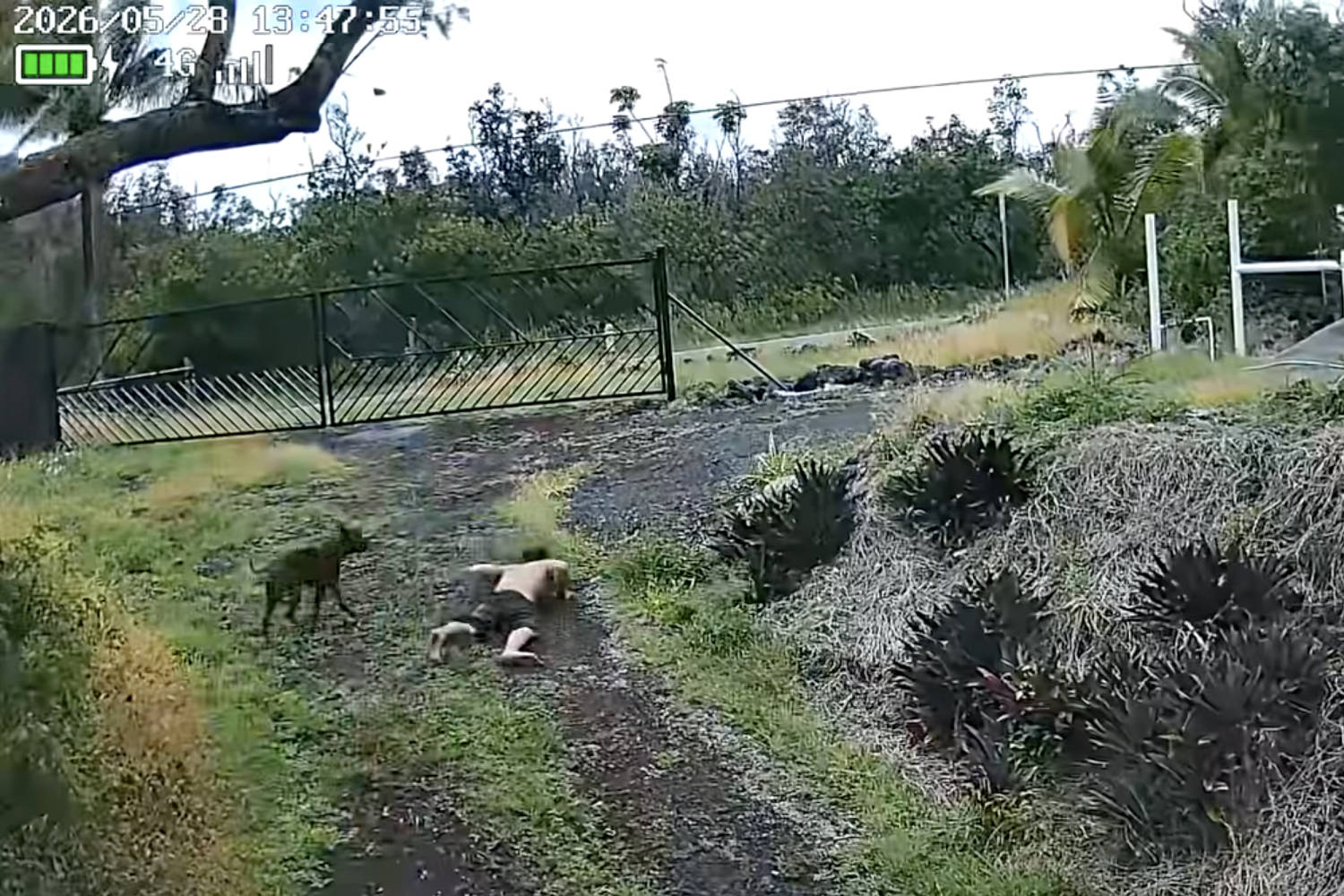
The bodies were discovered over a two-day stretch. First, officers found 69-year-old Robert Shine partially submerged in a cement pond. Just a few hundred feet away lay a second victim, a 79-year-old man whose name hasn't been released yet. The third victim, 69-year-old John Carse, was discovered a staggering 19 miles away.
Think about that distance. This wasn't a sudden, localized burst of domestic violence. Baker was moving through the island, covering miles of rural terrain over a 48-hour window.
The Hawaii Police Department, backed by state and federal authorities, poured massive resources into the hunt. They eventually pinned Baker down after a local tipped them off. He was hiding in a grassy area, ducking low whenever traffic passed, before ducking into a small cave where officers finally handcuffed him.
The arrest brought immediate relief to a terrified community, but it leaves us with glaring, uncomfortable questions about how we handle unstable individuals before they cross the line into violence.
The Systemic Breakdown of Restraining Orders
Let's talk about what happened in that courtroom right before the killings. This is where the story gets incredibly frustrating.
Two women, one who co-owned a local fruit farm and another who was staying there, filed separate petitions for temporary restraining orders against Baker. He had lived on the property previously, helping out by climbing coconut trees for fruit. Things went south, and he left the cabin in complete disarray, overflowing with trash.
When Baker returned, he wasn't looking to make amends. He claimed squatter's rights, threatened the farm owner, and explicitly stated he would trespass and take what didn't belong to him. The court petitions stated that Baker threatened to kill multiple women staying at the property, prompting several of them to pack their bags and flee the island entirely. He also threatened a disabled man living in the area.
One woman even included a digital link to a video capturing these explicit threats in her court filing.
The judicial response? Denied.
Judges often cite a lack of immediate physical evidence or rigid procedural standards when denying emergency orders. They want a clean paper trail. But in rural areas like Puna, where neighbors live miles apart and police response times can stretch to an hour or more, a restraining order is often the only shield a vulnerable resident has.
When the legal system treats explicit death threats and armed trespassing as minor neighborly disputes, it essentially tells predators that the coast is clear.
A Community Left Exposed
This case highlights a reality that Big Island locals know all too well. Puna is beautiful, but its isolation makes it dangerous.
People choose to live off-grid for privacy and independence. The downside is that you are completely on your own when someone dangerous decides to target your neighborhood. Local residents noted that Baker had a reputation around the highway for a creepy vibe while selling coconuts, yet he managed to drift through the community for months despite escalating tensions.
Court records show Baker was no stranger to the legal system. He had 20 prior cases over two decades. Most were traffic infractions, and he regularly represented himself in court. He knew how to navigate the system, and he knew exactly how far he could push the boundaries before the police would step in.
The police admit they still don't have a clear motive linking Baker to these three specific men. Investigators haven't found any direct connection among the victims, other than the fact that two of them lived near each other. It appears to be a case of random execution or highly localized disputes that spun entirely out of control.
Where the Case Goes Next
Now that the Hawaii County Office of the Prosecuting Attorney has filed formal murder charges, the legal battle moves to the courtroom. Baker is being held on massive bail, and the community is picking up the pieces.
But public safety shouldn't depend on high-stakes manhunts through the jungle after a tragedy has occurred.
If you or someone you know is dealing with an escalating stalking or harassment situation in a rural area, you cannot rely solely on the standard legal framework to keep you safe. Take these concrete actions immediately:
- Document every single interaction. Do not rely on digital links that can be broken or removed. Download video clips, export text messages to external drives, and keep a physical log with exact dates, times, and descriptions.
- Build an immediate community network. If local law enforcement is far away, your neighbors are your first line of defense. Set up an emergency communication chain using radios or off-grid messaging apps.
- File for orders of protection anyway. Even if a judge denies the initial temporary restraining order, the filing forces a paper trail into the official record. If police are called out later, that documentation proves a pattern of behavior that they cannot easily ignore.
- Establish hard property boundaries. Install security cameras that upload to the cloud instantly. Clear brush away from your home to eliminate hiding spots, especially if your property borders dense jungle or state land.
The Big Island triple homicide shouldn't be remembered just as a shocking headline. It needs to be a wake-up call for how Hawaii courts handle early indicators of severe violence.
The video below offers an on-the-scene look at the intense multi-agency manhunt and the immediate relief felt by Big Island residents when the suspect was finally cornered.