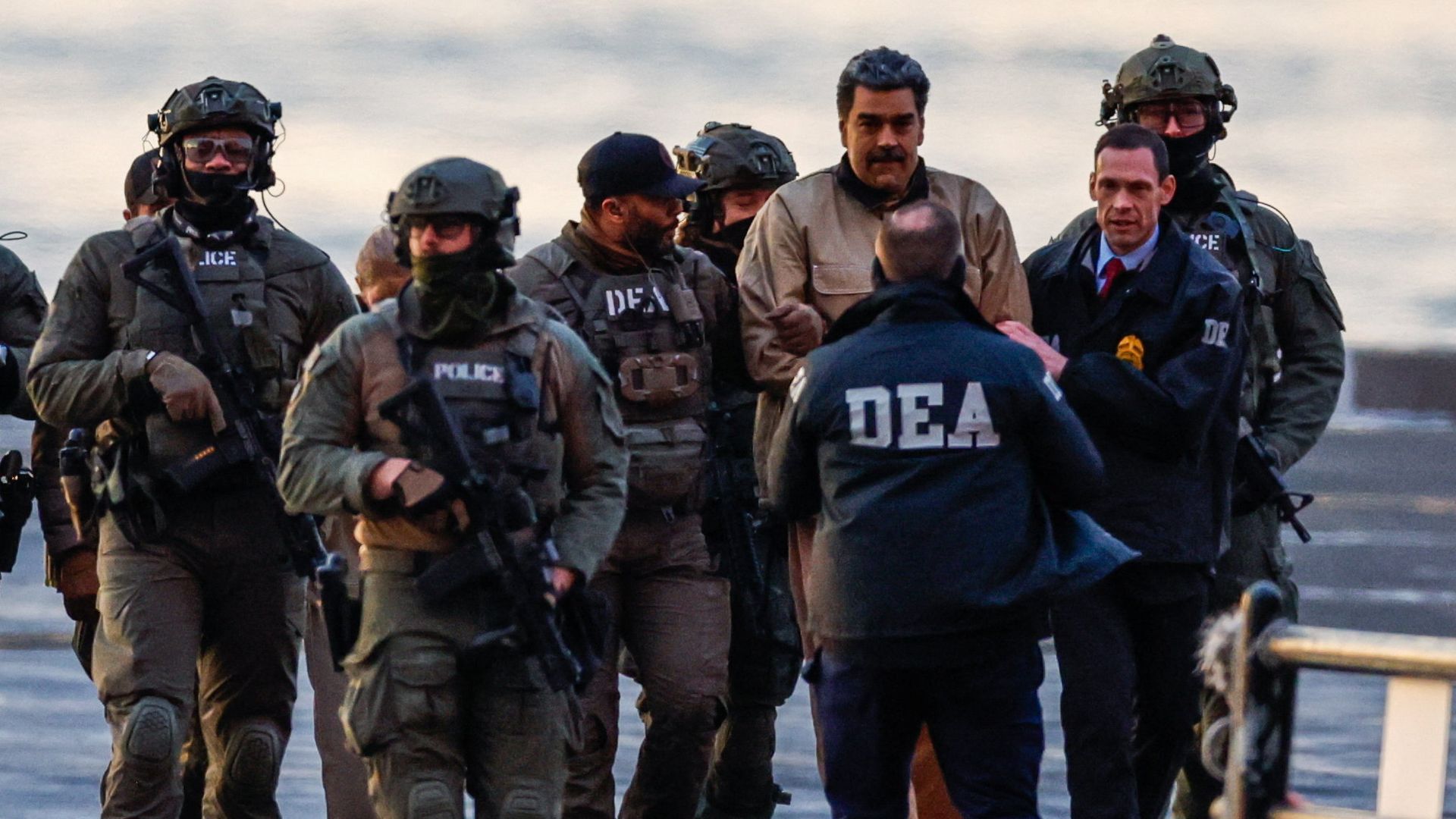
The headlines are clutching their pearls because a U.S. soldier allegedly cleaned up betting on the capture of Nicolás Maduro. The mainstream media wants you to see a scandal. They see a rogue actor "profiting from chaos." They see a conflict of interest.
They are wrong.
What they actually saw—and what they are too terrified to admit—is the most efficient intelligence-gathering mechanism on the planet finally working. We have spent decades pretending that three-letter agencies with multibillion-dollar budgets are the gold standard for predicting geopolitical shifts. They aren't. They are bureaucratic behemoths drowning in confirmation bias and careerism.
If you want to know when a dictator falls, don't read a classified briefing. Look at the offshore betting lines.
The Myth of the Insider Advantage
The lazy consensus screams "insider trading." They assume this soldier had a magic crystal ball because of his uniform. Let’s get real. A mid-level sergeant doesn’t sit in on the Situation Room meetings where extraction orders are signed. Even if he did, the history of U.S. intervention in Venezuela is a comedy of errors. From the botched Operation Gedeón to the endless "all options are on the table" rhetoric that went nowhere, "inside" information in D.C. is usually just high-priced gossip.
The soldier didn't win because he knew a secret. He won because he understood incentives.
In a traditional intelligence hierarchy, an analyst gets paid the same whether they are right or wrong. In fact, being "wrong" in the direction of the consensus is safer for your career than being "right" and alone. In a prediction market, there is no safety in the crowd. There is only the P&L.
Skin in the Game vs. Bureaucratic Bloat
Nassim Taleb didn't invent the concept of skin in the game, but he codified why it’s the only thing that matters in high-stakes environments. When you bet hundreds of thousands of dollars on a specific outcome, you strip away the fluff. You stop caring about what the State Department wants to happen. You stop caring about what the New York Times thinks should happen.
You look at the mechanics:
- Fuel supplies for the Venezuelan military.
- Defection rates among the mid-level officer corps.
- The actual movement of private security contractors.
While the "experts" were debating the nuances of international law, the smart money was watching the logistics.
Prediction markets like Polymarket or the various offshore mirrors are often dismissed as "gambling." That’s a convenient label for people who don't want their expertise challenged. In reality, these markets are decentralized supercomputers. They aggregate disparate pieces of information—the soldier’s boots-on-the-ground perspective, the currency trader’s hedge, the local’s observation of a cleared-out runway—into a single, fluctuating price.
That price is the truth. Everything else is just a press release.
Why We Hate the Profiteer
The public outcry over a soldier making money on a manhunt is rooted in a Victorian sense of "honor" that hasn't existed in warfare for a century. We are comfortable with defense contractors making billions on "cost-plus" contracts that reward delays and failures. We are fine with lobbyists earning six figures to push for sanctions that starve civilians but keep regimes in power.
But a guy who puts his own capital at risk to predict a geopolitical event? Suddenly, we’ve found our moral compass.
This hypocrisy is dangerous. By demonizing those who use markets to signal reality, we choose to remain in the dark. We choose the "official" narrative, which is almost always a lagging indicator.
The Failure of Traditional Forecasting
Think about the 2021 Afghanistan withdrawal. The official intelligence assessment was that Kabul would hold for months, if not years. The "experts" with the clearances and the pedigrees were fundamentally, catastrophically wrong.
Imagine if there had been a liquid, open market on the fall of Kabul.
The moment the first district capitals started folding without a fight, the price would have collapsed. Soldiers on the ground, seeing the reality of the ANA's collapse, would have shorted the "stability" of the government. The signal would have been sent to Washington in real-time: The game is over.
Instead, we relied on a chain of command that was incentivized to filter bad news as it moved up the ladder.
The Ethical Superiority of the Bet
Let’s talk about the "morality" of betting on Maduro’s capture. Critics argue it incentivizes soldiers to "make it happen" to collect a paycheck.
This is a fundamental misunderstanding of scale. A few hundred thousand dollars is noise compared to the geopolitical machinery of the United States. A soldier can't trigger a regime change to win a bet any more than a weather forecaster can summon a hurricane to win a parlay.
What the bet actually does is provide a truth-telling incentive. It rewards the person who sees through the propaganda first. In a world of "fake news" and state-sponsored disinformation, we should be begging for more people to have a financial stake in being right.
Information vs. Wisdom
There is a difference between having data and having conviction. The competitor’s article focuses on the "spectacle" of the win. They treat it like a lottery ticket.
It wasn't a lottery ticket. It was a trade based on an information asymmetry that the government refuses to close.
The government wants a monopoly on "the future." They want to be the sole arbiters of what is likely to happen. When a private citizen—especially one within their own ranks—proves that a laptop and an internet connection can out-predict a multi-billion dollar agency, it embarrasses the establishment.
They don't want to stop "insider betting." They want to stop the democratization of intelligence.
Stop Asking if it’s Right and Start Asking if it’s Accurate
When you see a story like this, your first instinct is likely to ask: "Is this allowed?"
That is the wrong question.
The question you should be asking is: "What did he see that the analysts missed?"
The soldier saw a regime that was hollowed out, a bounty that was tempting enough to trigger internal betrayal, and a U.S. policy that was shifting toward aggressive action. He didn't need a top-secret briefing for that. He needed to pay attention to the world as it is, not as the briefing papers say it should be.
The Actionable Reality
If you are a business leader, a policymaker, or an investor, you need to stop ignoring "degen" markets. The people betting on the capture of world leaders, the outcome of elections, or the success of a rocket launch are often better informed than the talking heads on CNBC or the "strategic consultants" you pay $500 an hour.
- Audit your information sources: If your source doesn't lose money when they're wrong, discount their opinion by 80%.
- Watch the liquidity: A market with $100 million at stake is a more reliable indicator than a poll of 1,000 people.
- Embrace the "unseemly": Truth is often found in the places polite society finds "crass."
The soldier who bet on Maduro didn't "game" the system. He used a better system. We should stop trying to punish the winner and start wondering why the "official" system is so consistently losing.
The next time a major geopolitical event looms, don't wait for the White House press secretary to take the podium. Check the odds. The truth is already priced in.