Most politicians get crushed when a massive security failure happens on their watch. Their poll numbers crater, opposition leaders smell blood, and resignations follow within weeks.
Yet Benjamin Netanyahu and Narendra Modi have spent the last decade doing the exact opposite. When intelligence lapses or border breaches occur under their leadership, they don't just survive the fallout. They weaponize the crisis, rally nationalist sentiment, and often emerge stronger than before.
If you've watched politics in Israel and India over the past ten years, you've probably noticed this weird parallel. Both leaders built their entire brand on being the ultimate "strongman" protector. Modi pitched himself as the chowkidar—the vigilant watchman guarding India's borders. Netanyahu spent decades cultivating the image of "Mr. Security," the only Israeli leader tough enough to keep the country safe.
So what happens when the strongman fails to stop an attack? In a normal political environment, the brand collapses. Instead, Netanyahu and Modi flip the script by shifting blame onto internal enemies, framing criticism as treason, and turning grief into an aggressive electoral mandate.
The Anatomy of the Strongman Paradox
Political scientists have studied this phenomenon for years, often calling it the "rally 'round the flag" effect. Normally, that boost is temporary. George H.W. Bush hit a 90% approval rating after the Gulf War in 1991, then lost the election a year later because voters focused back on the economy.
Netanyahu and Modi play a very different game. They don't just wait for a temporary bump in support; they actively engineer a permanent state of existential threat.
When a major security breach happens, the immediate public reaction is shock and anger. If voters start asking why the government missed the warning signs, the leader is toast. To prevent those questions from sticking, both governments immediately control the narrative around three core pillars.
First, they frame the attack not as a failure of state intelligence, but as proof that their core worldview was right all along. Second, they equate questioning the government with disrespecting the military. Third, they pivot rapidly toward a dramatic, visible military retaliation that dominates media coverage and crowds out investigations.
Honestly, it's a masterclass in political survival, even if it comes at a massive cost to democratic accountability.
Pulwama and the 2019 Indian General Election
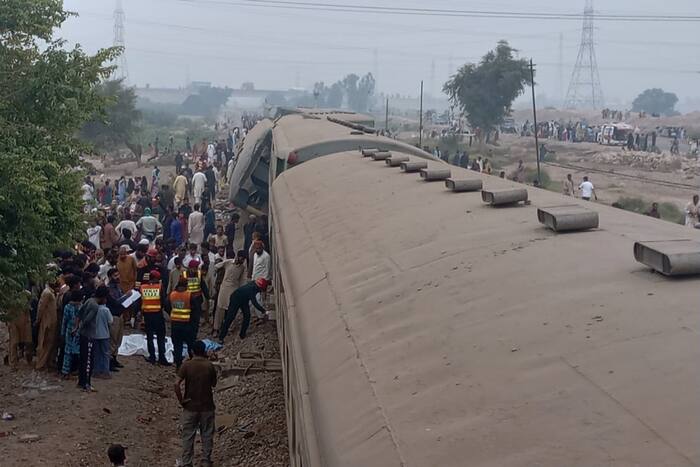
Take a look at what happened in India in February 2019. Just months before a brutal general election, a suicide bomber attacked a convoy of security personnel in Pulwama, Jammu and Kashmir, killing 40 members of the Central Reserve Police Force.
At the time, Modi's Bharatiya Janata Party (BJP) was in serious trouble. Rural distress was high, unemployment numbers were leaking to the press, and the BJP had just lost three key state elections in the Hindi heartland. The opposition was gaining real momentum by hammering the government on jobs and the economy.
Pulwama was an undeniable intelligence and operational failure. How did explosives get moved through one of the most heavily militarized zones in the world? Why were troops transported by road instead of air despite intelligence warnings?
Those questions barely lasted a news cycle.
Twelve days after the bombing, the Indian Air Force launched airstrikes on an alleged militant training camp in Balakot, inside Pakistani territory. Overnight, the national conversation shifted from economic anxiety and intelligence lapses to national pride and military muscularity.
Modi didn't shy away from linking the military action directly to his election campaign. At rally after rally, he urged first-time voters to dedicate their votes to the soldiers who carried out the Balakot strikes and the martyrs of Pulwama. Opposition leaders who dared to ask for proof of the strike's impact or question the security lapse were immediately labeled "anti-national" and accused of speaking Pakistan's language.
The strategy worked like clockwork. When the votes were counted in May 2019, the BJP didn't just win—they expanded their majority, winning 303 seats on their own. A devastating security failure had been successfully converted into a historic landslide.
October 7 and Netanyahu's Survival Playbook
Israel's story since October 7, 2023, is far more complex and tragic, yet the underlying political mechanics look strikingly familiar.
The Hamas-led attack on southern Israel was the worst security and intelligence catastrophe in the country's history. Around 1,200 people were killed, and more than 250 were taken hostage. For years, Netanyahu had championed a policy of "managing" the conflict—allowing Qatari funds into Gaza to keep Hamas stable while sidelining the Palestinian Authority in the West Bank. That doctrine collapsed in a matter of hours.
In the immediate aftermath, Netanyahu's approval ratings plummeted. Polls from the Israel Democracy Institute and major Israeli news outlets showed that a massive majority of Israelis held him personally responsible for the failure. Many commentators predicted his political career was finished.
Yet here we are, and Netanyahu is still Prime Minister. How did he pull that off?
He used the exact same deflection playbook. Almost immediately, Netanyahu refused to take personal responsibility, arguing that any state commission of inquiry would have to wait until after the war ended. Meanwhile, his allies and media supporters went on the offensive against the military brass and intelligence chiefs—specifically the heads of the IDF and Shin Bet—painting them as arrogant elites who failed to wake the Prime Minister up in time.
By turning the crisis into an endless, multi-front war against Hamas in Gaza, Hezbollah in Lebanon, and Iran, Netanyahu made himself virtually irreplaceable in the eyes of his base. He framed every domestic critic, every hostage family protesting in Tel Aviv, and every opposition politician calling for early elections as a threat to national unity during wartime.
When you convince voters that changing leaders mid-crisis equals handing victory to the enemy, you don't need high approval ratings to stay in power. You just need to keep the crisis going.
Why Traditional Accountability Fails Against Populist Nationalists
You might wonder why voters fall for this pattern repeatedly. It isn't because people in India or Israel are gullible. It's because human psychology under severe threat tends to favor certainty over nuance.
When people feel unsafe, complex explanations about intelligence bureaucratic failures or flawed long-term deterrence policies feel deeply unsatisfying. A strongman offering a simple story—we are surrounded by ruthless enemies, and only I am tough enough to hit them back—hits a primal nerve.
Both Modi and Netanyahu have also spent years reshaping their domestic media ecosystems to amplify this exact message.
In India, mainstream television news channels largely aligned with the government, turning prime-time debates into hyper-nationalist spectacles where questioning state security policies is treated as treason. In Israel, outlets like Channel 14 and newspapers historically backed by Netanyahu's allies consistently frame his political survival as synonymous with Israel's survival.
When the media ecosystem rewards outrage and loyalty over investigative journalism, accountability evaporates. Investigations into what went wrong get delayed indefinitely. In India, the full details of the Pulwama intelligence lapse were never made public. In Israel, Netanyahu fiercely resisted establishing an independent state commission of inquiry into October 7, knowing full well what such an inquiry would conclude about his decade of policies.
The Role of Internal Enemies
Another critical piece of this strategy is the creation of the "enemy within." External threats alone aren't enough to sustain a political movement; you also need domestic scapegoats to blame when things go wrong.
In India, the BJP frequently ties national security threats to domestic political opponents, activists, journalists, and religious minorities. After Pulwama—and later during clashes along the Chinese border in Ladakh in 2020—opposition leaders like Rahul Gandhi were routinely attacked not just as wrong, but as treacherous for demanding transparency from the government.
In Israel, Netanyahu has spent years demonizing the judiciary, the civil service, the mainstream press, and left-wing activists as the "deep state" undermining the will of the people. Even after October 7, members of his coalition blamed the massive anti-government protests over judicial overhaul earlier in 2023 for weakening military deterrence, effectively pinning the security failure on the very citizens who had warned him his policies were tearing the country apart.
It's a closed loop. If the policy succeeds, the leader gets all the credit. If the policy fails catastrophically, it's because internal traitors tied the leader's hands.
Comparing the Two Approaches
While Modi and Netanyahu share this core playbook, their circumstances and execution have clear differences.
Modi operates from a position of overwhelming institutional dominance. His party controls a massive grassroots machine, faces a fractured opposition, and benefits from a compliant press. When a crisis hits, Modi doesn't even have to do the dirty work of attacking critics himself; his ministers, party spokespeople, and social media armies handle it while he maintains a statesmanlike posture.
Netanyahu, by contrast, operates in a hyper-fractured parliamentary system where his survival depends on keeping extreme-right coalition partners happy. He is constantly fighting for his political life, facing ongoing corruption trials, and dealing with massive street protests. Because his margin for error is razor-thin, his tactics are often sharper, more divisive, and openly combative toward Israel's own security establishment.
Still, the end result in both democracies is remarkably similar. Security failures, which should serve as wake-up calls for institutional reform and leadership change, instead become fuel for deeper polarization and executive power.
What You Can Watch For Next Time a Crisis Hits
If you want to cut through the noise the next time a major security crisis erupts in any democracy, pay close attention to how leaders respond in the first 72 hours. The rhetoric tells you everything about whether they're focused on fixing the problem or exploiting it.
Watch out for these specific red flags:
- Immediate deflection of blame to "the system" or predecessors. When a leader who has been in power for a decade blames past governments or rogue bureaucrats for a failure on their watch, they're setting up a political shield.
- Attacks on the patriotism of critics. In a healthy democracy, asking how an intelligence failure happened is a civic duty. When officials label those questions as "helping the enemy," they're hiding something.
- Resistance to independent inquiries. Leaders who truly want to prevent the next attack welcome transparent, independent investigations immediately. Those who stall or try to handpick the investigators are protecting their own political hide.
- Theatrical retaliation over strategic reform. Big, noisy military strikes make great television and boost poll numbers, even if they don't solve the underlying security vulnerability.
Recognizing this pattern doesn't make you cynical; it makes you an informed citizen. Security failures happen even to competent governments, because intelligence work is messy and adversaries adapt. The real test of leadership isn't whether a breach ever occurs—it's whether the people in charge have the integrity to own their mistakes instead of turning national tragedy into a campaign slogan.