Benin is tired of exporting its wealth in heavy burlap sacks. For decades, this West African nation has grown some of the finest cotton on the planet, competing directly with Mali for the crown of Africa's top producer. Yet, until recently, almost 90% of that crop left the port of Cotonou completely raw. It went straight to textile mills in Bangladesh or China. Local workers did the backbreaking farming, while factories thousands of miles away captured over 90% of the profits by turning that raw fiber into fast-fashion garments.
Change is happening now. The government wants to spin, weave, and sew that cotton right at home. They want a massive domestic manufacturing base. To get there, Benin has turned to an aggressive mix of international capital, state control, and heavy technical support from China.
But this economic transformation isn't a simple feel-good story. It is a messy, high-stakes experiment filled with geopolitical strategy, major infrastructure upgrades, and intense local controversy over worker rights.
The Chinese Blueprint in Parakou
The real work of upgrading Benin's cotton production starts in the dirt. In April 2026, the fourth Chinese cotton technical assistance mission arrived in Parakou, the heart of Benin's cotton country. This wasn't a sudden political stunt. This specific program, run by entities like the China Hi-Tech Group Corporation, has been operating on the ground since 2013.
Chinese agricultural experts don't just sit in offices in Cotonou. They live in the northern production hubs. They work directly with Beninese technicians and farmers to solve fundamental agricultural bottlenecks. They focus heavily on three areas.
First, they work on seed selection. Local varieties often struggle with unpredictable weather patterns or yield limits. Chinese teams test and distribute refined seeds designed for higher output.
Second, they push for mechanization. Most farming in Benin is still done by hand. The expert teams run intensive training courses on tractor operations, mechanized sowing, and modern field management.
Third, they build local technical capacity. The goal isn't just to drop off a few pieces of machinery and leave. Chinese teams train local mechanics to repair and modify these tools to fit the rocky, demanding terrain of northern Benin.
This technical push helped drive Benin's raw output to peaks of 800,000 tons in recent seasons. The country proved it can grow massive amounts of "white gold." But growing it was only the first hurdle. The next problem was moving it.
The Infrastructure Play and the Cotton Road
You can't build an industrial powerhouse if your trucks get stuck in the mud during the rainy season. Logistics in West Africa are notoriously expensive, often wiping out any competitive advantage local producers might have.
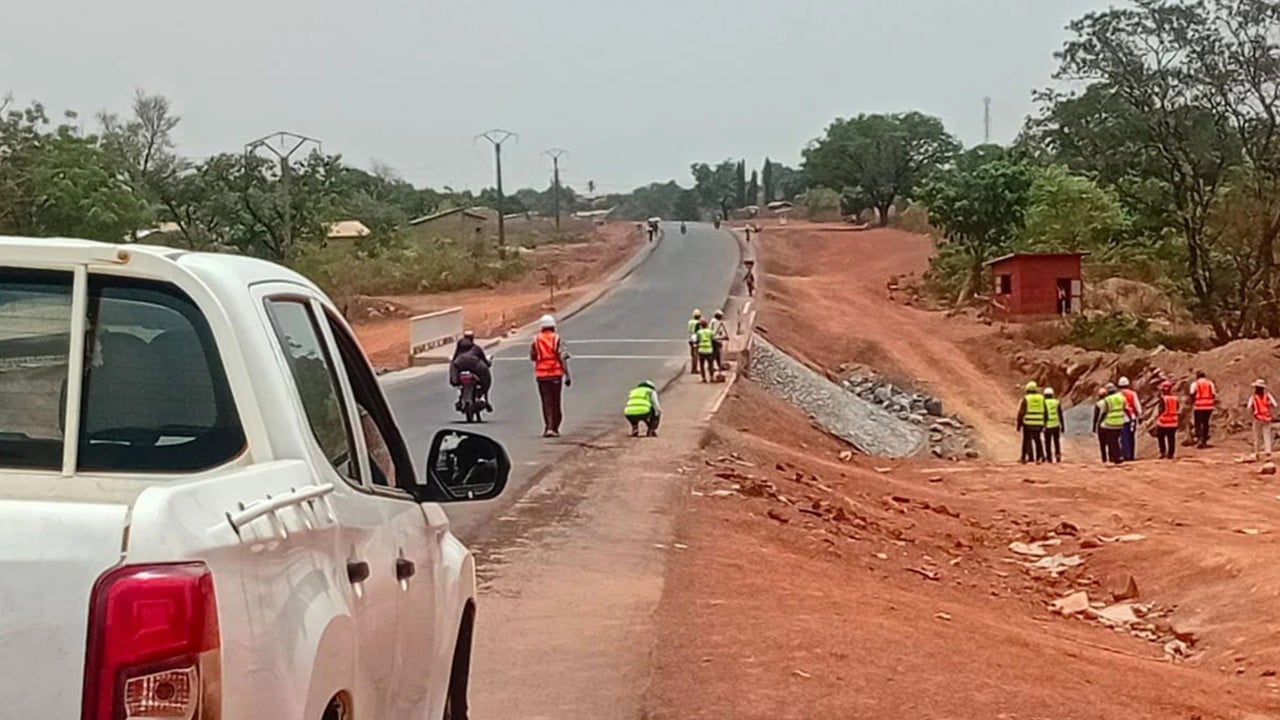
To fix this, the state contracted PowerChina to build what locals call the Cotton Road. This major transportation corridor cuts right through the primary agricultural zones. It sounds like a basic civil engineering project, but it serves as a critical economic artery.
Before the road, transporting raw bales from remote northern fields to ginning plants and coastal hubs was a slow, expensive nightmare. Truck breakdowns were frequent. Fuel costs were staggering. The new corridor slashes transit times and directly lowers production costs. By making transport efficient, Benin makes its agricultural exports competitive on the global stage.
Once the infrastructure started coming together, the focus shifted to processing. The state needed a space to turn raw fibers into actual clothes. That brought them to the Glo-Djigbé Industrial Zone.
The Dark Side of Glo Djigbe
Located about 45 kilometers from the commercial capital of Cotonou, the Glo-Djigbé Industrial Zone, known as GDIZ, is the crown jewel of Benin's industrial strategy. It is a massive public-private partnership between President Patrice Talon's administration and Arise Integrated Industrial Platforms, an investment firm run by Gagan Gupta.
The park is enormous, spanning an area equivalent to dozens of football fields. The official narrative is glowing. State media regularly showcases rows of clean, modern machines. They talk about the thousands of young Beninese workers producing millions of garments for international brands. The plan is to have dozens of factories operating by 2030, processing the entire national cotton crop domestically.
But look past the official press releases, and the reality gets dark.
In late 2025, serious labor scandals erupted inside the zone. Labor union leaders, including representatives from the Confederation of Workers of Benin, exposed extreme working conditions. Workers at the largest cotton processing complex inside the park reported being locked inside the factory walls to force overtime shifts.
The financial reality for these workers is grim. Many claim they were promised monthly wages of 100,000 CFA francs, but ended up receiving just 52,000 CFA francs, which amounts to roughly 85 US dollars. In a country where rent in urban areas can easily consume half that amount, workers are struggling to feed their families. They describe grueling eight-hour shifts under intense heat, with minimal ventilation and strict limits on movement.
This has triggered fierce domestic debate. Critics openly call the setup a form of corporate predation rather than true industrialization. The firms operating inside GDIZ enjoy massive tax holidays, including 17 years without customs duties. While the government argues these incentives are necessary to attract foreign direct investment away from established hubs like Asia, local critics point out that the country gains very little if the domestic workforce is kept in near-poverty conditions.
The Billionaire President and the Next Steps
You cannot understand Benin's cotton strategy without looking at the man running the country. President Patrice Talon, who took power in 2016, is Benin's wealthiest individual. He built his estimated 400 million dollar fortune entirely within the cotton sector.
Talon's rise began in the 1990s during privatization reforms pushed by the World Bank. He acquired state ginning factories and eventually took control of the vast majority of Benin's cotton processing plants. His critics argue that the current industrial strategy is perfectly tailored to benefit his own business empire and his international partners, rather than the average farmer or factory worker.
If you are tracking the textile sector or looking at West African trade, you need to look beyond the political speeches. Watch the wage disputes inside GDIZ. If Benin cannot stabilize its labor relations and provide livable wages, the workforce turnover will destroy productivity. Watch the actual output of finished garments. Benin needs to prove it can consistently ship high-quality clothes, not just raw bales, to international markets. Keep an eye on how effectively the Chinese technical teams in Parakou scale up mechanization among smallholder farmers who still lack access to basic tractors. The road to industrialization is never smooth, and Benin is finding out exactly how rough it can get.


