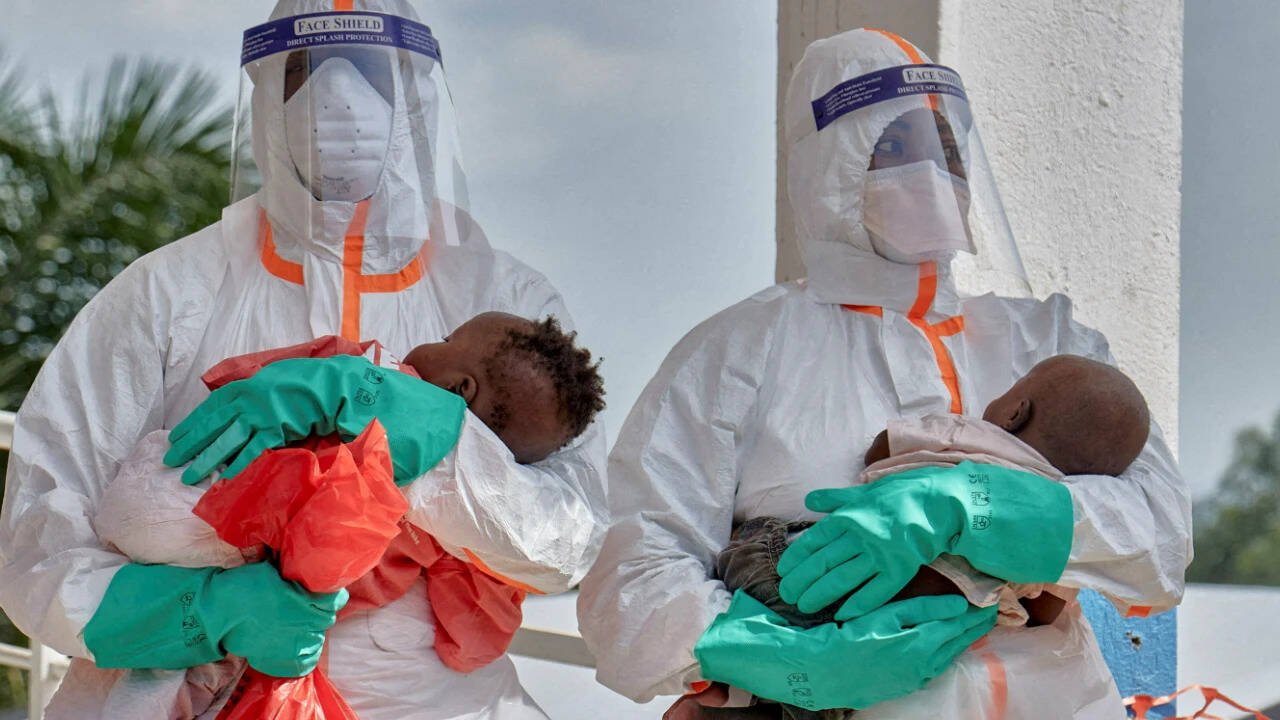
Epidemiology has a cruel habit of mocking optimism. When weekly figures for the Democratic Republic of Congo show a dip in active Ebola infections, public health officials breathe a temporary sigh of relief, yet historical precedent warns that a falling curve does not equate to victory. The recent downward trajectory of Ebola virus disease cases in the eastern provinces of the DRC masks a volatile reality on the ground, where structural vulnerabilities, community distrust, and logistical nightmares create an environment primed for resurgence.
Every outbreak carries its own political and social ecosystem. To understand why an apparent lull in transmission is frequently a mirage, one must look past national statistics and examine the mechanics of viral persistence in conflict zones. Ebola does not vanish simply because the active case count drops for three consecutive weeks. It merely goes underground, waiting for a lapse in surveillance or a breach in containment protocols to detonate once more.
The Mirage of Falling Metrics
Raw numbers are seductive. A drop from fifty cases a week to five offers an irresistible narrative of triumph for international agencies and local ministries alike. Yet, public health reporting in the Kivu and Ituri regions operates under extreme duress. Security threats, militarized zones, and rugged terrain routinely block contact tracers from reaching remote villages where symptomatic individuals remain hidden.
When surveillance breaks down, reported numbers reflect the capacity of the health system to collect data rather than the true burden of the disease. A clinic that cannot send an epidemiologist down a rebel-controlled road due to active combat is a clinic recording zero new admissions. That zero is logged as success in regional dashboards, while the virus continues to circulate quietly within households.
Asymptomatic carriers or individuals seeking care outside formal treatment centers skew the metrics further. Traditional burial practices, deeply embedded in cultural grief, continue to occur away from the gaze of medical personnel. Every unmonitored funeral represents a potential superspreading event that will not appear in official summaries until days later, when a new cluster emerges miles away.
The Geography of Neglect
Infrastructure is destiny in epidemic response. The eastern DRC lacks the paved arterial roads, reliable electrical grids, and decentralized laboratory networks required to stamp out a pathogen as lethal as Ebola. Cold chain storage for experimental vaccines degrades in tropical heat without reliable diesel generators. Transporting blood samples for Polymerase Chain Reaction confirmation involves perilous motorcycle journeys over washed-out tracks, turning a twenty-four-hour diagnostic turnaround into a week-long ordeal.
Militarized instability compounds these physical barriers. Armed militias view humanitarian workers with suspicion, often accusing foreign medical teams of espionage or resource hoarding. When a treatment center is attacked or burned, surveillance grinds to a halt. Contact tracing notebooks are lost. The institutional memory of an infection chain vanishes in smoke. Under these conditions, a falling case count is less a sign of containment and more an artifact of a blind spot.
Community Resistance Rooted in History
Public health is ultimately a question of trust. Decades of state neglect, economic exploitation, and violent conflict have left rural Congolese populations deeply skeptical of government directives and international interventions. When men in biohazard suits arrive with armed escorts to isolate a beloved family member, the emotional response is not gratitude for medical science, but sheer terror.
This dynamic breeds clandestine care networks. Families hide sick relatives in back rooms, treating them with herbal remedies or turning to traditional healers who lack personal protective equipment. By the time a patient reaches a proper treatment unit, they are often in terminal shock, and dozens of secondary contacts have already been exposed.
Communication campaigns that rely on top-down instructions rather than genuine dialogue fail to bridge this divide. True containment requires local ownership of the response, empowering community leaders to drive contact tracing and burial management. Until the population views health workers as protectors rather than occupiers, the virus will find safe harbor in the shadows of mistrust.
The Long Tail of Viral Persistence
Biological factors add another layer of uncertainty to the epidemiological horizon. Recent scientific findings demonstrate that the Ebola virus can persist in immunologically privileged sites within recovered patients, such as the central nervous system, the eyes, and semen, long after clearance from the bloodstream.
Sexual transmission or late recrudescence from a survivor can ignite an entirely new transmission chain months after an outbreak is declared officially over. In a health system strained by simultaneous crises of measles, cholera, and malaria, detecting a single sporadic relapse before it sparks widespread transmission is extraordinarily difficult. The reservoir is not merely animal; it is human, mobile, and unpredictable.
The Cost of Complacency
Donor fatigue sets in rapidly when headlines shift to newer global emergencies. Funding streams that once supported robust contact tracing networks and community engagement teams dwindle just as the virus enters a low-level endemic phase. This premature withdrawal is the single most reliable catalyst for a resurgence.
When surveillance teams are laid off due to budget shortfalls, the early warning system goes dark. The next wave does not announce itself with sirens. It arrives quietly, masked by malaria symptoms and dismissed by local clinics until a cluster of unexplained deaths forces the issue back onto the global agenda.
Reversing this cycle demands sustained investment in foundational primary health care rather than frantic, reactive emergency deployments. Communities must have permanent access to clean water, reliable diagnostics, and trusted local practitioners. Only by building a resilient health infrastructure from the ground up can the DRC move past the endless cycle of panic and temporary relief. The virus is patient, adaptive, and indifferent to the exhaustion of the international community. Treating a lull as an eradication is an expensive gamble paid for in lives.