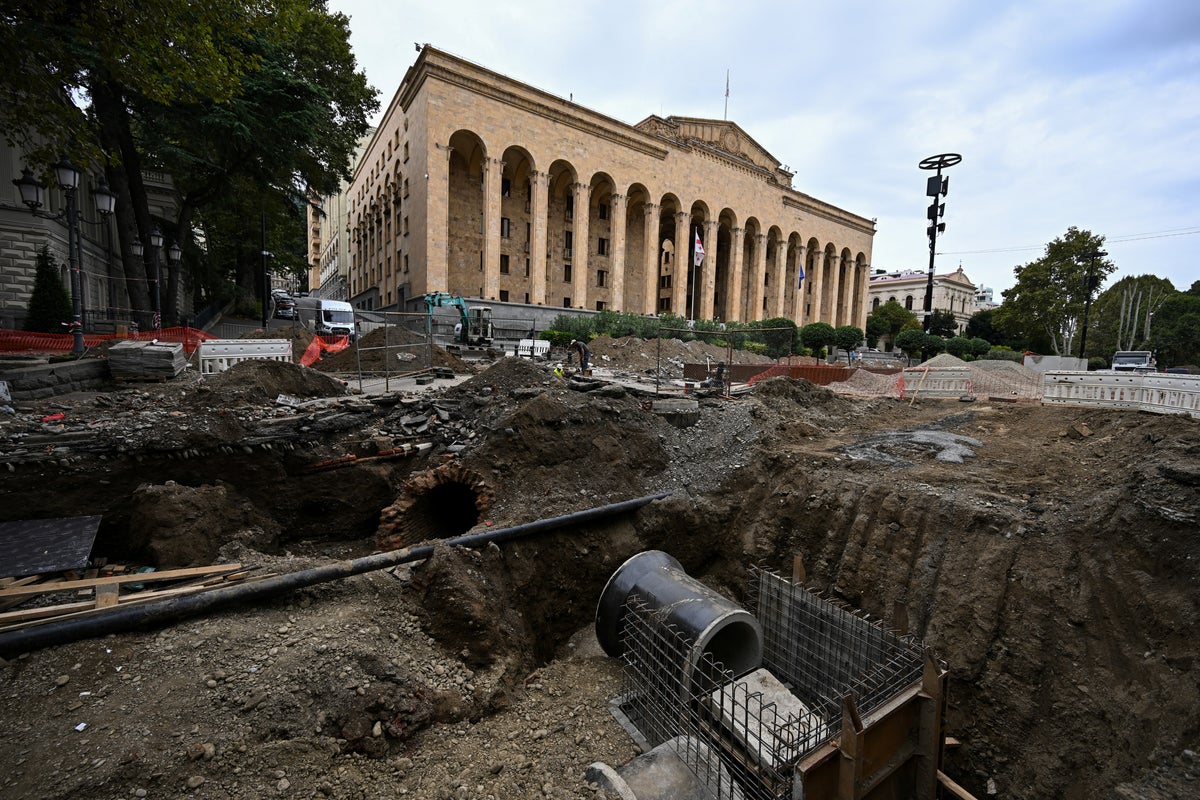
Road construction projects in historic urban centers frequently act as accidental archaeological excavations, turning routine municipal upgrades into high-stakes rescue missions for lost history. Beneath the humming traffic and utility lines of Georgia's capital, Tbilisi, routine roadworks recently uncovered a substantial 10th-century trove of artifacts, structures, and ancient infrastructure that forces a difficult reckoning between modern urban development and the preservation of a deep medieval past.
For decades, urban planners treated the Georgian capital's underground as an inert utility corridor meant for water pipes, fiber optic cables, and stormwater drains. That bureaucratic illusion shattered when heavy machinery struck masonry belonging to a different era entirely. This discovery is not merely a collection of scattered coins or broken pottery shards. It points to a dense, multi-layered urban footprint from the 10th century—a period when Tbilisi stood at a crucial crossroads of regional trade routes, constantly fought over by local emirates, Georgian kingdoms, and foreign empires.
The find exposes the fundamental friction of managing a historic metropolis in the twenty-first century. Municipal leaders face a brutal financial and logistical squeeze. Modernize the city's crumbling infrastructure to accommodate a growing population and burgeoning tourism economy, or halt multi-million-dollar civil engineering projects to meticulously map every square meter of medieval stone.
The Fragile Mechanics of Urban Rescue Archaeology
When an excavator bucket strikes an unrecognized wall three meters beneath a major thoroughfare, the clock starts ticking immediately. Rescue archaeology operates under conditions of extreme duress. Unlike academic digs funded for years with targeted grants, salvage operations forced by infrastructure projects must move at the speed of construction contracts, penalty clauses, and political pressure.
Archaeologists stationed at the Tbilisi site are working in narrow trenches flanked by active traffic lanes, balancing the demand for speed against the rigorous documentation required to preserve historical context. Every layer of soil removed is gone forever. If a stratigraphic layer is misread under the glare of floodlights during a night shift, centuries of stratified data vanish into a dump truck.
The 10th century in Tbilisi was a volatile era. Following periods of Arab rule and shifting geopolitical boundaries, the city was a crucible of diverse cultures, religions, and economic activities. The artifacts emerging from the tarmac—metalwork, ceramic storage vessels, and structural foundations—demonstrate a sophisticated urban center long before modern municipal planning existed. Yet, these physical remnants are notoriously fragile. Exposed to sudden air circulation, moisture changes, and modern pollution after a thousand years of stable burial, ancient organic materials and porous stone begin to degrade within hours unless immediately stabilized.
Municipal authorities often view these discoveries through the lens of project delays. Every week the trench stays open is a week of gridlock for commuters and additional expenditure for the city council. This dynamic pits heritage protection agencies against civil engineering contractors who care little for medieval masonry when concrete pour schedules are on the line.
Beneath the Pavement A History of Erasure
Tbilisi is a palimpsest. Modern buildings sit atop 19th-century brickwork, which rests on medieval foundations, which in turn obscure structures from antiquity. This vertical stacking of history makes every trench a potential archaeological minefield.
Urban development has a long history of erasing what lies beneath. Soviet-era infrastructure projects frequently plowed through historical layers with zero documentation, prioritizing rapid industrialization and utilitarian housing over preservation. Modern democratic Georgia inherited this subterranean complexity but operates under a different set of legal frameworks. Heritage laws mandate halts and assessments, but the enforcement mechanisms remain underfunded and politically vulnerable.
When roadworks unearth significant finds, the immediate response is a scramble for media attention followed by quiet compromises behind closed doors. Will a section of the 10th-century wall be incorporated into a glass-fronted viewing pit beneath the new pavement, or will it be dismantled, cataloged, and stored in a damp municipal warehouse to make way for a smoother bus lane?
The answer usually depends on who is shouting the loudest. Local preservationists demand total site freezes. Commercial interests point to economic stagnation. Meanwhile, the physical evidence of the 10th century remains exposed to the elements, waiting for a bureaucratic consensus that rarely satisfies both history and logistics.
The Economic Paradox of Ancient Ruins
Cities leverage their history to attract tourists, yet treat the physical manifestations of that history as obstacles to economic progress. Tbilisi relies heavily on its historic charm—the sulfur baths, the winding cobblestone alleys of the old town, the fortress ruins looming overhead. Visitors come to consume a romanticized version of the past.
Yet, when that past literally blocks a drainage upgrade, the romance evaporates instantly.
The newly discovered 10th-century structures complicate the narrative of urban renewal. If preserved in situ, they require ongoing maintenance, tourist infrastructure, and permanent alterations to traffic flow. If ignored or destroyed, the city chips away at its own authenticity, trading tangible heritage for temporary asphalt longevity.
The financial burden of archaeological conservation cannot be absorbed by the municipal budget alone. International cultural heritage funds are notoriously slow to mobilize for emergency salvage operations. By the time a grant application clears committee review, the road project has either bypassed the find or paved over it.
The Unresolved Fate of the Dig
As the excavation lights cast long shadows over the exposed stone walls in Tbilisi, the immediate future of the site remains precarious. The construction equipment idles fifty yards away, its engine humming a low baseline of impatience.
Urban strata do not negotiate. Once a city decides that convenience outweighs continuity, the loss is permanent. The 10th-century trove pulled from beneath the roadworks serves as a stark reminder that beneath every modern commute lies an unacknowlected debt to the people who walked the exact same ground a thousand years ago. Whether this capital city chooses to honor that debt or bury it once more beneath another layer of concrete will define the character of Tbilisi for generations to come.