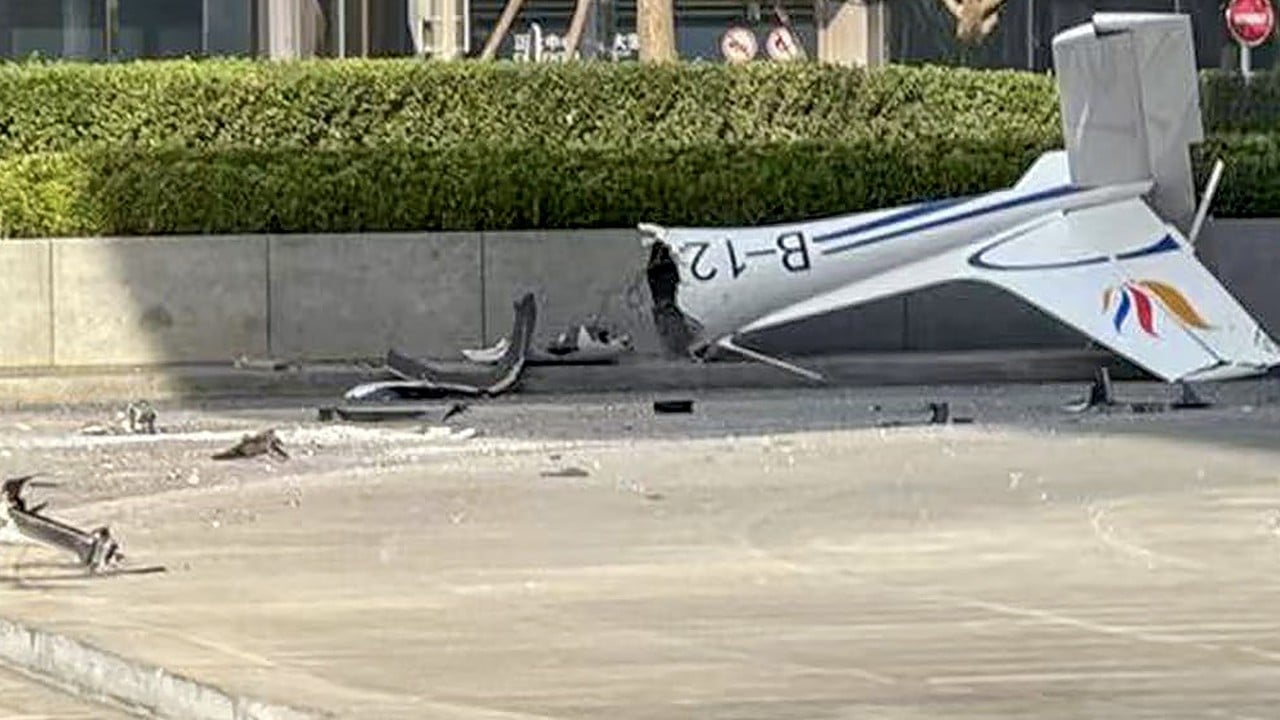
You don't expect a plane to hit a skyscraper in one of the most heavily policed, airspace-restricted cities on earth. Yet, just before 6 p.m. local time on Friday, June 26, 2026, a light sport aircraft slammed right into the upper floors of the CITIC Tower, Beijing's tallest building. The 108-story skyscraper, affectionately known as China Zun due to its resemblance to an ancient wine vessel, stands at a staggering 1,732 feet in the middle of the capital's central business district.
The impact sounded "louder than fireworks," according to local couriers who rushed toward the noise. Debris immediately rained down into the streets below, shattering the window of a nearby taxi and sending panicked pedestrians running for cover. Fire alarms inside the tower triggered immediately, prompting mass evacuations of office workers who suddenly found themselves fleeing down hundreds of flights of stairs onto roads quickly swarming with police cars, fire engines, and ambulances.
While the physical damage appears limited to a few shattered glass panels and a gash in the tower's facade, the geopolitical and security implications of this crash are massive. Beijing is practically a fortress. This wasn't supposed to happen.
Inside the Rapid Information Blackout
If you try searching for the crash on Chinese social media platforms right now, you won't find much. Within minutes of the impact, the state's censorship apparatus kicked into overdrive.
Searches for "China Zun" or "CITIC Tower" on the lifestyle app Xiaohongshu (Red Note) only pull up posts from yesterday. Videos and photos uploaded by frantic eyewitnesses vanished from WeChat and Weibo almost as fast as they went up. Out on the streets, the police presence expanded rapidly, cordoning off approach roads and aggressively forcing bystanders to delete any footage they managed to capture on their phones. When reporters asked one officer why they were forcing people away from the scene, the reply was telling: "We all know why!"
This aggressive narrative control isn't just standard operating procedure; it highlights how deeply embarrassing this security breach is for local authorities. Just last month, Beijing tightened its already suffocating airspace regulations, effectively implementing a zero-tolerance, drone-free zone across the entire capital jurisdiction. Residents can't even rent or buy a basic consumer drone without explicit government sign-off. To have a full-sized, two-seat airplane navigate straight into the heart of the corporate district exposes a glaring vulnerability in the city's air defense grid.
The Aircraft and the Bizarre Flight Path
Publicly available flight data that managed to escape the digital dragnet paints a confusing picture of how the flight went so horribly wrong. Tracking data from Flightradar24 identified the plane as a Sunward SA 60L Aurora, a domestically manufactured light sport aircraft with a distinctive blue and white frame.
The plane belongs to a local general aviation company that typically uses it for pilot training, recreational flights, and aerial photography. It originally took off from a small airfield roughly 50 kilometers (30 miles) east of Beijing.
Flight Origin: Small airfield (50km East of Beijing)
Flight Direction: Direct Westward path toward downtown
Termination Point: East Third Ring Road / CITIC Tower
Instead of maintaining a standard flight training pattern away from the metropolitan center, the aircraft followed an unusual, severely deviated path that brought it directly past the East Third Ring Road. It eventually wedged itself into the upper structure of the CITIC Tower. Images that leaked past the firewall showed a section of the plane's tail section, displaying part of its registration number, B-12PP, sitting directly on the pavement below the tower.
What makes the scenario highly unusual is the lack of immediate engine failure indicators that would typically force a pilot to try to glide toward an urban center. Investigators will have to look closely at whether this was a catastrophic medical emergency, severe spatial disorientation in the late afternoon glare, or something more deliberate.
Moving Past the Initial Shock
For businesses operating out of the CITIC Tower and the surrounding financial district, the focus shifts from immediate panic to long-term structural and logistical recovery. If your team is located in a major metropolitan hub, an incident like this is a stark reminder that crisis protocols need constant updates.
- Audit Your Physical Evacuation Routines: Don't rely purely on annual fire drills. Ensure team leaders on high floors understand emergency exit paths that bypass primary elevator banks, which automatically lock down during structural impacts.
- Establish Out-of-Band Communication Channels: When localized incidents happen in tightly regulated markets, standard cellular networks and popular local messaging apps often face heavy throttling or censorship-related delays. Maintain external, decentralized communication networks to confirm employee safety.
- Prepare for Localized Traffic and Supply Chain Disruptions: The area surrounding China Zun will likely face rolling street closures and heavy security checkpoints for days. Shift local operations to remote setups immediately to avoid getting caught in the logistical gridlock.
Official state media has kept completely silent about the incident, and the municipal government has ignored international requests for comment. As the wreckage is cleared behind large blue tarps under the cover of night, the true cause of the crash remains hidden behind a wall of silence.


