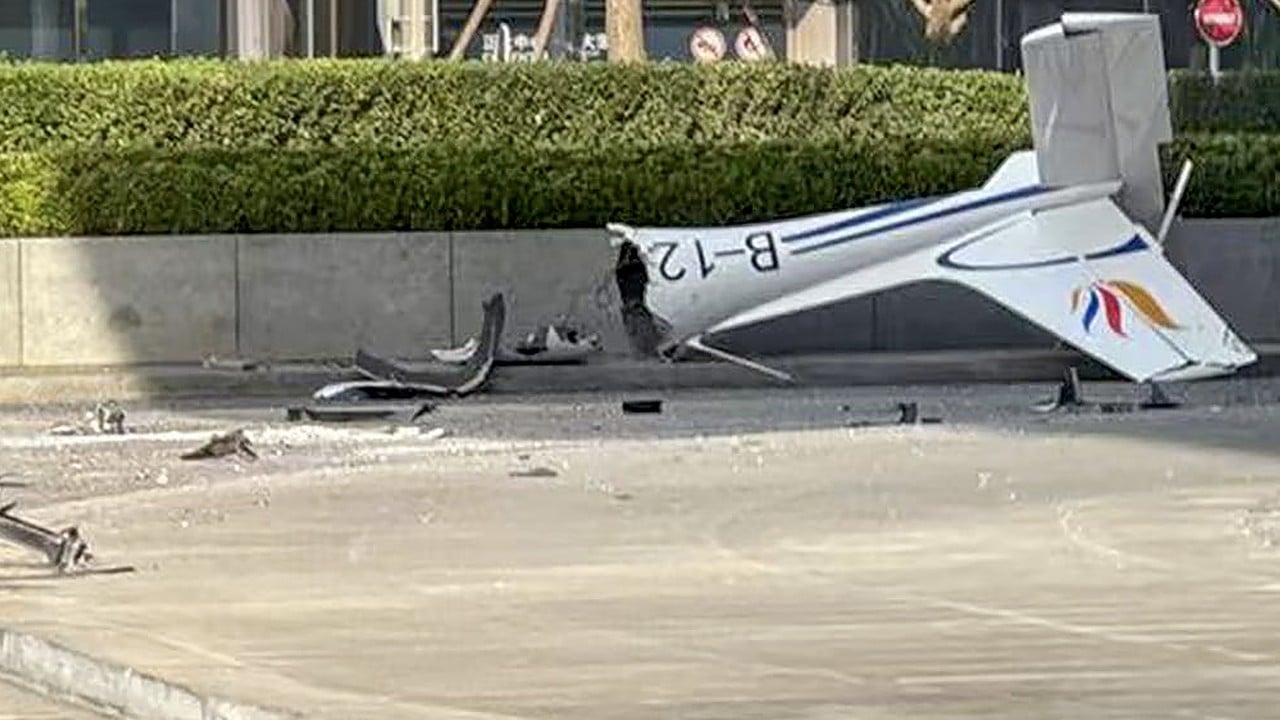
You don't expect to see a plane sticking out of a skyscraper in one of the most heavily policed, restricted airspaces on earth. Yet, on Friday afternoon at 5:55 p.m., that's exactly what happened in the heart of Beijing. A two-seat light sport aircraft slammed directly into the CITIC Tower, the capital's tallest building.
The collision killed the pilot, who was the sole occupant of the craft, and injured 13 people on the ground or within the immediate area. The 108-story tower, colloquially known as China Zun due to its architectural resemblance to an ancient wine vessel, stands at a staggering 528 meters (1,732 feet). It dominates the skyline of the Chaoyang District, Beijing's bustling central business district.
The shock of the impact was immense. A local courier working near the base of the tower noted that the sound was "louder than fireworks." Almost immediately, emergency services flooded the area. Fire trucks lined the East Third Ring Road, blasting water at debris fires on the asphalt while police quickly cordoned off the block.
The Broken Window in a Heavily Guarded Sky
While a tragedy like this would trigger an immediate, transparent investigation anywhere else, the reaction inside China has been predictably tightly managed. Beijing's airspace isn't just restricted; it's a fortress. The city enforces strict low-altitude aviation controls, including a complete ban on unapproved drones. The CITIC Tower sits roughly a 20-minute drive from Zhongnanhai, the heavily fortified compound housing the offices of China's top political leadership.
Because of this geographic and political sensitivity, the digital cleanup started within minutes of the impact. Videos showing the plane hitting the upper floors, smoke billowing near the base, and a wing lying on the street were scrubbed from platforms like Weibo and Xiaohongshu. A search for the building’s name on local apps yielded nothing but historical posts from days prior. When international journalists asked why they were being forced away from the scene, a local police officer simply replied, "We all know why."
The aircraft involved has been identified via flight-tracking data as a Sunward SA60L Aurora, carrying the registration number B-12PP. This Chinese-manufactured light sport aircraft is highly popular for private pilot training and aerial sightseeing. Data from Flightradar24 indicates the plane took off from Shifosi Airport, located about 50 kilometers (30 miles) east of the city.
What the Flight Data Tells Us
The plane was reportedly in the middle of a routine flight and was supposed to return to Shifosi Airport around 5:40 p.m. Instead, the aircraft deviated sharply from its planned flight path, heading straight toward the urban center of Beijing. Tracking signals were lost near the East Fifth Ring Road just before the aircraft made its fatal impact with the tower's glass facade.
The operator of the plane, Shuangyue General Aviation (specifically Dongshi Shuangyue Beijing General Aviation), offers private pilot training and recreational flights. Their website went offline shortly after the incident became public.
Flight Timeline: Friday Afternoon
- Takeoff: Shifosi Airport (approx. 50km east of Beijing)
- Scheduled Return: 5:40 p.m. (Aircraft deviates westward instead)
- Signal Loss: East Fifth Ring Road area
- Impact: 5:55 p.m. at CITIC Tower, Chaoyang District
Images that managed to leak past the Great Firewall showed at least two massive glass panels completely shattered on an upper floor of the skyscraper, with a temporary patch quickly applied by Saturday morning. Debris raining down from that height explains the 13 injuries, though authorities haven't specified whether those individuals were hit by falling glass on the sidewalk or were inside the office spaces when the fuselage struck.
The Reality of Low Altitude Risks
This isn't the first time an aviation mishap has occurred over the capital, though it's by far the most high-profile. In 2022, a tourist helicopter crashed between the Changping and Fangshan districts, killing both pilots. But hitting a crown jewel of state-owned enterprise infrastructure—the headquarters of the CITIC Group—presents an entirely different level of security nightmare for municipal authorities.
Aviation experts are already looking closely at how an aircraft could travel so deep into the metropolitan core without being intercepted or forced down, given the regional air defense networks. Whether the cause boils down to a sudden mechanical failure, pilot incapacitation, or something intentional, the fallout for the domestic general aviation industry will likely be severe. China has been slowly trying to open up its low-altitude airspace to boost private aviation and commercial drone logistics. This incident will almost certainly freeze those regulatory expansions.
If you happen to be traveling or working in the Chaoyang business district over the next few days, expect heavy security checkpoints and significant traffic delays around the East Third Ring Road. Avoid taking photos or videos anywhere near the CITIC Tower; local police are actively confiscating phones and forcing users to delete media related to the crash. Stick to official transit routes and monitor local municipal notices for building re-entry schedules if your office is located within the affected zone.