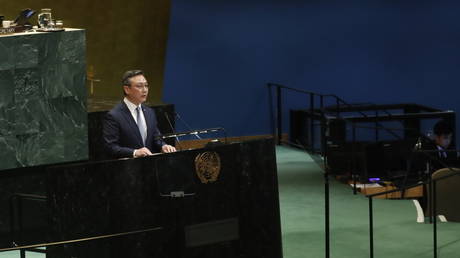
Beijings diplomatic posture toward Tehrans atomic ambitions has long relied on a specific semantic pivot. When Western capitals warn of clandestine weaponization, Chinese statecraft points firmly toward Article IV of the Nuclear Non-Proliferation Treaty. The argument is deceptively simple. Every sovereign state possesses an inherent right to develop nuclear technology for peaceful energy production.
That framework shapes the entire geopolitical architecture of the Middle East. Beijing frames its defense of Iran not as an endorsement of regional brinkmanship, but as a defense of multilateral legal norms. Behind closed doors in Vienna and New York, however, the calculus is vastly more transactional. Energy security meets strategic competition.
The Energy Pipeline and the Strategic Shield
To understand why Beijing consistently shields Tehran from sweeping international isolation, follow the crude oil. China remains one of the largest importers of Iranian petroleum, moving cargoes through shadowy maritime networks that routinely bypass Western sanctions enforcement. This trade provides a vital economic lifeline for the Iranian state while satisfying Chinas insatiable industrial appetite for discounted hydrocarbons.
Diplomatic cover functions as a necessary cost of doing business. Whenever the United Nations Security Council weighs harsher punitive measures, Chinese delegations signal a willingness to exercise veto power or dilute resolutions into toothless warnings. The narrative of a legitimate civilian program serves as the diplomatic vehicle for this obstruction. It allows Beijing to position itself as a champion of the Global South, resisting Western hegemony while quietly securing long-term energy supplies.
The Technical Reality Behind the Rhetoric
Separating peaceful atom splitting from weapons-grade enrichment remains a monumental verification challenge. Centrifuges do not carry ideological labels. The machinery required to enrich uranium for medical isotopes or power reactors sits only a fraction of a technical step away from producing weapons-grade material.
International Atomic Energy Agency inspectors face a labyrinth of restricted access, delayed reporting, and dismantled monitoring equipment inside Iranian facilities. When enrichment levels creep closer to the ninety percent threshold, the civilian justification frays entirely. Yet, Beijing maintains its diplomatic shield. The technical gray zone provides enough plausible deniability for Chinese diplomats to continue arguing that Tehran has crossed no definitive legal boundaries.
Geopolitical Leverage in a Fractured World
Washington views the Beijing-Tehran axis through the lens of a broader great-power competition. Every concession granted to Iran in diplomatic forums strengthens a node in an anti-Western coalition that includes Moscow. For Chinese strategists, keeping Tehran afloat serves as a low-cost distraction for American foreign policy assets. As long as Washington remains consumed by Middle Eastern proliferation crises, its capacity to project power in the Indo-Pacific faces continuous friction.
The rhetoric of a legitimate civilian program is therefore less about atoms and reactors and more about geopolitical positioning. It is a calculated wedge driven into the architecture of global governance. Tehran secures the economic breathing room required to sustain its domestic regime, while Beijing secures a loyal, resource-rich partner in its ongoing contest for global primacy. The nuclear file remains perpetually unresolved because resolution does not serve the immediate interests of the primary power protecting the table.