The security footage was grainier than it should have been for a high-end driveway in San Bernardino. In the frame, a luxury car sat silent, a shimmering monument to Southern California success. Then, from the shadows of the manicured bushes, a figure emerged. It was shaggy. It was lumbering. It moved with the heavy, uncoordinated gait of a predator that had perhaps spent too much time raiding suburban trash cans.
The "bear" approached the vehicle, climbed inside, and began to systematically shred the interior. Leather seats were gouged. Door panels were scored with deep, jagged claw marks. To the insurance adjuster watching the playback days later, it looked like a clear-cut case of nature reclaiming the concrete jungle. It looked like a hundred-thousand-dollar payout. For a closer look into this area, we suggest: this related article.
It also looked exactly like a man in a rug-store costume.
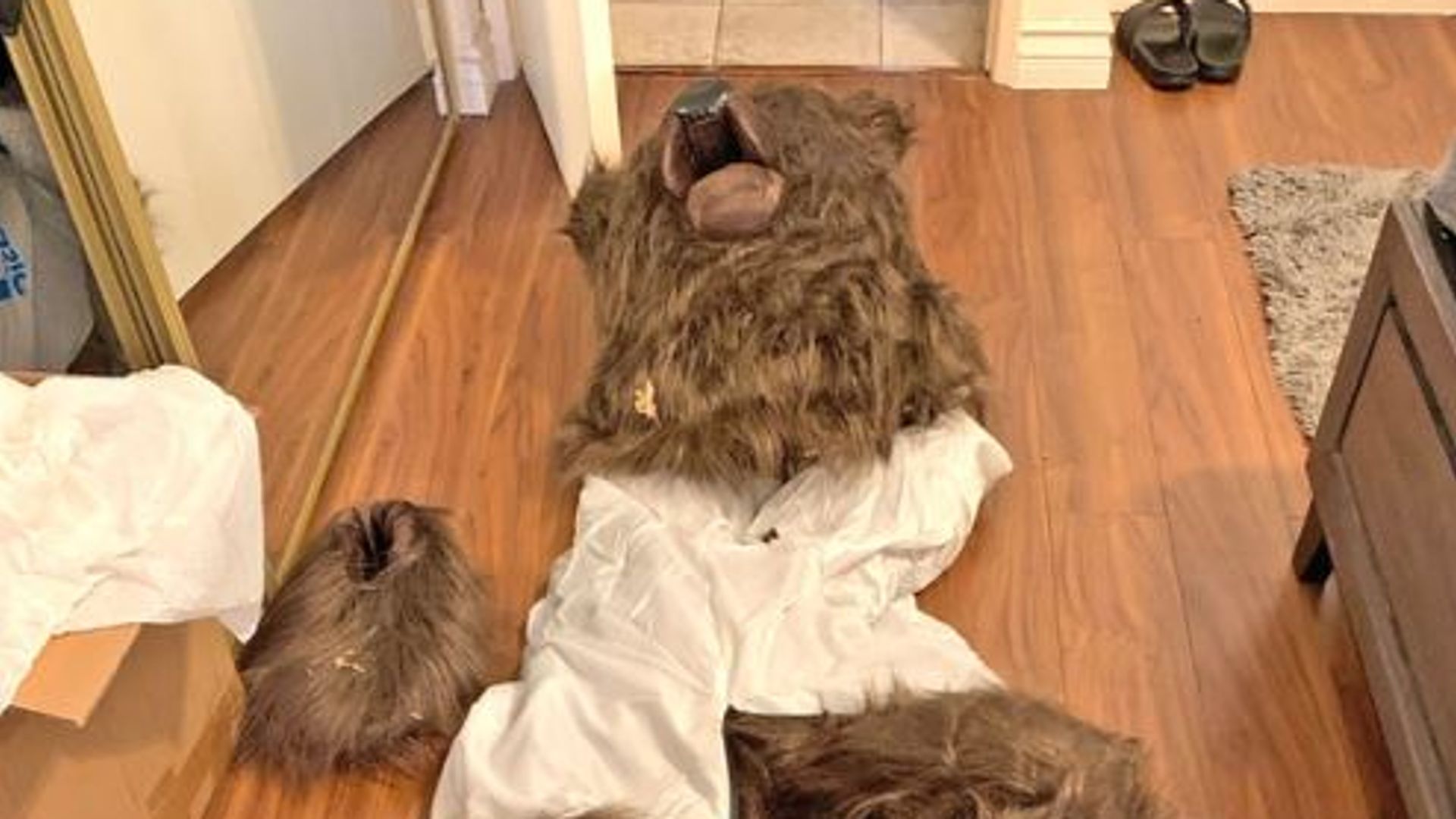
The claw marks were too rhythmic. The "fur" caught the light with the unmistakable sheen of polyester. When investigators finally raided the homes of those involved, they didn't find a den or a hibernation spot. They found a brown furry suit with hand-held meat claws taped to the paws. It was a scheme so absurd it bordered on folk art, but the reality behind the "Bear Hole" scam is a window into a much darker, much more human desperation. For additional information on this topic, in-depth reporting can be read on BBC News.
The Anatomy of the Shag
Ruben Tamrazian, Ararat Chirkinian, and Vahe Muradkhanyan didn't just wake up one day and decide to impersonate a grizzly. They were participants in a meticulously staged theater of the absurd designed to siphon $141,839 from insurance companies. They claimed that a bear had damaged not one, but three different luxury vehicles: a 2010 Rolls Royce Ghost, a 2015 Mercedes G63 AMG, and a 2022 Mercedes E350.
Think about the audacity of that choice. A bear in San Bernardino is rare but plausible. A bear with a specific taste for European luxury imports, however, suggests a predator with a very refined palate.
The group submitted three separate claims to three different insurance providers. They provided the same grainy footage for each. They banked on the idea that insurance companies are massive, faceless bureaucracies that don't talk to one another. They assumed that in the churn of thousands of claims, a "bear attack" would be processed as a freak accident of geography—a check cut to make a problem go away.
They were wrong.
Detectives from the California Department of Insurance's Fraud Division noticed a pattern. It wasn't just the frequency of the attacks; it was the physics of the movement. Real bears don't have human knees. They don't have the specific center of gravity required to climb into a luxury sedan through a door handle without rocking the entire chassis in a very specific, heavy-set way. To confirm their suspicions, the Department of Insurance brought in a biologist from the California Department of Fish and Wildlife.
The expert’s report was blunt. "It was clearly a human in a bear suit."
The Invisible Stakes of the Hustle
It is easy to laugh at the image of a grown man in a cheap costume clawing at a Rolls Royce with a set of kitchen tools. The internet certainly did. But the laughter masks the structural damage these "theatrical" crimes do to the rest of us.
Insurance fraud is often viewed as a victimless crime, a way of "sticking it" to billion-dollar corporations that spend their days denying valid claims from honest people. There is a certain Robin Hood allure to the idea, a sense that we are just clawing back our own premiums. Yet, the math tells a different story.
In California alone, insurance fraud is a multibillion-dollar drain. When a company pays out $140,000 for a fake bear attack, they don't just eat that cost. They distribute it. They bake it into the premium of the single mother in Fresno, the small business owner in San Diego, and the retiree in Sacramento. Every time someone puts on a costume to stage a "wreck," the cost of living for everyone else ticks upward.
We are all paying for the bear suit.
The human element here isn't just the greed of the perpetrators; it's the erosion of the social contract. Insurance is, at its core, a communal pool of risk. We all pay in so that when tragedy strikes—a real fire, a real accident, a real illness—the weight is shared. When people treat that pool like a lottery, the pool dries up for those who actually need it.
The Verdict of the Costume
The legal system finally caught up with the trio. Ruben Tamrazian was sentenced to several years in prison, while his co-conspirators received varying degrees of probation and heavy fines. The court didn't just see a prank; it saw a calculated attempt to undermine a system of trust.
During the investigation, officials discovered that this wasn't an isolated "moment of madness." It was a business model. The meticulous nature of the staging—the choice of the vehicles, the timing of the claims, the use of the specific "meat claw" tools—pointed toward a level of planning that far exceeded a simple impulse.
Imagine the scene in that San Bernardino garage. Imagine three men, presumably successful enough to have access to a Rolls Royce, standing around a brown pile of fake fur. Imagine the conversation. Who was the one to suggest the meat claws? Who was the one to volunteer to put on the suit? There is a profound, almost tragic comedy in the amount of work humans will put into being dishonest. If they had spent half that energy on a legitimate enterprise, they likely would have earned the $140,000 honestly.
Instead, they are now footnotes in the history of strange crimes.
The Shadow in the Brush
This story resonates because it taps into a very modern anxiety. We live in an era where the line between "real" and "staged" is thinner than ever. We see it in our social media feeds, our news cycles, and apparently, our insurance claims. We have become a culture of the "staged event," where the appearance of reality is more valuable than reality itself.
The San Bernardino bear was a low-budget version of a high-tech problem. Today it’s a man in a suit; tomorrow it’s a deep-faked accident report or an AI-generated invoice. The tools change, but the impulse remains the same: the desire to shortcut the slow, grinding process of earning a life in favor of a sudden, deceptive windfall.
As the three men begin their sentences, the "bear" costume sits in an evidence locker—a matted, ridiculous reminder of how far some will go to avoid the truth. It is a hollow skin, missing the heart and the hunger of a real animal, left only with the lingering scent of a desperate plan that fell apart under the light of a single, skeptical eye.
The next time you hear a rustle in the bushes at night, it might be a predator. But in the modern world, it’s just as likely to be a man with a mortgage and a very bad idea.