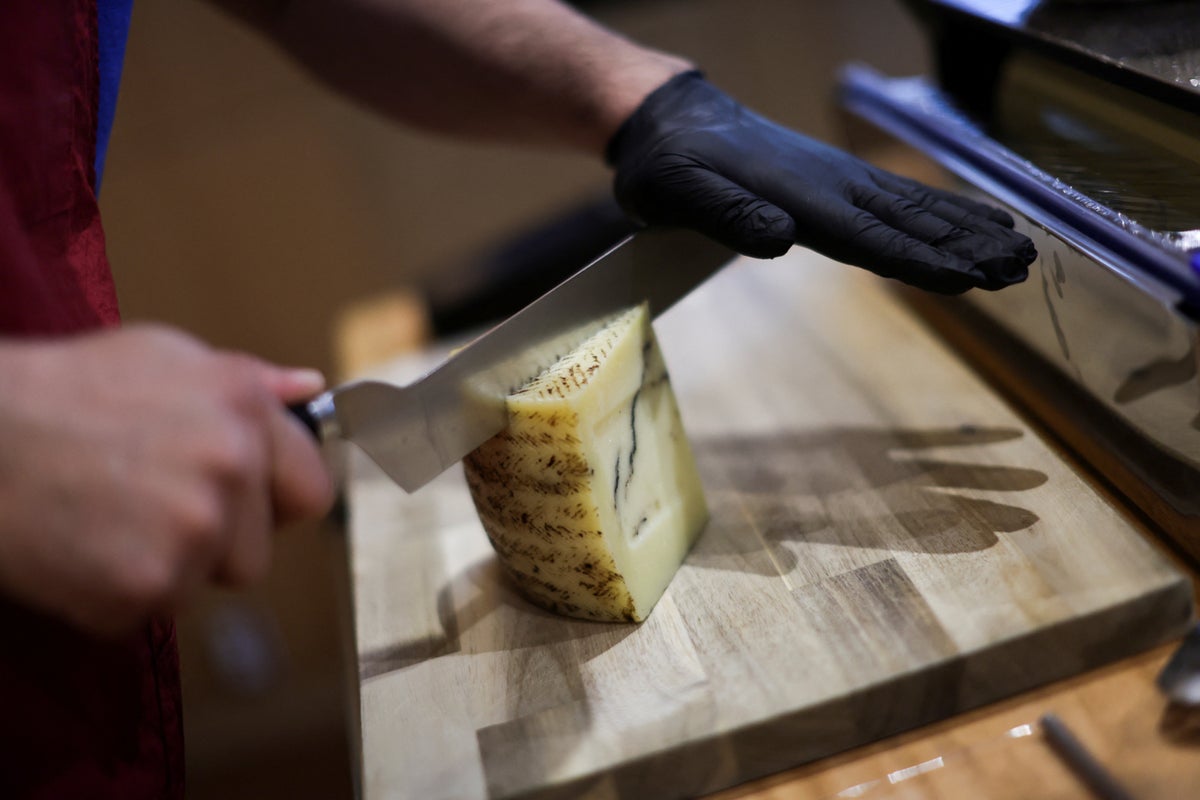
The air inside the aging maturation cellar in Querétaro smells of damp earth, unhurried time, and the sharp, barnyard kick of unpasteurized milk. Mateo wipes the sweat from his forehead with the back of a calloused wrist, leaving a powdery smear of salt against his skin. Around him, thousands of wheels of cheese—each one pressed by hand, each one turned weekly, each one carrying the quiet hopes of a multi-generational dairy family—rest on wooden planks.
They are aging toward a confrontation they never asked for.
Across a border defined by steel fences, customs manifests, and billions of dollars in trade, a massive economic machine is watching these very wheels. To a trade lawyer in Washington, Mateo’s life work is simply an item on a balance sheet. To the grocery store chains stretching from Chicago to Austin, it is an inventory slot. But to the men and women locked in what trade analysts dryly call a billion-dollar cheese war, every single wedge of dairy represents something far more volatile: a fight over identity, protectionism, and what belongs on a plate.
We tend to think of international trade as an abstraction of cargo ships and floating exchange rates. We see numbers in headlines—a billion dollars here, a tariff dispute there—and our eyes glaze over. But trade is intensely physical. It tastes like salt and fat. It smells like sour milk and aged rind.
Consider what happens next.
When politicians and bureaucrats begin bickering over geographical indications, Mateo does not read the white papers. He feels the pinch in his ledger. The conflict began innocently enough, or at least as innocently as modern commerce allows. For decades, Wisconsin and California dairies churned out blocks of cheese labeled with names that European and Latin American traditionalists claimed as their own cultural birthright. Feta. Parmesan. Asiago. And, most contentiously of all, specific regional styles of artisanal wedges that crossed international lines with growing frequency.
Then the regulatory walls went up.
The United States and Mexico found themselves staring across a billion-dollar chasm of dairy exports, caught in a tit-for-tat web of protective labeling laws and retaliatory tariffs. On paper, it is a dispute over intellectual property and market access. On the ground, it is a slow-motion collision between industrial efficiency and cultural preservation.
Think about the sheer scale of modern milk production. In massive, high-tech dairies where cows are milked by silent robotic carousels, efficiency is the singular god. Feed is optimized by software. Milk yields are tracked to the exact ounce. Thousands of pounds of cheese roll off conveyor belts every hour, vacuum-sealed in plastic, ready to be melted over factory-extruded nachos or slipped into fast-food burgers across the globe. This is the muscle of American dairy export—vast, standardized, and relentlessly affordable.
Now look back at Mateo’s cellar.
There are no robots here. There are only wooden brushes, cold water, and a grandfather’s handwritten notebook detailing the exact humidity required during the third month of aging. When trade disputes erupt into tariff threats, it is not the massive industrial complexes that feel the immediate panic. They absorb the blow with diversified portfolios and government subsidies. It is the small-batch producers—the ones whose entire financial survival depends on whether a container ship clears customs before a rind turns bitter—who bear the invisible weight.
There is a strange irony in how we fight over food today. We live in an era obsessed with authenticity. We hunt for farm-to-table restaurants, scroll through endless photos of artisanal charcuterie boards, and romanticize the rustic traditions of old-world makers. Yet the global trade system we’ve built treats food like microchips or steel coils. It demands standardization. It punishes variation. If a batch of cheese from a small Mexican creamery doesn't match the chemical profile anticipated by an export code, or if an American exporter finds their shipment held hostage by retaliatory tariffs over entirely unrelated agricultural disputes, the romantic illusion shatters against the hard rock of bureaucracy.
The billion-dollar figure attached to this conflict sounds sterile, but money of that magnitude translates directly into human decisions. It decides whether a family sells their ancestral pasture to a real estate developer or holds on for one more season. It determines whether a supermarket shelf features a wedge of cheese with a story, or a uniform block of yellow fat stamped out by a machine that has never seen a cow.
Trade wars are rarely about the products themselves. They are proxy battles for sovereignty in a rapidly shrinking world. When countries argue over who has the exclusive right to call a specific style of cheese by a certain name, they are arguing over cultural legacy. They are trying to draw lines in the sand of human history, claiming that certain flavors belong only to certain flags.
Yet cheese has always been a traveler. It was born out of necessity—a primitive technology designed to preserve milk before refrigeration existed, carried in saddlebags and ship hulls across empires and oceans. It evolved as it moved. Mexican artisanal cheesemaking is a living bridge between Spanish colonial traditions and indigenous agriculture, layered with local microclimates that cannot be replicated in a laboratory. American cheesemaking is an explosive, innovative melting pot that took European foundations and pushed them into wild, experimental territory.
To wall these traditions off behind trade barriers and legal threats is to misunderstand why we eat what we eat.
Back in the cellar, the evening cool begins to settle through the stone windows. Mateo picks up a small brass-bladed knife, drives it gently into the heart of a six-month-old wheel, and draws out a narrow plug of cheese. He inspects the paste, smells it, and finally touches it to his tongue. His expression doesn't change—it is the stoic face of a man who has weathered bad weather, shifting markets, and political crosswinds his entire life.
He slides the plug back into the wheel, sealing the wound with a practiced thumb. Outside, the political machinery in two capitals will wake up tomorrow morning to draft more memos, calculate more tariffs, and argue over another billion dollars of moving product. But inside the dark, cool quiet of the cellar, the cheese keeps aging, indifferent to the borders trying to contain it.


