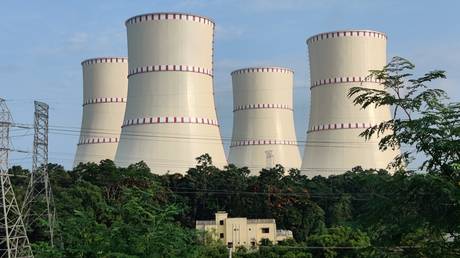
Bangladesh finally has atomic electricity flowing into its national grid.
After six decades of planning, stalled feasibility studies, financing hurdles, and construction delays, the first unit at the Rooppur Nuclear Power Plant connected to the grid in November 2026. During its initial trial run, Rooppur 1 fed up to 350 MW of electricity into the system before officials dialed output back to 300 MW to keep grid frequency and stability right where they needed to be. That happened shortly after the Bangladesh Atomic Energy Regulatory Authority gave the green light to launch unit operations following criticality in October.
If you're looking for the short version, this isn't commercial full-blast power yet. It's a test phase. Unit 1 is slated for full commercial operation in 2027, with Unit 2 following around 2028. Once both 1,200 MW VVER-1200 reactors are running at full tilt, the 2.4 GW facility is projected to cover roughly 11% to 15% of Bangladesh's electricity needs.
Why Bangladesh Nuclear Power Came Together When It Did
People talk about Rooppur like it appeared overnight. Honestly, the timeline reads like a lesson in patience and geopolitical persistence.
The idea of putting a nuclear plant at Rooppur in Pabna dates back to 1961, with site selection following in 1963. Over the next fifty-plus years, Bangladesh formed the Bangladesh Atomic Energy Commission in 1973, ran feasibility studies with foreign firms in the late 1970s and late 1980s, and still couldn't get financing off the ground. Construction didn't actually start on Unit 1 until November 2017.
So why push a roughly $12.65 billion to $13 billion project across the finish line now?
Gas has carried roughly half of Bangladesh's electricity generation for years. When domestic supply tightens and global liquefied natural gas prices spike or get disrupted by regional conflicts—like the fuel crunch tied to the Middle East war—a country of 170 million people feels it fast. Rolling blackouts and costly emergency fuel imports aren't just an engineering headache. They squeeze industrial output and factory competitiveness.
Nuclear baseload power doesn't care what spot LNG costs in Rotterdam or Doha once fuel is loaded. Even when analysts point out that Rooppur's levelized cost of electricity looks steep compared to cheaper legacy gas, imported LNG volatility changes the math. Having steady, non-weather-dependent megawatts on tap gives grid operators breathing room they simply haven't had.
What Happens After the Power Generation Nod
Getting regulatory approval to launch generation and synchronizing a turbine with the grid is a huge deal, sure. It's also where the real stress testing begins.
When a large thermal unit first ties into a grid, engineers watch turbine vibration, voltage profiles, frequency response, and load-following behavior like hawks. Dropping from 350 MW to 300 MW during the initial trial run wasn't a failure. That's normal commissioning discipline when you're proving the transmission network can absorb big chunks of steady power without wobbling.
Reactor Tech and Safety Systems
Rooppur uses two Russian VVER-1200 pressurized water reactors built with Rosatom. Unlike older designs that rely heavily on active operator intervention during emergencies, modern VVER-1200 units pack passive safety features:
- Core catchers positioned beneath the reactor vessel to hold and cool molten material if a severe accident ever occurred.
- Passive autocatalytic recombiners that deal with hydrogen buildup without needing external power.
- Closed-loop emergency cooldown systems paired with natural draft cooling towers drawing heat rejection support near the Padma River.
Having engineered safety layers matters doubly in a dense delta country with high humidity, heavy monsoon weather, and tight transmission corridors. Still, safety on paper only works as well as operator training, maintenance culture, and independent regulatory oversight over a 60-year operating life.
The Money and Geopolitics Nobody Can Ignore
Let's be real about the elephant in the control room. Rooppur isn't just a power station. It's a generational tether.
Roughly 90% of the project's cost has leaned on Russian financing—around $11.38 billion in Russian export credit on a project originally pegged near $12.65 billion, with delays pushing total cost estimates closer to $13 billion. Delays aren't free. Every month a multi-billion-dollar build slips means interest clocks, deferred power sales, and prolonged reliance on pricier fossil fuels.
Look at how political shifts already tested the project. Bangladesh went through massive political upheaval in 2024 that ousted Sheikh Hasina, whose government signed the core agreements with Moscow back in 2013. Governments change. A nuclear plant stays. Fuel deliveries, spare parts, engineering support, and waste management bind Dhaka and Moscow for decades.
Meanwhile, Bangladesh relies heavily on garment exports to Western markets and balances ties across India, China, the United States, Japan, and Gulf states. As analysts at the Lowy Institute have pointed out, deep infrastructure ties—whether ports, telecoms, or nuclear reactors—can subtly narrow diplomatic maneuverability over time, even when a country tries to stay non-aligned.
And there's a fair counter-argument worth taking seriously. Critics of mega-nuclear builds in developing grids often warn about high upfront debt, schedule slippage, and whether transmission lines and solar or storage investments could deliver faster relief. Both things can be true at once: Rooppur can bring vital baseload power while still carrying heavy financial and strategic baggage.
Practical Next Steps If You're Tracking This
If you follow energy markets, infrastructure risk, or South Asian policy, don't stop at the headline that power hit the grid.
- Watch trial-to-commercial milestones. Track how steadily Unit 1 ramps power above 300–350 MW and whether its 2027 commercial target holds without major grid trips.
- Check transmission readiness. A 1,200 MW unit needs rock-solid high-voltage lines and substations to push power from Pabna to demand centers without bottlenecks.
- Compare fuel and debt numbers. Look closely at loan repayment schedules alongside LNG import bills and parallel clean-energy plans like Bangladesh's push to scale solar generation.
Keep an eye on the testing logs over the next few months—that's where hype turns into hard megawatts.