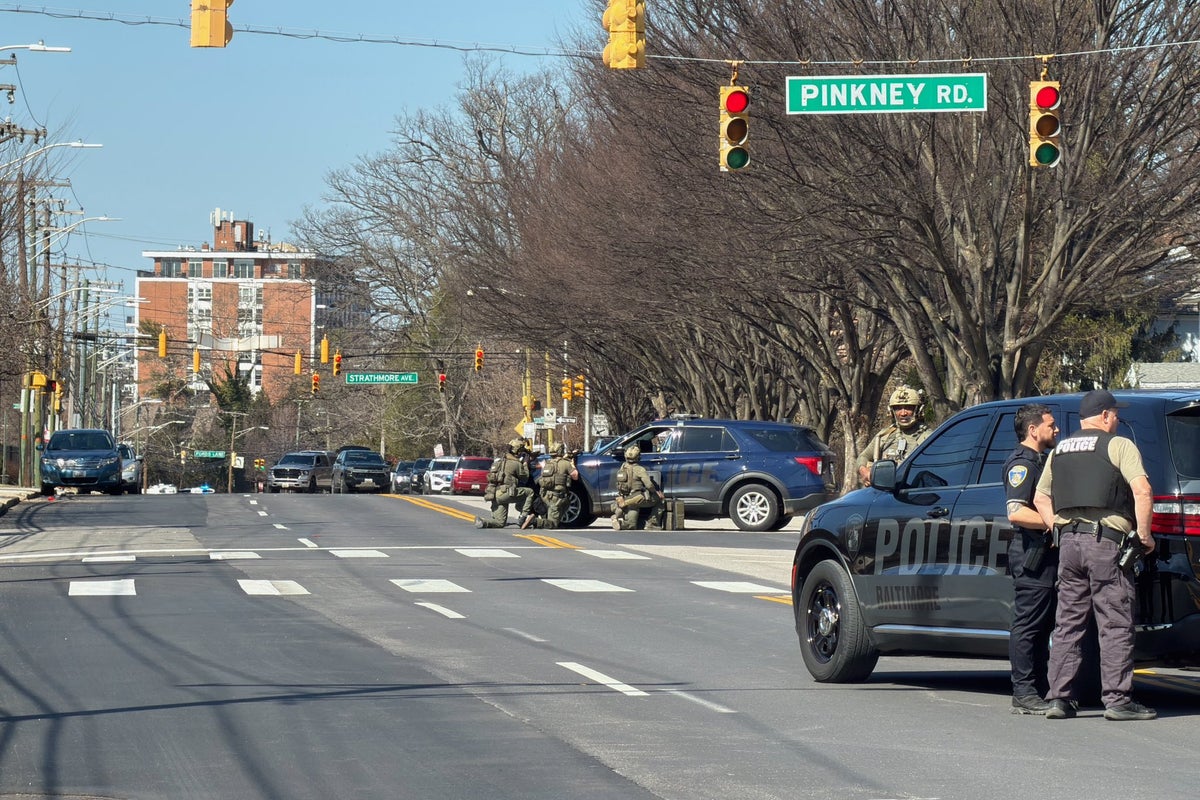
When police sirens began wailing near a Northwest Baltimore synagogue this week, the digital world moved faster than the first responders on the ground. Reports of an "active shooter" flashed across social media feeds before officers had even unholstered their sidearms. Within minutes, the neighborhood was paralyzed. But as the smoke—both literal and metaphorical—cleared, a familiar and exhausting pattern emerged. There was no gunman. There was no massacre. Instead, there was a convergence of high-tension security protocols, a suspicious sound, and a public psyche that is currently wound so tight it is snapping at the slightest pressure.
The incident near the synagogue serves as a brutal case study in how we process fear in the 2020s. We are living in an era where the threshold for "mass casualty event" has shifted from a physical reality to a psychological expectation. For the residents of Baltimore and the members of the Jewish community who were at the center of this storm, the trauma was real even if the bullets were not.
The Anatomy of a False Alarm
Public safety officials in Baltimore confirmed that the massive police response was triggered by reports of gunfire in the vicinity of a local house of worship. In an environment of rising antisemitism and a steady drumbeat of national headlines regarding mass shootings, the "better safe than sorry" doctrine dictates an overwhelming show of force.
The logic is simple. If the threat is real, a delayed response is a death sentence. If the threat is fake, the only cost is a few hours of traffic and some frayed nerves. Or so the theory goes.
However, this calculation ignores the compounding interest of public trauma. Every time a neighborhood is locked down for a ghost, the community’s collective resilience erodes. We are training the public to exist in a state of permanent hyper-vigilance, where every car backfire or construction noise is filtered through the lens of a tactical emergency.
The human brain is not designed to sustain this level of cortisol. When a "false alarm" occurs, the body doesn't just reset to zero. It remains in a state of "low-grade" alarm, waiting for the next spike. This is the hidden tax of the modern urban experience.
The Digital Acceleration of Chaos
In the Baltimore incident, the speed of misinformation was the primary accelerant. We no longer wait for the 6:00 PM news to tell us what is happening on our block. We have Ring camera networks, Citizen app alerts, and X (formerly Twitter) threads that provide a real-time, often unverified stream of consciousness.
The problem is that "real-time" is rarely "accurate-time."
Early reports suggested multiple victims. They were wrong. Later reports suggested a suspect in custody. They were also wrong. By the time the Baltimore Police Department issued an official statement clarifying that no shots had been fired and no injuries were reported, the narrative of a "synagogue shooting" had already circled the globe.
This creates a dangerous feedback loop for law enforcement. When officers arrive at a scene where the digital narrative says "active shooter," their internal threat assessment is already skewed. They are looking for a gunman, which means every person running away or reaching into a pocket is viewed through a prism of lethal intent. This is how tragic accidents happen. The miracle of the Baltimore incident is that it ended with a quiet dispersal rather than a nervous mistake.
The Heavy Burden on Faith Communities
You cannot analyze this event without addressing the specific vulnerability of the Jewish community. Synagogues, schools, and community centers have spent the last decade transforming into soft fortresses. They have hired armed guards, installed blast-resistant glass, and conducted grueling "run-hide-fight" drills for children as young as five.
This isn't paranoia. It is a rational response to a documented increase in targeted violence. But this defensive posture creates a specific type of atmosphere. When you enter a building through a metal detector and pass a man with an AR-15, you are being subtly told that your life is in danger.
When a "scare" happens in this environment, the reaction is exponential. For a secular office building, a suspicious noise might cause confusion. For a synagogue, it triggers a generational memory of persecution. The Baltimore response was massive because the stakes—political, social, and human—are at their absolute highest when a religious minority is involved.
Why We Keep Getting It Wrong
The industry of "breaking news" is partly to blame for the persistence of these false narratives. In the race to be first, accuracy has become a secondary metric. A headline that reads "Police Investigating Loud Noise" gets zero clicks. A headline that reads "Active Shooter Near Synagogue" generates millions in ad revenue and social engagement.
We have commodified fear.
Investigative looks into similar "swatting" incidents and false alarms across the country reveal that the "why" is often mundane. It can be a disgruntled neighbor making a prank call, a construction crew using a nail gun, or a car with a modified exhaust system. But the "how" we react to it is what matters. We have built an infrastructure that is optimized for catastrophe.
The Cost of Over-Response
- Financial Drain: A full-scale tactical response involves hundreds of man-hours, helicopter fuel, and the suspension of regular municipal services. These incidents can cost a city hundreds of thousands of dollars in a single afternoon.
- Public Apathy: Eventually, the "boy who cried wolf" effect takes hold. If every loud noise results in a three-mile radius lockdown, people will eventually stop taking the alerts seriously.
- Medical Trauma: For the elderly or those with pre-existing heart conditions, the sheer terror of a perceived active shooter situation can cause genuine physical harm, including heart attacks and strokes.
Rebuilding the Protocol
If we want to stop these incidents from paralyzing our cities, we need a fundamental shift in how information is disseminated during the first twenty minutes of an event. Law enforcement agencies need to be as fast as the "citizen journalists" on social media, providing a "verified" counter-narrative even if that narrative is simply "we are investigating and have found no evidence of a shooter yet."
Vacuum-sealed silence from official sources is what allows rumors to grow.
Furthermore, we need to address the "security theater" that has become a permanent feature of modern religious and educational life. We are essentially living in a theater of the absurd, where a single loud noise in a metropolitan area can lead to a global panic within five minutes.
The Baltimore incident ended with a quiet neighborhood and a few red faces. But next time, the collective panic might not be so benign. We are a society that has forgotten how to breathe through the static. Until we find a way to de-escalate the digital and physical response to a loud noise, we will continue to be held hostage by our own heightened expectations of tragedy.


.png?width=1200&auto=webp&trim=0%2C72%2C0%2C128)