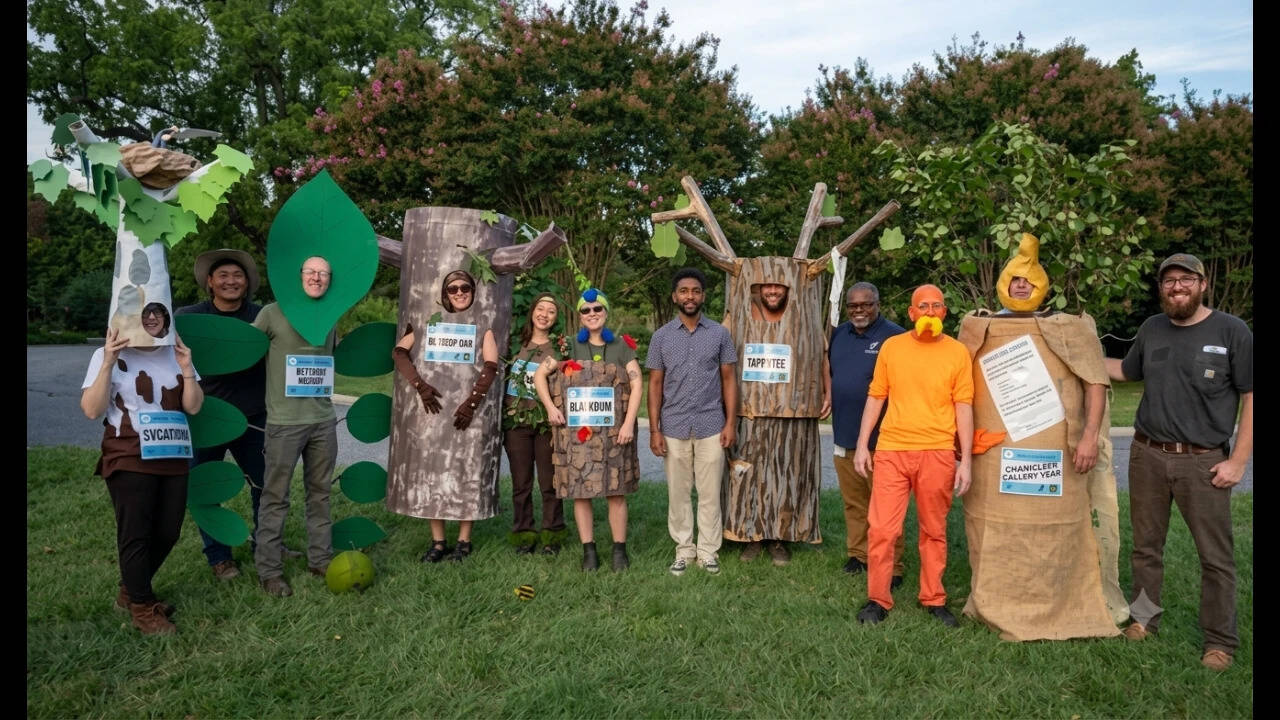
Baltimore has officially ended a fifty-two-year municipal mistake. The city replaced its official municipal tree—the invasive, foul-smelling Chanticleer pear—with the native tulip poplar, known scientifically as Liriodendron tulipifera. Chosen by former Mayor William Donald Schaefer back in 1974, the pear tree spent decades cementing its reputation as an urban planning catastrophe. Its spring blossoms emitted an odor frequently compared to rotting fish or biological waste, its brittle wood snapped during minor storms, and its aggressive root systems choked out local biodiversity. Now, following a public voting campaign and an eccentric mascot race at the Cylburn Arboretum featuring forestry workers in full costume, Baltimore has corrected course.
Municipal landscaping decisions rarely capture public imagination. This shift, however, reflects a wider reckoning across American cities regarding how metropolitan areas manage the fallout of mid-century arboricultural trends. For decades, urban foresters prioritized rapid growth, uniform aesthetics, and low initial nursery costs over long-term ecological balance. The Callery pear family—which includes the infamous Bradford pear and the Chanticleer variety selected by Baltimore—became the poster child of this municipal shortsightedness.
The Half-Century Hangover of Poor Ecological Choices
When Schaefer stamped the pear tree as Baltimore's botanical ambassador, the urban planning playbook favored ornamental perfection. Pyrus calleryana promised brilliant white spring blooms, neat symmetrical canopies, and an uncanny ability to survive the grueling compacted soils of downtown corridors. Nurseries pumped them out by the millions.
Nobody accounted for the genetics.
Most cultivated pear varieties were clones incapable of self-pollination. Urban planners assumed planting thousands of identical trees across American grid systems posed zero ecological risk. But nature adapts. As different pear cultivars were introduced into neighboring suburbs, cross-pollination occurred. The trees began producing viable fruit. Birds devoured the small pears, dropped the seeds into local parks and highway medians, and unleashed a thorny, dense monoculture that choked out native oaks, maples, and understory shrubs.
Baltimore held the line on its official tree long after the agricultural reality became clear. While neighboring Maryland counties and the state legislature moved to restrict and eventually ban the commercial sale of invasive Callery pears under the Biodiversity and Agriculture Protection Act, the city's official symbol remained an ecological outlaw. The disconnect became impossible to ignore. A municipal mascot should represent the health and values of a region, not a prohibited agricultural weed that smells like a bait shop dumpster on a humid July afternoon.
Anatomy of a Botanical Democracy
Fixing a fifty-year-old error required more than a memo from the Department of Recreation and Parks. City officials initiated a public campaign to crowdsource a replacement, narrowing down candidates to six resilient native species. Residents evaluated the American sycamore, bald cypress, bitternut hickory, blackgum, overcup oak, and the eventual winner, the tulip poplar.
Nearly two thousand residents cast ballots. The tulip poplar secured a commanding lead, driven partly by its deep historical roots in Maryland and its towering physical presence.
The transition culminated in a theatrical public relations event. Forestry staff donned elaborate, handmade tree costumes to race across the grounds at Cylburn Arboretum while Mayor Brandon Scott served as the starter. The spectacle masked a serious policy shift. The city is not merely swapping one decorative symbol for another; it is pivoting toward functional urban resilience.
The Heavy Realities of the Native Choice
Replacing a compact, highly managed ornamental pear with a native tulip poplar introduces entirely new variables for urban planners. The contrast is stark. While a Callery pear tops out at thirty or forty feet with a polite, dense canopy, the tulip poplar represents the absolute apex of Eastern deciduous forests.
Liriodendron tulipifera can rocket upward to two hundred feet, living for up to three centuries. Its trunk grows massive, its root structure requires significant subterranean volume, and its upper branches provide ideal architecture for the hanging nests of Baltimore orioles. Walt Whitman once described them as the Apollos of the woods—tall, sinewy, and graceful.
Yet, planting a potential forest giant in a dense urban environment presents distinct management challenges. City foresters acknowledge that tulip poplars are ill-suited for narrow sidewalk cutouts where concrete restricts root expansion. Planting strategies slated to begin next year will deliberately place the new official tree within expansive parklands, wider medians, and open green spaces rather than cramped downtown corridors.
Furthermore, biological reality dictates that large native trees demand active stewardship. Tulip poplars drop heavy organic debris during severe windstorms, and their rapid growth rates require attentive municipal pruning schedules. Unlike the sterile, disposable landscaping philosophy that championed the Callery pear, choosing a native titan means accepting a long-term symbiotic relationship with nature rather than demanding compliance from it.
Baltimore's pivot serves as a blueprint for post-industrial municipalities grappling with aging urban canopies. Reversing decades of poor ecological planning requires political will, public buy-in, and a willingness to tear down old symbols to make room for something deeper, cleaner, and built to last