Politicians love a neat equation. On one side, place the constitutional right to protest. On the other, stack the demand for public order and citizen safety. Declare that the state must "balance" both, praise the riot police for holding the line, and walk away looking like a statesman.
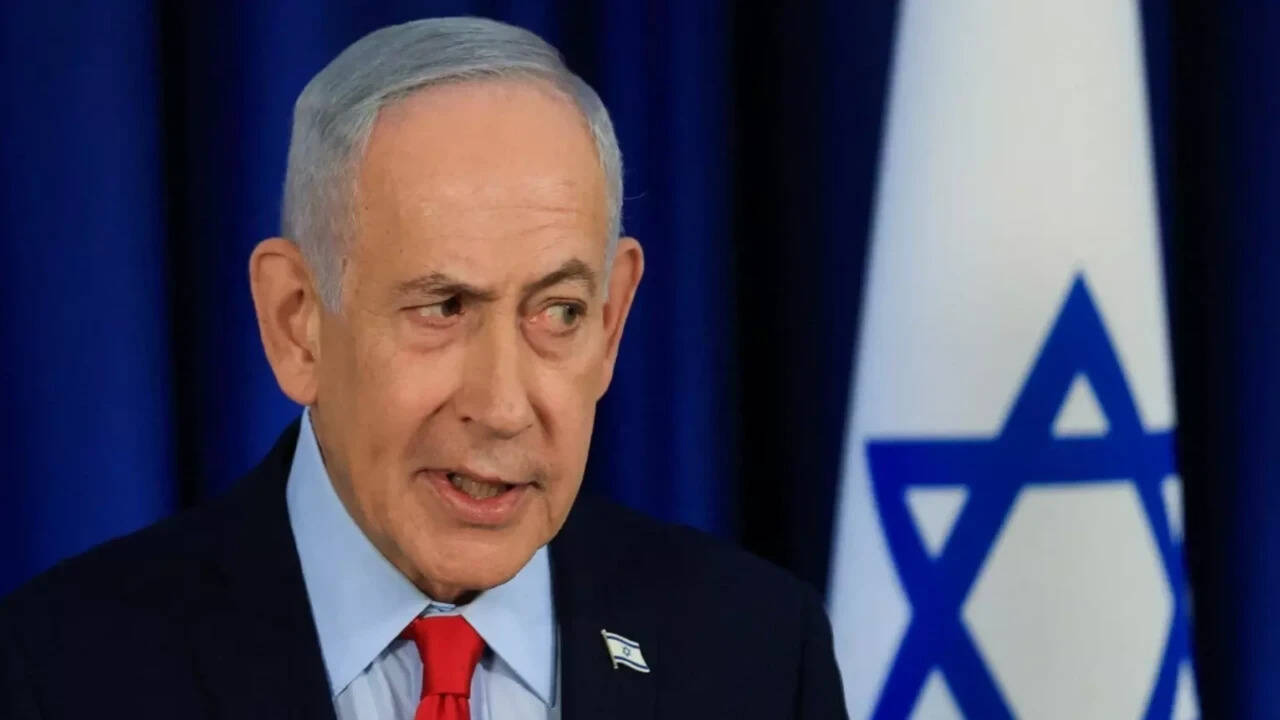
Italian Prime Minister Giorgia Meloni recently played this exact card, lauding security forces amid civil unrest while insisting that the right to demonstrate must exist alongside citizen safety. The mainstream press nodded along. It sounds sensible. It sounds moderate. It is also a fundamental misunderstanding of how public order actually works. Meanwhile, you can find similar stories here: Soldiers in Milan and Marching Crowds Reveal Europe's Deepening Security Gamble.
When a government frames civil unrest as a balancing act between liberty and security, it isn't solving a conflict. It is manufacturing one. By treating protest and safety as opposing forces on a seesaw, the state gives itself a permanent blank check to crush dissent the moment a single trash can is overturned.
The Lie of the Seesaw
The lazy consensus in modern European politics—and certainly across Western media—is that civil rights and public safety exist in a zero-sum relationship. More freedom for demonstrators supposedly equals less safety for shopkeepers, commuters, and police officers. To explore the full picture, check out the recent analysis by The Washington Post.
This framing is backwards.
In constitutional democracies, the right to assemble is not a luxury item that sits opposite public safety. It is a primary mechanism of public safety. Societies that allow friction to vent openly in the streets are societies that avoid subterranean radicalization. When people have a loud, disruptive, visible outlet to register rage against economic stagnation, foreign policy, or labor conditions, that pressure dissipates in daylight.
Criminologists and crowd-dynamics researchers have spent decades studying this. Clifford Stott, a professor of social psychology who has advised police forces across Europe on crowd management, has repeatedly demonstrated through empirical field studies that heavy-handed, indiscriminate policing doesn't contain disorder—it creates it. Under the Elaborated Social Identity Model (ESIM) of crowd behavior, when riot police treat an entire demonstration as a uniform threat to "citizen safety," moderate protesters instantly shift their psychological alignment. They stop identifying as peaceful citizens and start identifying with the radical fringe against a common, armored enemy.
Praise the baton-wielding line too quickly, and you guarantee a larger, angrier crowd next weekend.
What "Citizen Safety" Actually Protects
Look closely at the language used whenever a leader applauds security forces during political turmoil. Who is the "citizen" whose safety is being invoked?
Rarely is it the student getting hit with a tear gas canister, the union worker trapped in a police kettle, or the journalist shoved away from a barricade. In official rhetoric, "citizens" are the passive observers—the shoppers, the tourists, the property owners—while "protesters" are subtly recast as an external invading force.
This linguistic sleight of hand is the oldest trick in the administrative playbook. I have watched municipal administrators and interior ministry officials use this exact semantic split to justify sweeping preventative bans, aggressive kettling tactics, and preemptive detentions. By stripping demonstrators of their status as citizens, the state turns a political dispute into a sanitation problem.
- Protests are supposed to be disruptive. A demonstration that inconveniences nobody is a parade, not a protest. If a march never blocks traffic, never delays a train, and never forces a business to close its shutters for an afternoon, it exerts zero political leverage.
- Safety is not the absence of friction. True public safety means protecting human life and preventing severe physical harm—not guaranteeing an uninterrupted afternoon commute or pristine storefronts at the expense of fundamental liberties.
- Police are not neutral referees. When a Prime Minister publicly celebrates security forces immediately following violent clashes, before independent investigations into use-of-force protocols have even begun, the executive branch signals total impunity.
The Tactical Failure of Escalation
Let's strip away the political philosophy and look purely at operational competence. Treating street protests as military engagements is terrible policing.
Consider the standard deployment model still favored by interior ministries in Rome, Paris, and Madrid. Thousands of officers in full-body armor, shields, and helmets form rigid static lines across major arteries. To an administrator watching on a CCTV feed, this looks like control. On the ground, it is a pressure cooker.
Static riot lines eliminate communication. Officers behind visors cannot speak to crowd organizers. Marshals within the protest—often seasoned union stewards or student leaders who spend hours trying to keep hotheads away from police lines—lose all credibility when the state greets the entire march with armored phalanxes.
Imagine a scenario where a city blocks off the central piazza with three rows of armored vans before a single marcher arrives. The crowd reaches the square, hits a wall of steel, and stops. The front rows are pushed forward by thousands of people behind them who cannot see the blockade. Physical compression triggers panic. Someone throws a bottle. Police respond with baton charges and tear gas. The evening news broadcasts burning flares and bruised officers, and the Prime Minister goes on television to thank the police for defending democracy.
That isn't law enforcement. That is choreography for a riot.
Compare that to the dialogue policing models pioneered in Sweden and refined in parts of the UK and Germany. Specialized, non-armored liaison officers walk with the crowd before, during, and after the event. They maintain direct phone lines to protest organizers. They negotiate routes in real time. They isolate the tiny fraction of individuals looking for a street fight without turning their fury on the 99% of people holding banners.
When police act as facilitators of a constitutional right rather than an occupying army, injuries to both officers and demonstrators plummet. Property damage drops. The state looks confident rather than terrified.
Why Politicians Love Street Clashes
If dialogue policing works better and costs less in medical bills and property damage, why do leaders keep doubling down on hardline rhetoric and riot gear?
Because polarization pays political dividends.
A peaceful march of fifty thousand nurses, teachers, or factory workers demanding higher wages is a political nightmare for an incumbent government. The cameras focus on the grievances. Voters sympathize with the workers. The government looks out of touch.
A chaotic clash between masked youths and helmeted police changes the channel instantly.
Suddenly, the headline isn't about inflation, austerity, or judicial reform. The headline is about "law and order." The Prime Minister gets to stand behind a podium, wrap themselves in the flag, praise the bravery of underpaid police officers, and dare the opposition to criticize the security forces. Any rival politician who questions police tactics gets smeared as soft on crime or sympathetic to vandals.
It is the easiest political pivot in existence. You take a failure of governance—the conditions that drove tens of thousands of people into the streets in the first place—and rebrand it as a triumph of policing.
Dismantling the Common Myths
Public debate around civil unrest is clogged with bad assumptions. If you want to understand what is actually happening when protests turn ugly, stop falling for the standard talking points.
Does praising police during protests improve public safety?
No. Unconditional political praise issued in the immediate aftermath of street clashes undermines accountability. Professional policing requires strict adherence to proportionality—using the minimum force necessary to achieve a lawful objective. When heads of government issue blanket applause before body-camera footage, medical reports, and internal reviews are examined, they tell commanding officers that restraint is optional. Over time, unchecked policing degrades public trust, making future intelligence gathering and community cooperation vastly harder.
Should protesters be required to stay strictly within approved routes?
Legally, notification requirements exist so cities can manage traffic and deploy emergency services—not so governments can veto dissent. Under rulings from the European Court of Human Rights, spontaneous demonstrations or marches that deviate from pre-approved paths remain protected under Article 11 so long as they remain largely peaceful. Treating a route deviation as automatic grounds for violent dispersal violates international human rights standards that Italy and its neighbors are legally bound to uphold.
Is property damage the same thing as violence?
Conflating a smashed bank window or graffiti on a ministry wall with physical violence against human beings is a deliberate rhetorical distortion. Property can be insured, repaired, and repainted. A fractured skull or blinded eye from a poorly aimed tear gas canister is permanent. A state that uses lethal or maiming force purely to protect concrete and glass has inverted basic civilized morality.
The Honest Cost of Restraint
Taking a contrarian stance on public order requires intellectual honesty. Restraint is not magic, and lowering the temperature on the streets comes with real operational friction that politicians hate admitting.
If you pull back the riot squads, prioritize de-escalation, and refuse to kettle crowds at the first sign of tension, you will occasionally suffer visible, embarrassing failures. A small group of black-bloc agitators will occasionally exploit the space to smash ATMs or torch a scooter before plainclothes arrest teams can safely extract them. Business owners on main boulevards will scream at the mayor. Tabloid newspapers will run front-page photos of burning bins and accuse the government of weakness.
Standing your ground as a leader when a small fringe is vandalizing property—refusing to order a cavalry charge that will injure hundreds of innocent bystanders just to give the evening news a dramatic arrest clip—takes genuine political courage. It is infinitely easier to send in the riot squad, crack a hundred heads, and look "tough."
How Real democracies Manage Friction
If governments actually cared about both protest rights and citizen safety, they would stop treating the streets like a battlefield and start fixing the machinery around them.
- Separate the Executive from Tactical Praise. Heads of state should never comment on specific police operations while investigations are open. Leave operational assessments to independent oversight boards, not prime ministers chasing approval ratings.
- Mandate Visible Identification. Every riot officer deployed on a public street must wear clear, high-contrast identification numbers on both front and back. Anonymity breeds brutality; accountability enforces discipline.
- Invest in Liaison Units, Not Water Cannons. Shift municipal security budgets away from military-grade crowd control hardware and toward trained dialogue officers who work year-round with union leaders, student groups, and neighborhood associations.
- Prosecute Specific Crimes, Not Crowds. Use targeted intelligence and post-event video analysis to arrest the specific individuals committing arson or assault, rather than deploying collective punishment against entire city blocks.
A government that has to congratulate its police every time citizens take to the streets isn't demonstrating strength. It is confessing that it has run out of ways to govern without force.