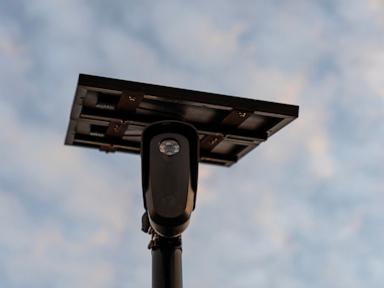
Automated license plate reader networks operated by private entities such as Flock Safety have transitioned from municipal utilities into primary flashpoints for electoral contests across the United States. Operating across thousands of communities, these networks capture vehicle metadata, including timestamps, directional vectors, and physical descriptors, aggregating this intelligence into searchable databases shared among law enforcement agencies. This architecture bypasses traditional physical checkpoints, establishing continuous monitoring without explicit legislative mandates or localized referendum approvals. Candidates running in legislative races now face direct voter hostility toward corporate-municipal surveillance partnerships, forcing a fundamental reassessment of how public safety infrastructure is procured, funded, and justified.
The mechanics of this pushback reveal a structural conflict between municipal budget constraints and civil liberties. Local police departments face chronic personnel shortages, creating an operational deficit. Automated surveillance infrastructure serves as a capital expenditure substitute for human labor, offering a low ongoing marginal cost per data point collected compared to hiring additional patrol officers. Private vendors monetize this deficit by deploying hardware under subscription models, transferring the fiscal burden to municipal budgets while retaining centralized data management control. Voters are increasingly rejecting this model, identifying it not as a modernization initiative, but as an unaccountable expansion of state power executed through corporate intermediaries.
The political alignment opposing these deployments defies traditional partisan categorization. Anti-surveillance coalitions unite progressive candidates who frame the networks as unconstitutional warrantless mass searches with conservative figures who target them as instruments of federal overreach and corporate consolidation. This convergence occurs because the underlying data collection mechanism creates systemic vulnerabilities regardless of who holds executive office. When law enforcement personnel utilize automated tracking systems to monitor personal acquaintances outside official investigations, the structural hazard of internal surveillance abuse becomes apparent to the electorate.
To understand why these networks generate intense electoral friction, one must examine the cost function of public safety technology. Traditional policing relies on targeted investigations triggered by specific complaints or observable offenses. Automated infrastructure reverses this logic by establishing continuous passive collection on the entire civilian population to isolate statistically anomalous behavior. The friction arises because the vast majority of data points collected belong to individuals who have committed no offense. Voters perceive this universal data capture as an inversion of constitutional protections, where privacy is treated as a conditional privilege rather than a default baseline.
Legislative responses to date cluster around three primary containment mechanisms: funding freezes, mandatory warrant requirements, and strict data retention limits. Proponents of these measures argue that without explicit statutory boundaries, municipal contracts default to maximum data retention and unrestricted inter-agency sharing. Conversely, law enforcement associations contend that restricting automated queries compromises response velocities in active criminal investigations. This trade-off between investigative efficiency and civil privacy frames the debate for current legislative cycles, transforming technical procurement decisions into litmus tests for personal autonomy.
The expansion of corporate-managed surveillance grids illustrates a broader structural shift in civil infrastructure. Municipalities increasingly outsource core governance functions to private technology vendors whose internal algorithms and data-sharing protocols lack transparent public oversight. As these networks proliferate alongside data centers and municipal sensor grids, the political cost of deployment rises. Candidates who fail to address the centralization of surveillance capital risk alienating an electorate increasingly skeptical of unaccountable technological growth.
Are Flock Safety cameras constitutional and how do they work?
This video is relevant because it breaks down the operational mechanics of automated license plate readers and the growing privacy debate surrounding their widespread municipal deployment.


