For years, the outside world heard almost nothing. Myanmar's ousted leader Aung San Suu Kyi vanished behind the heavy iron gates of military detention following the 2021 coup. Her son, Kim Aris, spent years shouting into a void, fighting to find out if his mother was even alive.
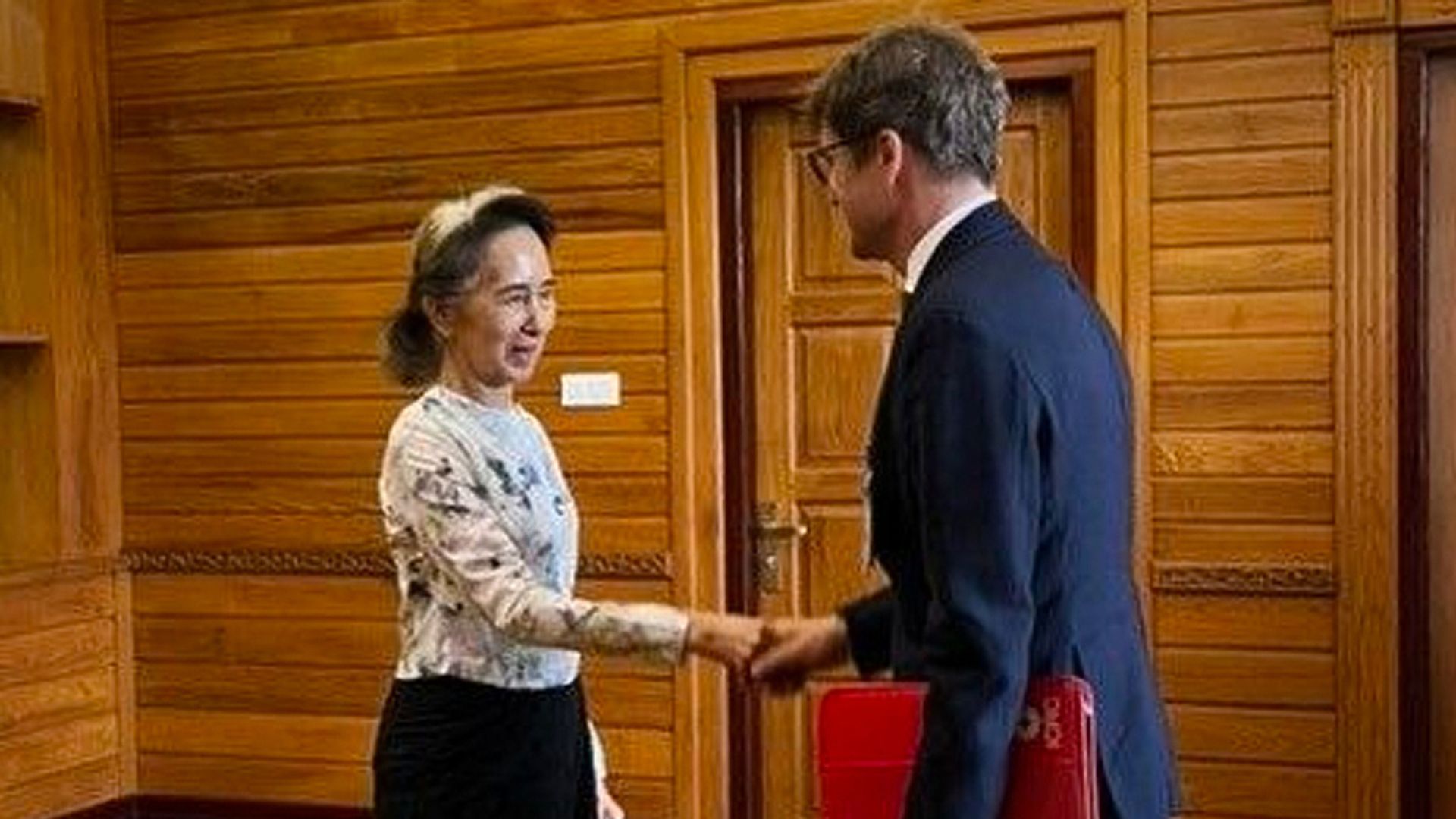
That silence broke when rare photographs emerged showing the detained Nobel laureate meeting with international humanitarian officials in Naypyitaw. For Aris, the images offer a complex mix of relief and lingering dread.
The Reality Behind Closed Doors
The Myanmar military junta released pictures of the eighty-year-old leader shaking hands with Arnaud de Baecque, the resident representative of the International Committee of the Red Cross. It is the first concrete visual evidence of her condition in a very long time.
Aris admitted that the photographs gave him a reason to hope, yet he remains deeply cautious. Years of enforced isolation leave deep scars. When communication is cut off for half a decade, a single photo doesn't erase the anxiety of a son fighting an authoritarian regime from abroad.
"It gave me hope, but I remain cautious," Aris shared in interviews following the release. "Now that hope must be matched by transparency, compassion and meaningful action."
Why the Junta Changed Tactic Now
Timing matters in geopolitics. The decision by Myanmar's military rulers to permit a Red Cross visit and distribute photographs is hardly an accident. International pressure has mounted steadily. Aris has traveled across the globe, meeting with foreign diplomats and diaspora communities to keep his mother's plight in the headlines.
Military spokespeople have previously claimed her health is fine, dismissing outside concerns as political theater. Yet, keeping a former national icon locked away in total secrecy carries massive diplomatic costs. Allowing a Red Cross inspection lets the regime project a veneer of cooperation without actually surrendering control.
Analysts note that the generals view high-profile detainees as leverage. As internal conflicts strain the ruling council, managing the optics around Suu Kyi becomes a delicate balancing act. They need to stave off total international alienation while preventing her from rallying any form of political opposition.
What Happens Next for the Family
Despite the brief glimpse of Suu Kyi provided by the Red Cross delegation, family members still face severe communication barriers. Aris has not received a direct, private briefing from the ICRC detailing her medical chart or day-to-day living conditions.
The demand remains simple: real transparency, proper medical care, and an end to solitary confinement. Photos are a start. They are not a solution.
The struggle for Myanmar's political future remains tied to the health and status of its most prominent prisoner. As Aris continues his advocacy, the burden falls on international bodies to turn a single humanitarian visit into sustained access.


