The travel industry and clickbait science blogs are synchronized in a chorus of hype. They are telling you that August 12, 2026, is a celestial jackpot. They call it a "double feature." A total solar eclipse and the peak of the Perseid meteor shower, hitting the Earth on the exact same calendar day.
They want you to book the expensive flights. They want you to buy the tour packages to Iceland or Spain. They paint a picture of a seamless, 24-hour festival of cosmic wonder.
It is a lie. Or, at best, lazy astronomy journalism that prioritizes headlines over how physics actually works.
If you are packing your bags expecting a flawless celestial double-feature, you are being set up for profound disappointment. The reality of orbital mechanics and human biology means these two events are fundamentally incompatible. One is actively going to sabotage your experience of the other.
Let's break down exactly why this "perfect alignment" is an absolute mess for serious observers.
The Blindness of Totality and the Darkness Illusion
The core argument of the hype machine is simple: you get an eclipse during the day, and then you get shooting stars at night. What is not to love?
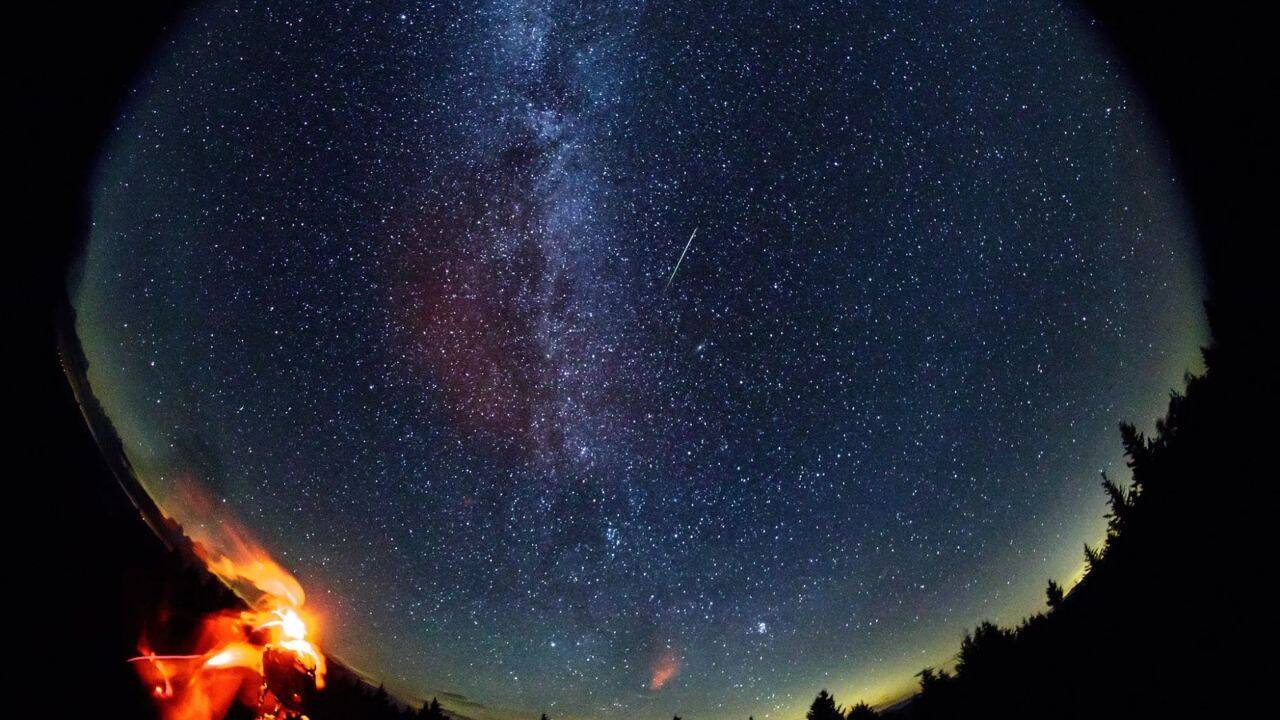
To understand the flaw, you have to look at the geometry of a total solar eclipse. A total solar eclipse can only happen during a New Moon. That part is great for meteor hunting. A dark, moonless night is the baseline requirement for seeing the faint streaks of space dust burning up in our atmosphere.
But here is what the travel brochures ignore: the sheer, unadulterated chaos of a path of totality.
I have spent decades chasing eclipses and tracking meteor storms. I have stood in paths of totality surrounded by thousands of people. The primary threat to a good meteor observing session isn't the clouds. It is light pollution. And an eclipse brings a temporary, hyper-concentrated wave of human-made light pollution directly into the pristine wilderness areas best suited for meteor viewing.
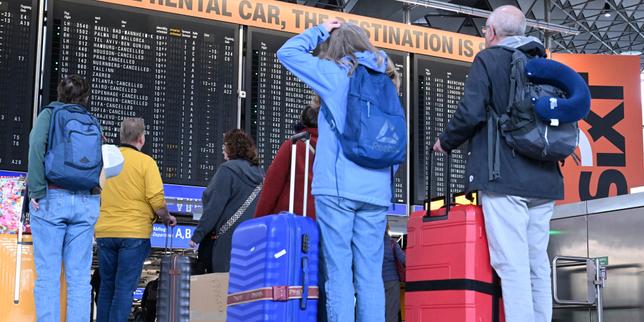
Millions of people are currently converging on a narrow strip of land stretching from Greenland, through Iceland, and across Spain. When totality ends on the afternoon of August 12, those millions of people do not vanish. They get into their cars. They turn on their headlights. They flood local campsites. They set up campfires, turn on flashlights, and light up the night sky with smartphones.
If you are in Spain—where the eclipse happens right before sunset—the problem is amplified tenfold. The moment the sun goes down, the mass exodus begins. You will not be looking at a pristine, unblemished night sky. You will be looking at the red glow of brake lights stretching for miles across the Iberian peninsula.
The Problem With Human Eyes
Your eyes need roughly 20 to 30 minutes in pitch-black darkness to adapt fully to the dark. This process relies on a biological chemical called rhodopsin. A single flash of a car headlight or a smartphone screen resets that biological clock instantly.
Dark Adaptation Cycle:
[Total Darkness] -> 30 Mins -> [Maximum Vision/Rhodopsin Peak]
[Any White Light Flash] -> 1 Second -> [Complete Reset to Zero]
Because the eclipse draws unprecedented crowds into the exact zones of maximum meteor visibility, your chances of finding a truly dark site free from amateur stargazers with flashlights are close to zero. The competitor articles tell you to "just look up after dark." They fail to mention that you will be surrounded by fifty thousand people doing the exact same thing, completely destroying your night vision.
The Geography Trap: Spain vs. Iceland
The media treats the path of totality as a uniform paradise. It is not. The logistical reality of August 12 presents a brutal choice that guarantees you will miss out on one of the two events.
To get the most out of the Perseid meteor shower, you need to be far north, under a sky that actually gets dark early, with clear weather. The Perseids originate from the constellation Perseus, which rises high in the northern sky during the late evening hours.
Let's look at the two primary viewing hubs for this eclipse:
Iceland: Great for Meteors, Terrible for the Eclipse
Iceland offers an incredible vantage point for the eclipse in terms of timing, but the weather is a notorious gamble. Statistically, August in Iceland has a high probability of cloud cover. Even worse for the meteors, Iceland at 64°N latitude doesn't experience true astronomical darkness in mid-August. You will be stuck in a state of perpetual twilight. The sky will never get dark enough for you to see the faint, minor meteors that make up 80% of the Perseid shower. You will only see the occasional bright fireball.
Spain: Great for the Eclipse, Terrible for Meteors
Spain offers the opposite problem. The weather prospects are excellent. Clear skies are almost guaranteed in the high plains. However, the eclipse occurs mere minutes before sunset. The sun will be incredibly low on the horizon—less than 10 degrees up.
While that makes for dramatic photography, it means the atmospheric distortion will be massive. More importantly, because the eclipse happens so late, the ground will still be radiating immense thermal heat from the brutal Spanish summer day. This causes atmospheric turbulence, making the night sky "shimmer" and blurring the fine details of any stellar observations.
Furthermore, by the time true darkness falls over Spain on August 12, the radiant point of the Perseids is still low on the horizon. You will miss the vast majority of the shower because the Earth itself is blocking the view.
By trying to catch both in one trip, you are forcing yourself into a geographic compromise that compromises both experiences.
Dismantling the "People Also Ask" Assumptions
Whenever these rare astronomical events pop up, the same fundamentally flawed questions circulate online. Let's address them with cold reality instead of romanticized stargazing fluff.
Can you see meteors during the total solar eclipse?
No. Stop asking this. During the two to three minutes of totality, the sky darkens to a deep twilight blue, not a midnight black. The brightest planets (like Venus and Mars) and a few first-magnitude stars will become visible to the naked eye.
However, the faint streaks of light produced by Perseid meteors require a much darker sky background to be visible. Unless an absolute monster of a fireball cuts across the sky at that exact three-minute window—an statistical anomaly that is highly unlikely—you will not see a single meteor during the daytime eclipse.
Where is the best place to view the combined event?
There isn't one. That is the entire point. If you optimize for the eclipse, you end up in a high-traffic, logistically congested zone with poor late-night viewing conditions or major light pollution. If you optimize for the meteors, you should be in a remote, high-altitude desert far away from the eclipse path entirely, such as the American Southwest or parts of the Southern Hemisphere where the eclipse isn't even visible but the skies are pristine.
The Financial Reality of the Eclipse Industrial Complex
I have seen people blow their life savings traveling to the 2017 and 2024 eclipses in North America, only to get trapped in twelve-hour traffic jams or rained out by a last-minute cloud deck.
The industry wants you to view August 12, 2026, as a mandatory travel milestone. Hotel prices in Leon, Burgos, and Reykjavik are already being jacked up by 400% to 600%. Car rental companies are instating mandatory minimum booking periods.
If you are paying a premium under the impression that you are getting a "two-for-one" celestial event, you are experiencing a classic marketing bait-and-switch. You are paying double for an environment that actively degrades the quality of the meteor shower.
The Perseid meteor shower happens every single year. It peaked last year, it will peak this year, and it will peak next year. It is a reliable, annual occurrence that is best enjoyed from a state park twenty miles outside your hometown on a random, quiet weekend when nobody else is looking at the sky.
To couple it with the most disruptive, chaotic, high-traffic tourism event of the decade is logistical madness.
Your Counter-Intuitive Playbook for August 2026
If you want to actually enjoy the cosmos in August 2026, you need to break away from the herd mentality. Stop trying to do it all. Pick one event, commit to it fully, and actively sacrifice the other.
Option A: The Eclipse Purist
If you want the eclipse, go to Spain. Accept that you will not see the Perseids. Do not even bother bringing your telescope or heavy astrophotography gear for the night time. The crowds, the dust, the heat, and the light pollution will make it a miserable exercise. Focus entirely on those two minutes of afternoon totality. Enjoy the tapas, accept the traffic, and go to sleep when the sun sets.
Option B: The Meteor Maverick
If you want to see a spectacular meteor shower, ignore the eclipse path entirely. While the entire world is fighting for hotel rooms in Europe, book a cheap flight to the high deserts of Utah, Chile, or Namibia.
You will have zero crowds. You will have completely empty campgrounds. You will have a pure, unpolluted night sky with zero traffic lights, zero smartphone screens, and a natural New Moon cycle that guarantees maximum visibility for the Perseids. You will see a hundred meteors an hour in total silence, while the people in Spain are honking their horns in a traffic jam outside Madrid.
The media wants you to believe nature coordinates these beautiful, synergistic spectacles for our viewing pleasure. It doesn’t. Nature is chaotic, indifferent, and crowded. The smart money is on avoiding the bottleneck. Choose your lane, or the universe will choose it for you.