The Smell of Smoke in the Spring
The air in northern Saskatchewan usually tastes like melting ice and wet earth in May. It is a season of release. After six months of a winter that locks the jaw and numbs the fingers, the sudden rush of running water is supposed to be a promise.
But this year, the water came too fast. Then, the fire came anyway.
To understand what is happening to the Canadian boreal forest right now, you have to look at the boots of the people who walk it. Imagine a farmer named David. He stands on a ridge just outside La Ronge, looking down at a coulee that, just three weeks ago, was an impassable lake of gray slush and bloated runoff. The provincial highways were flooded. Culverts exploded under the pressure of a sudden, violent melt. Basement pumps groaned across the province as the winter’s heavy snowpack vanished in a matter of days.
Now, David kicks the ground. The top inch of soil is a brittle, powdery crust. Beneath it, the peat is bone-dry.
When he inhales, it isn't the crisp scent of budding poplars that hits the back of his throat. It is the acrid, unmistakable bite of burning spruce. The horizon is already blurring into a familiar, dirty yellow.
The calendar says it is spring. The ground says it is August. The whiplash is enough to break you.
The Great Water Illusion
We have a flawed relationship with moisture. We look at a massive snowdrift or a flooded ditch and assume the earth is hydrated. It feels intuitive. If the basement is wet, the forest must be safe.
This is a dangerous lie.
What happened across Saskatchewan this spring was not a healing rain; it was a structural collapse of the season. A long, deep winter drought left the deep soil layers parched. When the heavy snows finally arrived late in the season, they sat on top of hard, frozen ground. Then the temperature spiked.
Instead of soaking into the earth like a slow, therapeutic balm, the snow melted all at once. The water tore across the frozen surface, filling the rivers, washing out the gravel roads, and rushing straight out of the ecosystem. It was a deluge that left nothing behind but mud and irony.
Consider what happens next: the sun comes out.
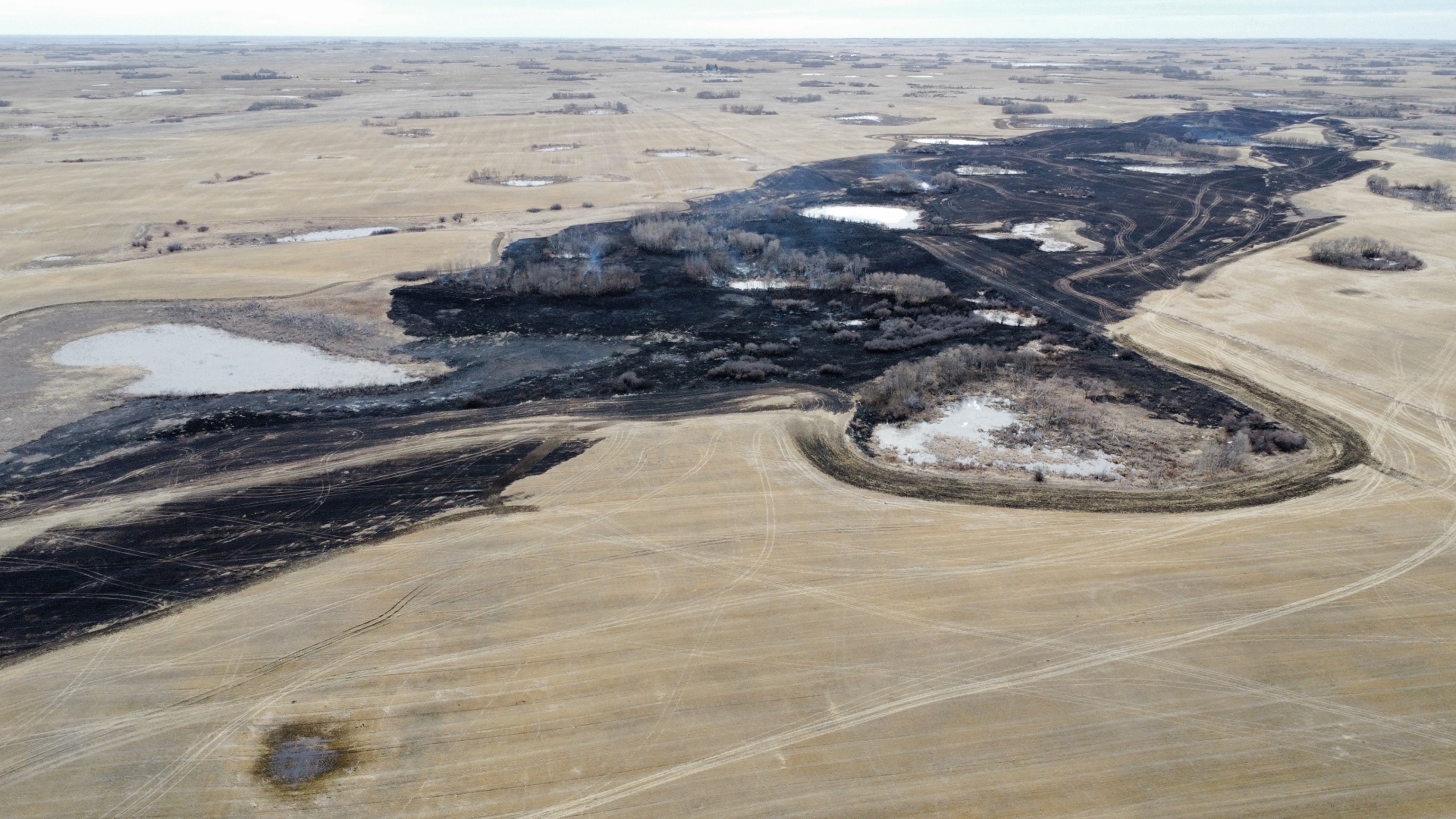
With the surface water gone and the deep water table empty, the intense spring sun cooks the dead grass, the fallen pine needles, and the twigs left over from winter. Within forty-eight hours, a flood zone becomes a tinderbox. The transition is so fast it makes the head spin.
The official reports from the Saskatchewan Public Safety Agency call this "the spring dip." It is that volatile window where the snow is gone but the new green vegetation hasn't yet grown to lock in moisture. But the dip has become a chasm. The province went from monitoring ice jams to tracking active wildfire plumes in the span of a single breathing cycle.
The Ghosts in the Dirt
There is a terrifying secret about the northern forest that most people outside the bush do not realize.
Fire does not always die when the winter comes.
Sometimes, when a wildfire rages in the late autumn, it digs deep into the muskeg. It finds the thick, subterranean layers of peat and decaying moss. It burrows down, away from the wind, away from the air, and it breathes. It survives on microscopic pockets of oxygen, eating the ancient carbon beneath the earth while the blizzards howl three feet above its head.
They are called zombie fires. Holdouts. Overwintering blazes.
When the snow melts rapidly and the topsoil dries out, these subterranean ghosts wake up. They chew their way back to the surface. A forest that looked peaceful in April suddenly begins to smoke from the inside out in May. You can walk through a grove of birch trees that looks completely untouched, only to feel the soles of your boots melting because the ground beneath you is an oven.
It feels like a betrayal of the senses. You expect danger to come from the sky, from lightning, or from a careless campfire. You do not expect the earth itself to be hostile.
This is where the psychological toll of living in the changing north takes hold. The old rules are dead. The markers that generations of trappers, hunters, and farmers used to read the weather have been scrambled. You can no longer look at a heavy winter and find comfort in it.
The Price of Standing Ground
The human cost of this volatility isn't measured just in hectares burned or property values lost. It is measured in the quiet, corrosive anxiety that settles into rural communities.
When the smoke rolls into an isolated town like Sandy Bay or Pelican Narrows, it doesn't just block the sun. It stops life. The elderly are confined indoors, listening to the wheeze of air purifiers that can barely keep up with the fine particulate matter. Parents look at their children and wonder if a childhood spent breathing the equivalent of twenty cigarettes a day during May is just the new baseline of existence.
Then there is the logistics of survival.
Evacuation is a word that sounds clean on the evening news. It sounds like an organized line of cars moving safely down a highway. In reality, it is chaos. It is deciding what to pack into a duffel bag in twenty minutes while your dog barks frantically because it smells the panic on your skin. It is leaving behind the photo albums, the tools your grandfather handed down to you, the house you built with your own knuckles.
And for what? To sit in a crowded gymnasium two hundred kilometers away, sleeping on a green cot, eating processed food from a styrofoam container, staring at a smartphone screen for updates that only come twice a day.
The people who live here are resilient. They like to boast about their ability to survive the worst winters the continent can throw at them. But this constant swinging between disasters—clutching sandbags to fight the water in April, then packing go-bags to flee the fire in May—wears down the spirit in a way that cold never could. It is an exhausting, relentless assault on the concept of home.
Reading the New Forest
We need to change how we think about the wilderness. The boreal forest is not a static postcard. It is a living, breathing system that is currently running a fever.
When the fires start this early, they change the composition of the forest itself. The intense heat destroys the seed banks in the soil. The black spruce, which has dominated the northern landscape for millennia, struggles to return when the burns happen year after year without a break. In its place, opportunistic shrubs and poplars take root. The entire ecology shifts.
The wildlife knows it. The moose move differently now, searching for pockets of unburned willow. The birds return from their southern migrations only to find their nesting grounds reduced to blackened toothpicks.
It is easy to look at a map of Saskatchewan and see nothing but empty space. A vast, green void between the prairies and the tundra. But that space is filled with intricate lives, small economies, and ancient relationships with the land. When the north burns, the south breathes it. The smoke from these early blazes doesn't stay behind provincial borders. It drifts across the plains, choking cities thousands of miles away, turning the sun a bruised, apocalyptic red over urban office towers.
We are all connected to the peat beneath David's boots.
The Horizon at Midnight
The sun takes a long time to set in the northern spring. Even at midnight, there is a pale, violet glow along the northern rim of the world.
Tonight, that glow is interrupted.
A ridge of high pressure has settled over the province. The wind is picking up, blowing from the south, hot and dry like a hairdryer held too close to the skin. On the edge of the horizon, just beyond the line of dark trees, a new column of smoke rises. It isn't white like steam. It is thick, oily, and dark as charcoal.
There is no rain in the forecast for the next ten days. The water from the great spring flood is already somewhere in Hudson Bay, useless to the trees that need it now.
David stands on his porch. The house is quiet behind him. His truck is parked facing the road, the keys sitting on the dashboard, the fuel tank full. He doesn't go inside to sleep. Instead, he just stands there in the violet twilight, watching the orange pulse of the fire reflect off the bellies of the low-hanging clouds, waiting to see which way the wind will turn.