The heat does not arrive as a warning. It arrives as a physical weight, pressing against the chest long before the first plume of smoke stains the pale Mediterranean sky.
You smell it before you see it. That unmistakable, ancient scent of green things dying too fast—pine needles turning to white dust, olive wood weeping its oils into a furnace, the sudden, sharp panic of a forest consuming itself in minutes. When the wind shifts from the north, it brings with it the roar. Not the crackle of a campfire, but the deep, mechanical breathing of an engine that refuses to stall.
For the families scattered across the northern ridges of Algeria during those merciless weeks of fire, the clock stopped at the exact moment the electricity failed.
Darkness came early, swallowed by soot.
Consider what happens next when the sky turns the color of a bruised plum. The sirens do not scream; they stutter, choking on their own generators as the power lines melt like wax. In the villages tucked into the folds of the mountains—places like Bejaïa and Tizi Ouzou, where stone houses have stood for generations—people had to make choices that no weather forecast or emergency broadcast ever prepares you for. Do you pack the photographs or the medicine? Do you open the livestock pens and pray the animals have more sense than the wind, or do you leave the gate latched and run with your children clutching the hems of your trousers?
The official tallies eventually arrived in neat columns on evening news broadcasts. Dozens dead. Hundreds hospitalized. Thousands of hectares of cork oak and fruit orchards reduced to charcoal. Statistics are efficient things. They fit neatly into spreadsheets and international wire reports. They allow distant bureaucrats to quantify a tragedy with clinical detachment.
They tell you nothing of the silence that follows a wildfire.
That silence is heavier than the smoke. It is the sound of an entire ecosystem holding its breath. When the flames finally retreated—starved of oxygen, beaten back by exhausted firefighters and water-dropping aircraft that arrived like silver dragonflies against the hellscape—they left behind a world stripped of color. Everything was monochrome. The earth was black; the sky was gray; the people were ghosts coated in ash, wandering through the skeletal remains of their livelihoods.
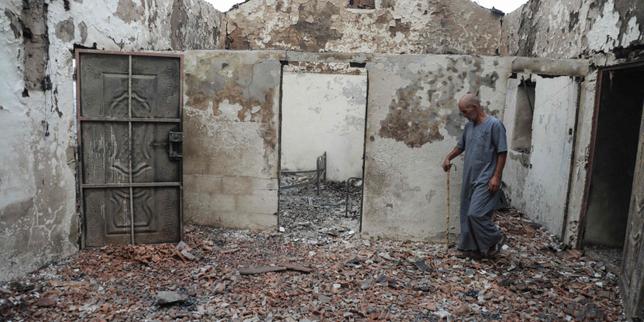
I walked through one of those mountain settlements days after the heat had subsided enough to breathe without a wet rag pressed to the mouth. The ground was still warm beneath the soles of my shoes, radiating a residual fury.
An old man named Mohammed sat on a plastic stool outside what used to be his front door. His hands were calloused, the nails permanently stained with the rich earth of his fig grove. He wasn't crying. Grief at this scale often bypasses tears and settles directly into a hollow, unblinking numbness.
"The fire did not take our history," he told me, his voice raspy, barely carrying over the distant rumble of a bulldozer clearing a blocked escape route. "It just made it invisible."
He pointed toward the charred stubble of what had been forty mature fig trees. They were his inheritance, planted by his grandfather, nourished by decades of erratic rainfall and stubborn pride. In less than twenty minutes, a shifting wall of orange flame had turned decades of labor into toothpicks.
This is the hidden cost of the infernos that now routinely scar North Africa during the punishing dry months. We talk endlessly about climate anomalies, rising global temperatures, and the creeping expansion of the Sahara. We debate policy frameworks and international aid packages. But the reality on the ground is intensely local and brutally intimate. It is the loss of a grandmother's copper pot melted into an unrecognizable lump of slag. It is the sudden, terrifying realization that the well water is contaminated with ash and chemical retardants.
Worse still is the psychological aftermath.
Every time the wind picks up from the south now, a collective shudder ripples through the valleys. The rustle of dry leaves against a tin roof is no longer background noise; it is a trigger. Children wake up crying in the middle of the night, convinced the orange glow of a distant streetlamp is the crest of a ridge fire coming back to finish what it started. The physical scars heal, skin grafting over burns, but hypervigilance settles into the community like a permanent fog.
Recovery here is not a matter of government checks arriving in the mail. It is a slow, agonizing act of stubbornness.
You see it in the way neighbors share water tanks when the municipal mains are ruptured. You see it in the young men who climb the smoking hills with crude hand tools, carving firebreaks into the dirt before the autumn rains can wash the naked, vulnerable topsoil down into the valleys. They are planting again, too. Not because the soil is ready—it isn't—but because to stop planting is to admit that the mountain has been lost for good.
Nature possesses a ruthless resilience. Even now, beneath the crust of charcoal, microscopic shoots of bracken and wild fennel are finding microscopic cracks in the stone to push their way upward. Life insists on itself, indifferent to the devastation that preceded it.
The smoke has long since cleared from the upper atmosphere, drifting out over the blue expanse of the Mediterranean until it is invisible from space. But down here, among the blackened trunks and the corrugated tin roofs patched together with wire, the true measure of the disaster remains written in the dust that settles on the windows every single afternoon.