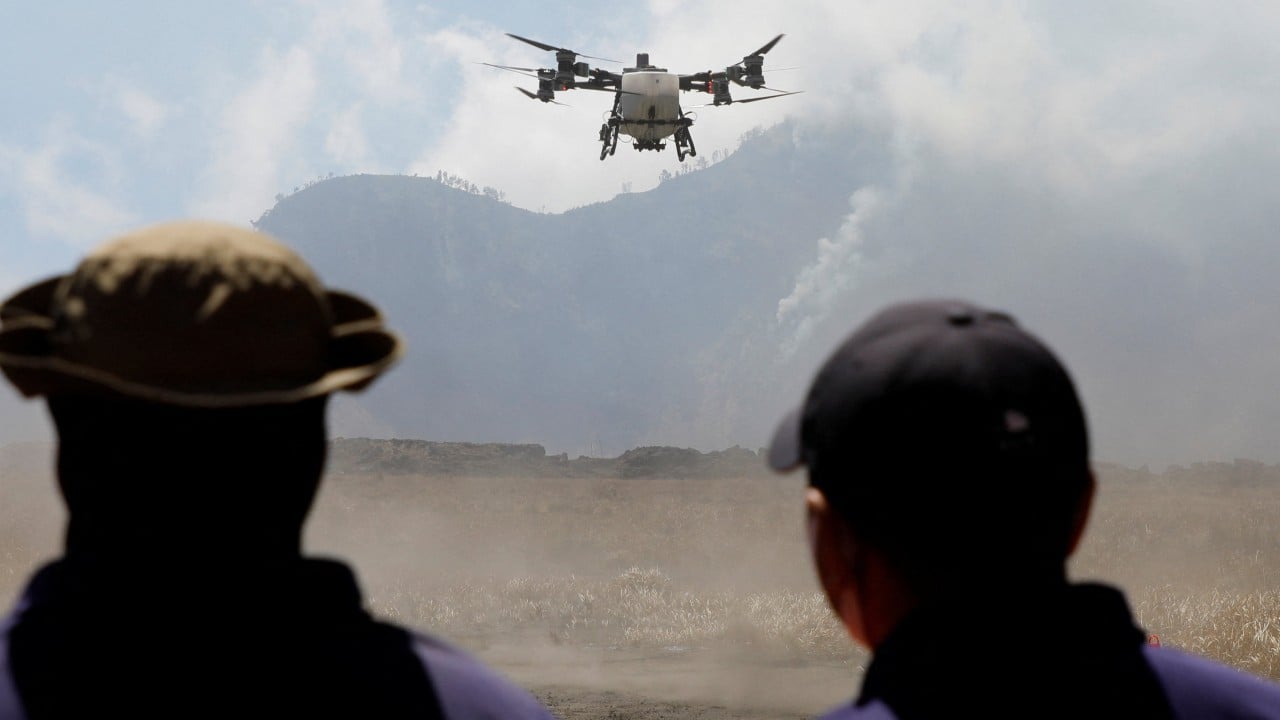
The air on the Tengger caldera does not belong to you. It belongs to the wind, the sulfur, and the memory of a thousand silent eruptions. Standing at the edge of the crater, watching the steam rise from the belly of Mount Bromo, you realize how thin the boundary is between the earth as a cradle and the earth as a furnace.
For the people who live beneath the shadow of these East Javan peaks, the mountain is not a postcard. It is a neighbor. A volatile, breathing, unpredictable neighbor.
Last season, that neighbor turned.
Flames tore across the savannahs of the Bromo Tengger Semeru National Park, turning golden grasslands into blackened skeletal dust. Firefighters, local volunteers, and rangers fought a desperate war with wet sacks, manual sprayers, and sheer exhaustion. They won the battle against the blaze, but the war for the mountain's future has only grown more perilous.
Now, the ashes have settled, yet the threat remains. An unusually dry season, fueled by shifting climate rhythms, has left the soil brittle and thirsty. Every leaf is tinder. Every gust of wind is a held breath.
To understand what is happening in East Java right now, you have to look past the satellite data and the dry meteorological reports. You have to look at the ground.
Consider Pak Slamet. He is a hypothetical village elder, though his face is stitched together from the real stories of dozens of farmers who harvest potatoes and leeks on the misty slopes of Probolinggo. For sixty years, Slamet has watched the weather like a religion. He knows the exact shade of grey the clouds must turn before the monsoon breaks. He knows how the morning dew feels against bare ankles when the dry season is finally breaking its back.
Lately, Slamet's instincts are failing him.
The rains arrived late, stayed for a fraction of their usual duration, and vanished into a brutal, unrelenting heat. The grass on the Teletubbies Hill—that iconic, rolling expanse of green that draws travelers from every corner of the globe—dried out into pale straw long before July.
When a single stray spark or a carelessly discarded ember meets grass that dry, physics takes over. Fire does not negotiate. It accelerates.
During the height of the recent wildfires, the smoke did not just obscure the view; it choked the heartbeat of the region. Tourism ground to a halt. Jeep drivers who ferry eager photographers to viewpoint sunrises sat idle in their driveways, listening to the sirens wail down in the valleys. The park gates closed. The sacred landscape went silent, save for the crackle of burning brush and the roar of helicopters dumping water from the sky.
And then, the fire was out. The headlines faded. The world moved on.
Except the grass is still dry.
We treat wildfires as events with a clear beginning and an end. We imagine a fire like a play: the curtain rises, the flames rage, the heroes arrive with hoses, the curtain falls.
Real life is messier.
The Indonesian government and park authorities are currently facing a terrifying statistical reality. The dry season is stretching longer, biting deeper into the calendar. When a forest or a savannah burns down to the roots, the ecosystem's ability to retain moisture drops precipitously. The next spark does not need a human hand. Sometimes, the intense tropical sun hitting a piece of broken glass or dry friction in the brush is enough to start the cycle anew.
Park officials have implemented stricter patrols. Drones scan the horizon for wisps of unauthorized smoke. Local communities are conducting fire-safety workshops, teaching younger generations that an unattended cooking fire or a tossed cigarette butt is no longer just careless—it is catastrophic.
Yet, anxiety hums beneath the surface of daily life in the villages surrounding the caldera.
When you walk through Ngadas village, the air smells of woodsmoke and damp earth. People speak in hushed tones about the drought. They point toward the horizon, where the haze hangs heavy even on clear mornings. They talk about the water tanks being installed, the firebreaks being hacked out of the wilderness by hand, the constant, low-grade dread of a dry wind blowing up from the Australian continent.
Why does this matter to someone sitting thousands of miles away, scrolling through a travel blog or a news feed?
Because Mount Bromo is a mirror.
The vulnerability of these volcanic highlands is the vulnerability of ecosystems everywhere. When climate patterns shift, the margins for error vanish. A single dry season in East Java carries global echoes—in the loss of endemic flora, the disruption of indigenous livelihoods, and the fragile economy of global tourism that sustains thousands of families who have no backup plan.
When you travel to Bromo, you are stepping into a delicate choreography between human survival and geological fury. The tourists who stand on Mount Penanjakan at four in the morning, shivering in rented parkas, waiting for the sun to punch through the mist and illuminate the smoking crater below—they are witnessing a miracle of resilience.
They are looking at a mountain that refuses to stay broken.
The flames were beaten back last season, and they will be beaten back again if they return. But the true story of Bromo right now is not about destruction. It is about anticipation. It is about the quiet, unheralded labor of people who refuse to abandon their ancestral home, even as the earth beneath their feet grows hotter and drier with every passing year.
The sun dips below the crater rim, painting the ash in shades of bruised purple and gold. The wind picks up, whispering through the dry grass, carrying the faint, eternal scent of sulfur. Somewhere out in the dark, a ranger checks his radio, looks out over the sleeping valleys, and waits for dawn.