The air in the Oval Office has a specific weight. It is thick with the scent of old wood, floor wax, and the invisible pressure of decisions that can move markets or stop wars. When a President speaks about a delay, he isn't just checking a calendar. He is playing with the concept of time itself as a tactical weapon.
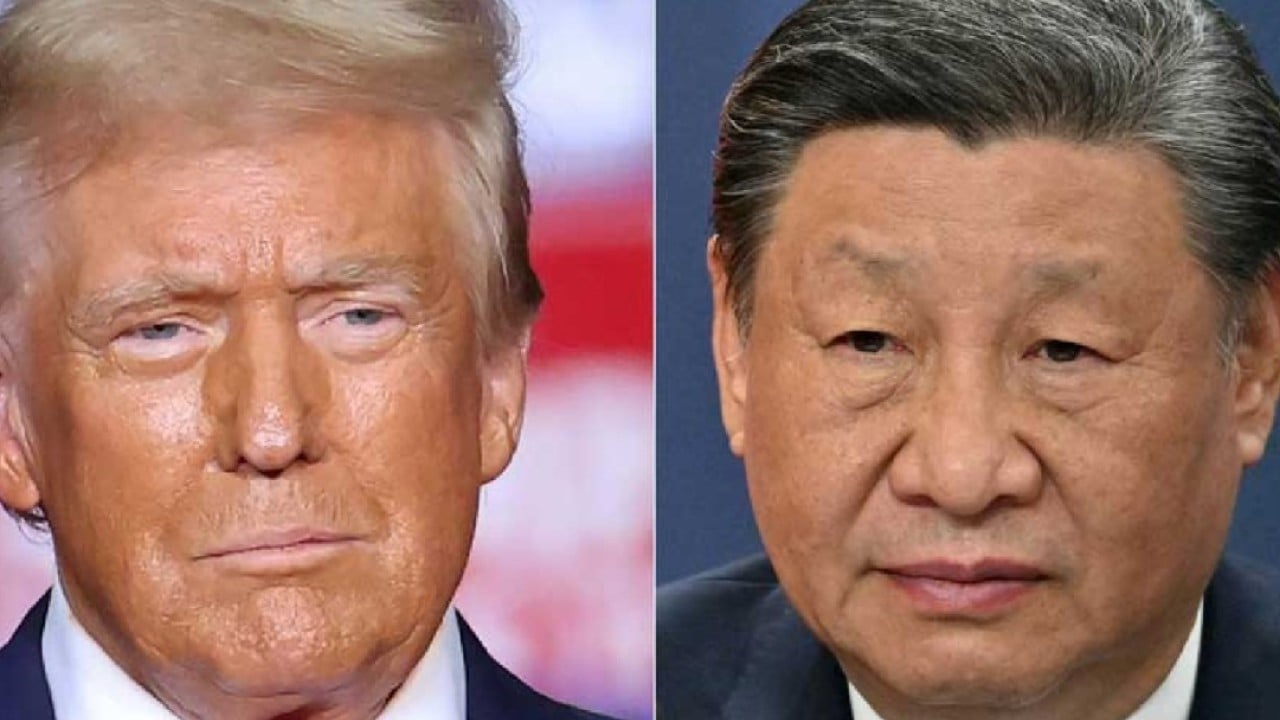
Donald Trump stood before the press and threw a wrench into the gears of global expectation. The Beijing summit—a high-stakes gathering that the world’s financial capitals had been tracking like a coming storm—was no longer imminent. The request was simple, yet heavy: a delay of "a month or so."
To a casual observer, thirty days is a blink. To a soybean farmer in Iowa watching the futures market or a tech CEO in Shenzhen calculating supply chain risks, thirty days is an eternity of uncertainty.
The Ghost at the Negotiating Table
Negotiations of this magnitude are never just about the people in the room. There is always a ghost at the table: the domestic audience.
For the American side, the pressure isn't just about trade deficits or intellectual property theft. It’s about the optics of a win. If you rush into a room in Beijing and come out with anything less than a transformation of the status quo, the narrative at home sours instantly. By asking for more time, the administration signaled that they weren't hungry enough to be desperate. They were willing to walk away, or at least, to sit still.
Consider the hypothetical position of a mid-level trade envoy. You have spent months staring at spreadsheets, arguing over the granular details of "non-tariff barriers" and "structural adjustments." Your eyes are bloodshot. You are living on lukewarm coffee and the adrenaline of a looming deadline. Then, the word comes down from the top.
Wait.
The frantic energy evaporates, replaced by a cold, calculating stillness. This is the "strategic pause." It’s the moment in a poker game where one player leans back, folds their arms, and stares at the clock. It forces the person across the table to wonder what you know that they don’t.
The Weight of a Calendar Page
Trade wars are fought in the headlines, but they are won in the quiet corners of logistics hubs.
When the news of the delay hit, it sent a ripple through the global economy that felt less like a wave and more like a collective indrawn breath. Markets hate a vacuum. However, they hate a bad deal even more. The "month or so" request served as a buffer, a way to let the heat dissipate from the rhetoric before the final signatures hit the parchment.
Trump’s rationale was grounded in the complexity of the deal itself. It wasn’t a matter of simple arithmetic. We are talking about the two largest economies on the planet attempting to rewire their entire relationship. You don't do that on a weekend trip. You do it with the agonizingly slow precision of a watchmaker.
The stakes are invisible until they aren't. They are hidden in the price of a laptop at a Best Buy in Ohio. They are tucked away in the shipping manifests of massive cargo ships idling in the Pacific. When the President asks for a delay, he is telling those ships to maintain their heading for just a little longer. He is telling the consumer that the price tag might stay stable—or it might jump.
The Human Cost of Hesitation
There is a specific kind of exhaustion that comes with geopolitical brinkmanship.
Imagine a family-owned manufacturing firm in the Midwest. They’ve been holding off on buying new equipment because they don’t know what the tariffs will look like in ninety days. They are paralyzed by the "will they, won't they" drama of the Beijing summit. For them, a one-month delay isn't a headline; it’s another month of holding their breath. It’s another month of telling employees that the expansion is on ice.
This is the emotional core of trade policy. It is the anxiety of the unknown.
The administration's move to push the date back was a gamble on the idea that a better deal is worth the price of prolonged anxiety. It assumes that the leverage gained by showing patience outweighs the damage caused by the wait. It is a classic move from the playbook of a man who views every interaction as a contest of wills. If you can control the timing, you can control the outcome.
The Silence Between the Words
In the world of high diplomacy, what isn't said is often louder than what is.
By requesting the delay, the U.S. side was subtly communicating that the current draft of the agreement wasn't "there" yet. It was a public admission that gaps remained. But it was also an invitation. It gave the Chinese leadership a grace period to reconsider their own red lines. It provided a theater of "almost there," which is often more effective than "now or never."
The rhetoric shifted from the aggressive posturing of the previous months to something more measured, almost domestic. Trump spoke of the delay not as a breakdown, but as a logistical necessity. This softens the blow. It keeps the markets from panicking while keeping the pressure on the negotiators to bridge the final, most difficult chasms.
Relationships between nations are remarkably similar to relationships between people. They require trust, but they also require boundaries. When one party asks for space, it can be a sign of trouble, or it can be a sign that they are taking the commitment seriously enough to want it to be perfect.
The "month or so" became a character in the story. It was the protagonist of the week, a span of time that held the hopes of two nations and the fears of a thousand CEOs.
A month to breathe. A month to blink. A month to decide if the future of the 21st century would be defined by cooperation or by a slow, grinding divorce.
The President stepped away from the lectern. The cameras stopped clicking. But in the offices of Shanghai and the boardrooms of New York, the clock started ticking again, louder than before, counting down the seconds of a pause that felt like a heartbeat.
The world waited.
Not for a miracle, but for the simple, terrifying clarity of a final answer.
Would you like me to analyze the specific economic indicators that moved during this "strategic pause" to see how the markets actually reacted to the uncertainty?