Western media loves a predictable script. A U.S. President signals an opening for talks, a Middle Eastern official issues a stern "no," and the headlines immediately pivot to "tensions rising" or "missed opportunities." They treat diplomacy like a first date where someone got stood up. It is a shallow, intellectually lazy interpretation of high-stakes geopolitical poker.
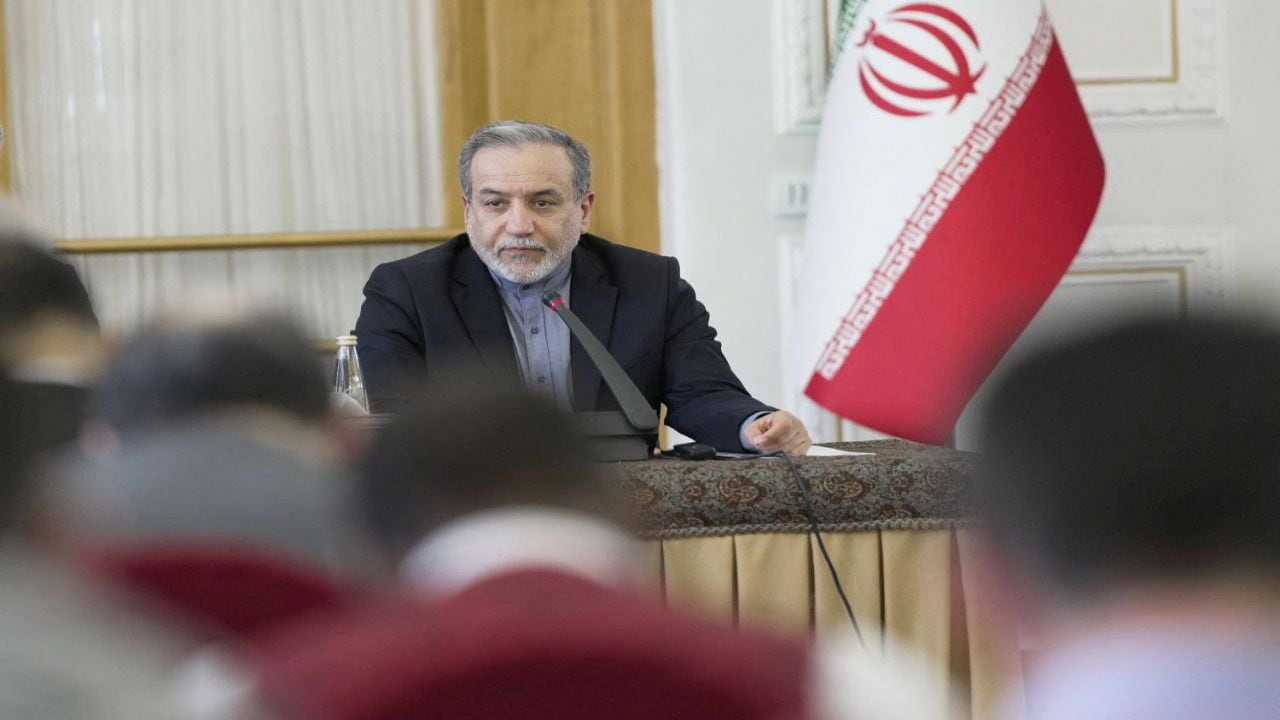
The recent declaration from Iran’s national security chief that they "will not negotiate" isn't a sign of stubbornness. It is a tactical deployment of silence. In the world of power projection, the loudest person in the room is often the weakest, and the one begging for a seat at the table has already lost their leverage.
The consensus view suggests that Iran is "backed into a corner" or "ignoring a golden bridge." This is wrong. They aren't ignoring the bridge; they are checking the structural integrity of the bridge-builder. When you are dealing with a shift in U.S. administration or a volatile policy environment, "no" is the only logical opening move.
The Myth of the Good Faith Actor
The primary flaw in mainstream analysis is the assumption that negotiations are a vacuum where two parties sit down to solve a problem. They aren't. They are an extension of war by other means.
I’ve watched executives at Fortune 500 companies blow nine-figure deals because they were too eager to "get to yes." They mistook a predator's grin for a partner's smile. In international relations, this desperation is fatal. Iran isn't refusing to talk because they hate peace; they are refusing to talk because the current "offer" to negotiate lacks a fundamental prerequisite: Sunk Cost Assurance.
When a superpower tears up a signed agreement—like the JCPOA—they destroy the value of their own signature. To walk back to the table immediately after a "signal" from the very entity that burned the previous contract isn't diplomacy. It’s masochism.
- The Consensus: Iran is being irrational and hurting its own economy.
- The Reality: Negotiating from a position of perceived weakness guarantees a bad deal that will be broken again in four years.
By saying "no," Tehran is forcing the U.S. to bid against itself. They are waiting for the "signal" to turn into a "concession." If you want someone to come to the table after you kicked them away, you don't just "signal." You bring a gift.
Maximum Pressure is a Mathematical Failure
The "Maximum Pressure" campaign is often cited as the reason Iran must eventually talk. The logic follows a simple linear path: more sanctions equals more pain, which equals a higher probability of surrender.
This fails to account for the Indifference Point. In economics, the Indifference Point is where the cost of a change exceeds the benefit of the current state. Iran has spent decades building a "Resistance Economy." They have mapped out the black markets, the gray-market oil tankers, and the back-channel financial networks with Russia and China.
When you apply 100% pressure, you lose your ability to threaten. You have already done your worst. At that stage, Iran’s leadership realizes that the risk of a "bad deal"—one that involves intrusive inspections without guaranteed, permanent sanctions relief—is actually higher than the risk of maintaining the status quo.
Imagine a scenario where a business is under a predatory audit. If the auditor says, "Admit to these five crimes and I'll stop," but the business knows the auditor will just find five more crimes tomorrow, the business stays silent. Silence is a shield.
The Credibility Gap: Why Trump’s Signals Fall Flat
The media focuses on the personality of the leaders. This is a distraction. The issue isn't whether a leader is "tough" or a "dealmaker." The issue is Institutional Persistence.
Why would any nation-state sign a 10-year deal with a country that operates on a 4-year mood swing?
- Term-Limited Diplomacy: The U.S. executive branch cannot guarantee that the next administration won't incinerate the deal on Day 1.
- Congressional Hostility: Without a formal treaty—which requires a two-thirds Senate majority—any "deal" is just a non-binding gentleman's agreement.
- The Leverage Paradox: The more a U.S. President wants a "win" for his legacy, the more the opponent should hike the price.
Iran’s national security chief knows this. He isn't talking to the current administration; he is talking to the global markets. By signaling a hard "no," he stabilizes internal hardline factions and signals to China that Iran isn't about to flip back into the Western orbit. It’s a move for regional stability, not an invitation for a conflict.
Dismantling the "People Also Ask" Delusions
If you look at the common questions surrounding this standoff, you see the bias baked into the queries.
"Why won't Iran just talk to avoid sanctions?"
Because talking doesn't avoid sanctions. Action avoids sanctions. Iran has seen that even when they complied with the JCPOA—as verified by the IAEA—the sanctions came back anyway. They are now operating on the principle of Verifiable Sequence. They won't talk until a portion of the sanctions are lifted first as a down payment on sincerity.
"Is Iran's refusal a precursor to war?"
Unlikely. War is expensive and unpredictable. "No" is a cheap and predictable way to maintain a stalemate. A stalemate is often better than a lopsided peace.
"Does this mean the U.S. strategy is failing?"
It means the U.S. strategy is incomplete. You cannot use a "carrot and stick" approach if the horse no longer believes the carrot exists and has grown immune to the stick.
The Strategic Power of the Outsider
We are witnessing the death of the Unipolar Moment. In the 1990s, a U.S. "signal" was a command. Today, it’s a data point.
Iran is leaning into a multi-polar reality. They are joining the BRICS+ alliance. They are deepening ties with the Shanghai Cooperation Organisation (SCO). They are realizing that they don't need the Western financial system as much as the West thinks they do.
The "Lazy Consensus" says Iran is isolated.
The "Disruptive Truth" is that the West is becoming isolated from the new trade corridors being built across Eurasia.
When Iran says they won't negotiate, they are stating a preference for their new partners over their old enemies. It’s a pivot, not a tantrum.
Stop Looking for a Signature
The biggest mistake analysts make is looking for a "Grand Bargain." There will be no photo-op on a lawn. There will be no leather-bound folder with two gold-penned signatures.
Future diplomacy will be incremental, transactional, and likely covert. It will happen through third-party swaps, quiet de-escalation in proxy zones, and "non-paper" agreements that no one has to defend on the evening news.
By publicly saying "we will not negotiate," Iran provides the political cover necessary to do the exact opposite in the shadows—on their own terms, at their own pace, and without the indignity of appearing to cave to a tweet.
The "no" isn't a wall. It's a screen.
If you're waiting for Iran to blink, you've misunderstood the game. They aren't in a staring contest. They've already walked out of the room and are busy building a different house.
The U.S. thinks it’s holding the keys to the kingdom. Iran is busy changing the locks.