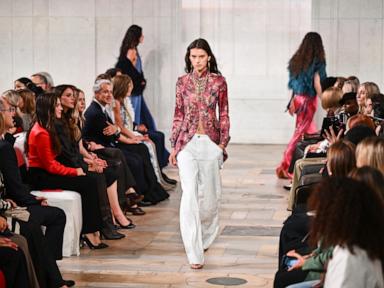
The contemporary luxury market operates on a recurring tension between heritage preservation and radical functional reinterpretation. When legacy fashion houses attempt to update their core design language, they frequently fall into binary failures: either they pander to transient algorithmic trends, diluting their brand equity, or they remain stagnant, functioning as historical archives rather than commercial enterprises. The recent collection presented by Ralph Lauren during New York Fashion Week offers a rare case study in structural calibration. By examining the precise mechanics of how masculine tailoring was counterbalanced against fluid, sensual silhouettes, we can deconstruct the exact formula behind longevity in high-end apparel strategy.
The Dual-Axis Framework of Heritage and Subversion
To understand why the collection succeeded in shifting public perception without alienating its core demographic, one must evaluate the design choices through a two-dimensional matrix: structural rigidity versus organic fluidity.
Traditional luxury menswear codes rely on heavy interfacing, structured shoulders, and rigid geometric lines. Conversely, conventional romantic womenswear leans toward bias cuts, diaphanous drapery, and unstructured movement. The operational brilliance of this collection lies in the deliberate friction created at the intersection of these two poles.
- Rigid Anchors: The inclusion of sharp, structured pantsuits, windowpane wool coats, and tailored military-derived jackets provides a heavy foundation. These elements supply the institutional authority and visual weight expected from an established house.
- Fluid Interventions: Overlaid golden fringed gowns, chainmail softened by physical movement, and translucent, watercolor-like floral treatments disrupt the structural severity.
By layering a liquid element over a solid base—such as placing a shimmering, flexible textile directly atop heavy navy trousers—the brand avoids the monotony of literal interpretation. This is not mere juxtaposition; it is a calculated tension that forces the observer to recalibrate their expectations of proportion.
The Economic Function of Minimalist Presentation
A critical error made by mid-tier apparel brands is the substitution of production scale for conceptual clarity. When budgets expand, staging becomes overcomplicated, shifting the consumer's focus from product architecture to theatrical distraction.
The presentation strategy executed here inverted this principle. By stripping the physical environment down to a minimalist white space with stark, utilitarian entry doors, the brand isolated the garments from contextual noise. This environment serves a dual commercial and psychological purpose:
- Cognitive Reduction: Removing ornamental backdrops forces absolute buyer concentration on fabric weight, drape behavior, and color saturation.
- Value Signaling: Restraint communicates confidence. A brand that requires excessive set design signals insecurity in its physical inventory.
The color palette functioned within similarly tight operational boundaries. Confining the primary visual spectrum to a disciplined navy, white, and warm neutral base allowed minor disruptions—such as oversized floral brooches and metallic embroidery—to carry disproportionate visual impact. When the baseline is neutral, small variations command maximum attention from the consumer eye.
Material Innovation as a Retention Mechanism
Legacy houses face a distinct inventory risk: repeat buyers grow fatigued by recycled silhouettes, yet reject radical departures. The solution requires material science and textile engineering rather than silhouette invention.
The collection utilized over fifty custom-developed textiles. This metric is vital for market analysts. By altering the tactile reality of classic garments, the brand delivers psychological novelty without modifying foundational patterns. Heavy wools are treated to feel weightless; rigid leather is manipulated to drape like silk.
This technical execution addresses the modern consumer demand for tactile versatility. Buyers navigating fluctuating climate patterns and multi-use environments require garments that perform across varied physical contexts. Heavy velvet jacquards paired with low-slung, relaxed-fit denim bridge the formal-casual divide not through styling tricks, but through inherent fabric composition.
Positioning Strategy for Long-Term Equity
The operational blueprint demonstrated by this collection offers a clear directive for brand stewardship. Sustainable luxury growth does not stem from chasing fleeting demographic micro-trends. It requires the systematic updating of historical codes through modern proportion, material experimentation, and spatial discipline.
Allocate creative development budgets toward proprietary textile manufacturing rather than external marketing noise. Redesign the baseline silhouette to tolerate structural contradiction, ensuring that traditional anchors always contend with fluid counter-weights. Maintain a strict minimalist presentation standard to let physical product quality drive consumer perception.
Ralph Lauren Fall/Winter Runway Analysis
This video provides a detailed visual breakdown of the seasonal collection's structural silhouettes and tailoring techniques.
http://googleusercontent.com/youtube_content/1