The shadow war between Iran and Israel has finally stepped into the daylight, and the geopolitical debris is hitting players far beyond the immediate border. While headlines focus on the exchange of missiles, the real story lies in the tightening of a regional alliance that seeks to turn Israel’s immediate neighbors into a unified tactical front. This isn't just a series of retaliatory strikes; it is a calculated stress test of the global defense infrastructure and the resilience of a crumbling status quo.
The recent surge in hostilities marks a departure from decades of proxy management. Iran has moved from using "fingertips" like Hezbollah and the Houthis to direct engagement, signaling a shift in its survival strategy. By drawing Israel into a multi-front conflict, Tehran aims to exhaust the Iron Dome's interceptor stocks and fracture the diplomatic normalization between Israel and the Arab world.
The Strategy of Attrition via Proxy
Israel's security doctrine has always relied on short, decisive wars fought on enemy territory. That doctrine is currently being dismantled. For the first time in its history, Israel is facing a sustained, high-intensity conflict that refuses to end. This is "attrition by design."
When groups like the Houthis in Yemen or militias in Iraq declare they are joining forces with Iran for a unified strike, they aren't just making rhetorical threats. They are creating a 360-degree threat environment. This forces the Israel Defense Forces (IDF) to spread their intelligence assets and air defenses thin. It is a simple numbers game. If a thousand low-cost drones are launched from four different directions, the cost-to-kill ratio becomes unsustainable for the defender.
The Interceptor Economics
The math of modern warfare is brutal. An Iranian-designed Shahed drone may cost roughly $20,000 to produce. An interceptor missile fired from a Patriot battery or the David’s Sling system costs millions.
$$C_{warfare} = \sum (M_{i} \times Q_{i}) - (D_{j} \times Q_{j})$$
In this simplified model, if $M$ represents the cost of the interceptor and $D$ represents the cost of the incoming drone, the defending nation faces a financial drain that no economy can support indefinitely. Iran knows it cannot win a traditional dogfight against the Israeli Air Force. It doesn't need to. It only needs to make the cost of defense higher than the political will to pay for it.
The Northern Pressure Cooker
Hezbollah remains the most significant variable in this equation. Unlike Hamas, Hezbollah possesses a state-level military apparatus, including precision-guided munitions that can reach any coordinate in Tel Aviv. The group's involvement isn't just about solidarity; it’s about maintaining the "unity of the arenas."
If Israel pushes too hard in Gaza, the north ignites. If Israel strikes Iran directly, the north ignites. This creates a strategic checkmate where Israel's hands are tied by the threat of a full-scale regional conflagration. The "enemy of Israel standing with Iran" isn't a single country; it’s a decentralized network that operates under a single command structure in Tehran.
The Intelligence Gap
Recent events have exposed a glaring reality: tactical brilliance cannot fix a strategic failure. Israel can successfully intercept 99% of a missile barrage, but that 1% that gets through—combined with the psychological impact of millions sitting in bomb shelters—serves the adversary's purpose. The intelligence community missed the depth of the coordination between these groups, underestimating how quickly they could synchronize their operations across thousands of miles.
The Economic Aftershocks of a Red Sea Blockade
We cannot talk about this conflict without looking at the water. The Houthi involvement in the Red Sea has effectively closed a primary artery of global trade for any vessel with perceived links to Israel or its allies. This is the "hidden front" of the Iran-Israel war.
Shipping rates have skyrocketed. Insurance premiums for cargo ships have reached levels that make certain routes non-viable. This isn't just an Israeli problem; it's a global inflationary pressure. By weaponizing the Bab al-Mandeb Strait, Iran's allies have proven they can exert pressure on Washington and London by hitting the wallets of everyday consumers.
- Shipping delays: Adding 10 to 14 days to journeys by rerouting around the Cape of Good Hope.
- Fuel costs: Increased consumption leading to higher carbon footprints and transport overheads.
- Supply chain fragility: A reminder that a regional conflict in the Middle East still dictates the price of goods in a Walmart in Ohio or a supermarket in Berlin.
The Nuclear Undercurrent
Everything we see on the surface is overshadowed by what is happening deep underground in Natanz and Fordow. Iran’s enrichment levels are at an all-time high. The regional chaos provides the perfect "noise" to mask the final steps toward breakout capacity.
The logic is simple: a nuclear-armed Iran becomes untouchable. If the "Axis of Resistance" can cause this much trouble with conventional drones and rockets, their leverage with a nuclear umbrella would be absolute. Israel views this as an existential deadline. Every missile fired back and forth is a data point for a much larger, much more dangerous calculation regarding a preemptive strike on nuclear facilities.
The Arab Street vs The Arab State
There is a widening chasm between the leaders of neighboring Arab nations and their populations. While several governments have signed the Abraham Accords and seek stability and trade with Israel, the images of destruction in Gaza are radicalizing a new generation.
Iran exploits this. By positioning itself as the sole defender of the Palestinian cause, Tehran is winning a soft-power war. This puts leaders in Jordan, Egypt, and Saudi Arabia in a precarious position. They must balance their strategic need for a US-led security architecture against the domestic pressure to cut ties with Israel. This internal friction is exactly what the Iranian leadership wants to catalyze.
The Role of Non-State Actors
We are witnessing the "Lebanonization" of the region. This is a process where the central government loses the monopoly on force to ideological militias. In Iraq, the government struggles to control groups that launch rockets at US bases. In Yemen, the Houthis are the de facto state. This makes traditional diplomacy impossible because there is no single "door" to knock on to negotiate a ceasefire.
The Failure of Deterrence
For years, the West believed that economic sanctions and occasional "mowing the grass" (limited military strikes) would keep the situation contained. That belief has been shattered. Deterrence only works if the adversary fears losing what they have. When a regime or a group feels it has nothing left to lose—or that the rewards of chaos outweigh the costs of stability—deterrence fails.
The current escalation proves that the old rules of engagement are dead. Iran is willing to take direct hits on its soil to prove a point. Israel is willing to risk total war to reset its security borders. Neither side is looking for an "exit ramp" because they both believe they are fighting for their long-term survival.
The Military Reality
The IDF is an incredibly advanced force, but it is currently bogged down in urban warfare that neutralizes many of its technological advantages. Tanks and high-tech sensors are less effective in the ruins of a city or the deep tunnels of southern Lebanon. The "enemy" has learned to fight in the gaps of the high-tech shield.
The New Map of Influence
Russia and China are not idle spectators. Moscow has deepened its military ties with Tehran, trading satellite technology and aircraft for the drones used in Ukraine. Beijing has stepped in as the primary buyer of Iranian oil, providing the financial lifeline that keeps the regime afloat despite sanctions.
This has transformed a regional scrap into a theater of the new Cold War. Any move the US makes to support Israel is viewed through the lens of its competition with the East. This prevents a unified international response and ensures that the conflict will be prolonged.
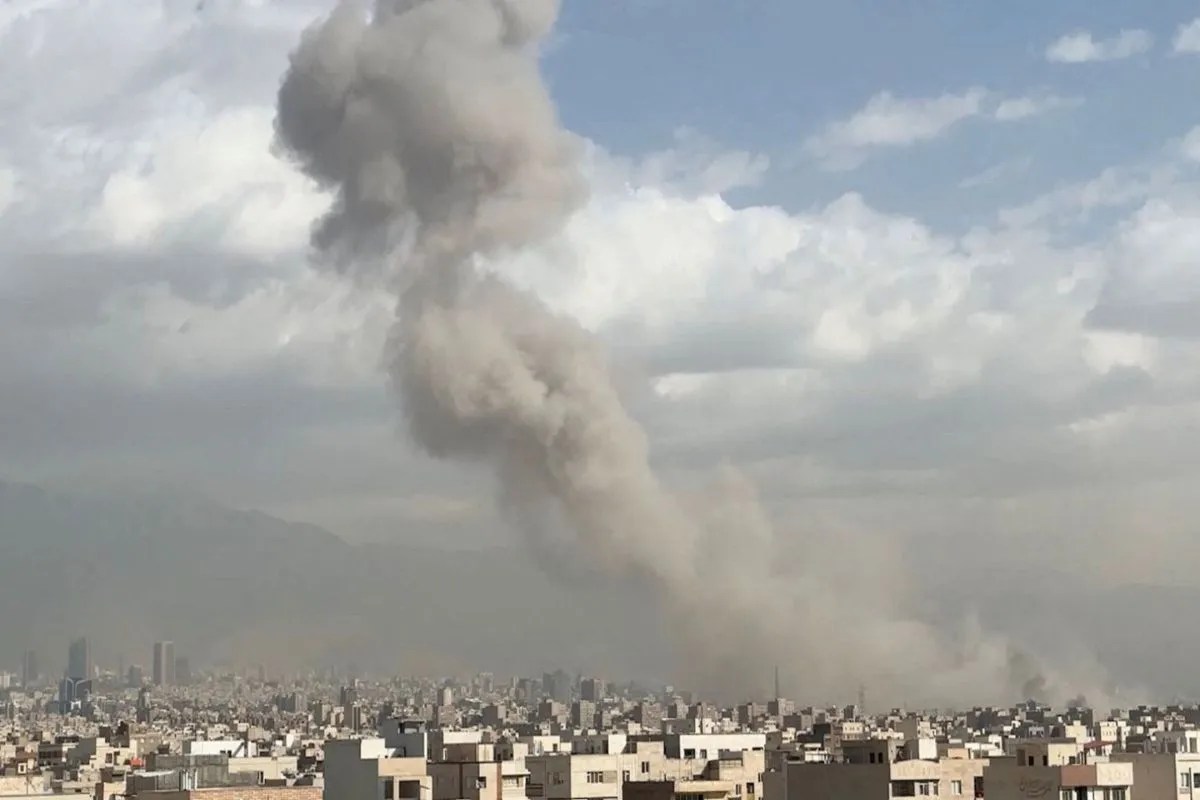
The "heavy destruction" mentioned in early reports is just the beginning of a structural shift. We are moving toward a period where localized conflicts are no longer localized. A spark in a suburb of Damascus now triggers a siren in Haifa, a price hike in London, and a strategic huddle in Washington. The "enemy" has realized that unity is their only path to parity, and they are now acting on that realization with lethal intent.
The fundamental truth of this conflict is that it cannot be "solved" by a single peace treaty or a single military victory. It is a deep-seated struggle over who defines the order of the Middle East. As long as Iran perceives an advantage in instability, the rockets will keep flying, and the alliances will continue to harden.
Identify the specific defense contractors currently scaling production for interceptor systems, as these are the primary indicators of how long the regional actors expect this high-intensity phase to last.