Chloe is twenty-four, and she smells like damp wool and expensive espresso. Every Tuesday night, she sits at a sticky laminate table in a community center basement, teaching thirty-somethings how to mend their own jeans. She calls it radical self-reliance. She says it with a smirk, but her eyes are dead serious.
When Chloe thinks about her future, she doesn’t see a cottage with a vegetable patch paid for by forty-five years of tax contributions. She sees a desert.
"The state pension isn't a safety net," she told me, pulling a thick green thread through a frayed denim cuff. "It's a ghost story. My parents believe in it because they've seen the shape of it. I only see the cold air where it used to be."
Chloe belongs to a generation performing a massive, silent recalculation. Across the developed world, millions of young adults are quietly deleting the concept of state retirement from their internal spreadsheets. They are not doing this out of teenage cynicism or political rebellion. They are doing it because they can read a demographic ledger.
To understand why a twenty-four-year-old has written off a foundational pillar of the modern social contract, we have to look at how that contract was signed.
The Math of a Crowded Room
The modern state pension was never designed for a society of centenarians. When Western governments formalized these systems in the mid-twentieth century, the math was brutal but functional. A massive pyramid of young workers paid into a central pot, which immediately distributed cash to a tiny, frail peak of retirees. People died younger. Workforces expanded.
Now, turn the pyramid upside down.
Consider a hypothetical country—let's call it Republic A. In 1960, Republic A had roughly six working-age citizens for every retiree. The burden was light, the distribution smooth. Fast forward to the present day, and that ratio has shrunk to less than three to one. By the time Chloe turns sixty-five, the ratio is projected to sit at a suffocating two to one, or worse.
The math breaks. It does not break because of bad intentions; it breaks because of a beautiful, terrifying biological reality: we are living longer, and we are having fewer children.
Young people look at this and realize they are paying for a party they will never get to attend. Every month, a chunk of Chloe’s paycheck vanishes to fund the retirements of a generation that bought homes for three times their annual salary. Meanwhile, her own rent eats forty percent of her take-home pay.
It feels like a heist.
The Invisible Shrinkage
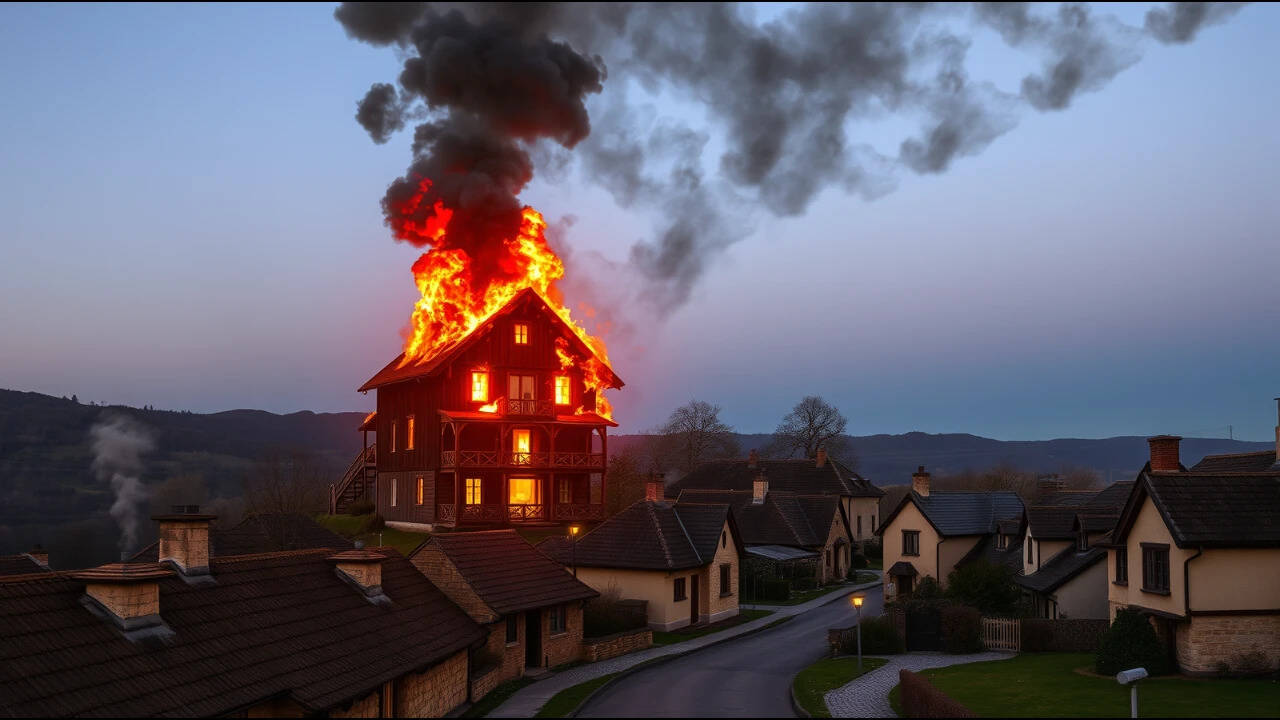
The collapse of the state pension won't happen with a dramatic parliamentary vote or a midnight announcement. It is happening right now, through a process of slow, bureaucratic evaporation.
Governments are shifting the goalposts while the players are still running. The retirement age creeps upward every few years. First sixty-five, then sixty-seven, then sixty-eight. Some European think tanks are already floating seventy or seventy-one as the new baseline for anyone born after 2000.
But raising the age is only half the strategy. The other half is inflation-matching adjustments that fail to match the reality on the ground. When the cost of groceries and heating outpaces the index used by the state, the pension becomes a token gesture. A monthly check that covers a week of utilities isn't a retirement plan. It's an insult.
This creates a psychological schism. Generation Z has grown up through a financial crash, a global pandemic, and a cost-of-living crisis that turned basic milestones—like homeownership—into luxury goods. They have never known a stable economic baseline.
Because of this, their trust in institutions is not just low; it is nonexistent.
The Survivalists of the Balance Sheet
So, what happens when you realize the cavalry isn't coming? You start digging your own trenches.
A new kind of financial survivalism is taking root. It doesn't look like stockpiling canned goods in a bunker. It looks like opening a low-fee index fund on a smartphone while sitting on the subway. It looks like fractional share investing, micro-side hustles, and a hyper-fixation on personal liquidity.
"I don't trust any institution that requires me to wait forty years to see if they kept their word," says Marcus, a twenty-six-year-old freelance copywriter. He keeps three separate savings accounts, each automated to skim money from his earnings before he can even think about spending it. "If I can't control the asset, the asset doesn't exist."
This is a profound departure from the financial behavior of previous generations. Baby Boomers trusted the system because the system delivered. Gen X trusted the markets until 2008, then pivoted to property. Gen Z is bypassing the traditional gatekeepers entirely, treating state promises as a zero-value asset.
This shift carries a quiet, corrosive grief. There is something deeply lonely about realizing you are entirely on your own. The collective warmth of the welfare state—the idea that we all look after each other when we get old—is being replaced by a cold, hyper-individualistic self-reliance.
The Mirage of the Private Fix
The standard advice from traditional financial advisors is simple: fill the gap with private pensions. Invest early. Let compound interest do the heavy lifting.
But that advice ignores the structural precarity of modern work. Compound interest is a magnificent engine, but it requires fuel. It requires steady, predictable income.
The modern labor market doesn't do steady. It does contract work. It does the gig economy. It does zero-hours flexibility that benefits the employer's bottom line while leaving the worker with a fluctuating bank balance. When your income changes by thirty percent every month, committing to a fixed, long-term pension contribution feels like tying your own hands behind your back.
Furthermore, private pensions are still tied to global financial markets. After witnessing two once-in-a-generation market collapses before their mid-twenties, young people view the stock market not as a wealth creator, but as a casino where the house always wins.
They are trapped between two systems that feel equally broken: a state pension that is running out of money, and a private market that feels rigged.
The Quiet Restructuring of a Life
This realization changes how a person plans their existence. It alters the timeline of adulthood.
If you know you will never receive a state pension, and you doubt your ability to save a million dollars in a private fund, the traditional concept of retirement dies. You stop viewing life as a linear three-act play: education, work, rest.
Instead, you view it as a continuous, looping cycle.
Young people are opting out of the grind-now-rest-later mentality because they suspect the "rest" part is a mirage. They take mini-retirements in their twenties and thirties. They change careers fluidly. They choose lower-paying jobs that offer time over high-paying jobs that offer burnout.
It is a rational response to an irrational situation. If the finish line keeps moving backward, the only logical move is to stop running the race and start walking at your own pace.
The Thread and the Needle
Back in the community center basement, Chloe finished mending the green thread on the jeans. She snipped the end with a small pair of silver scissors and handed them back to their owner. The repair was visible, a bright, jagged scar of emerald thread across blue denim.
"It looks different now," the owner said, tracing the stitches.
"It’s stronger than it was before," Chloe said. "But you can't pretend the tear never happened."
She packed her threads into a vintage tin box. Outside, the city was loud, full of flashing neon and buses carrying people home from late shifts.
The buildings looked permanent. The concrete looked solid. But the invisible agreements that hold the city together—the promises written on paper decades ago, signed by men who are now in the ground—are fraying at the edges.
Chloe knows this. She doesn't have a corporate retirement plan, and she doesn't expect a check from the government when her hair turns grey. She has her tin box of thread, her skills, and a circle of friends who know how to grow tomatoes on a balcony.
It is a fragile way to live. But as the old pillars crumble, it is the only architecture that feels real.