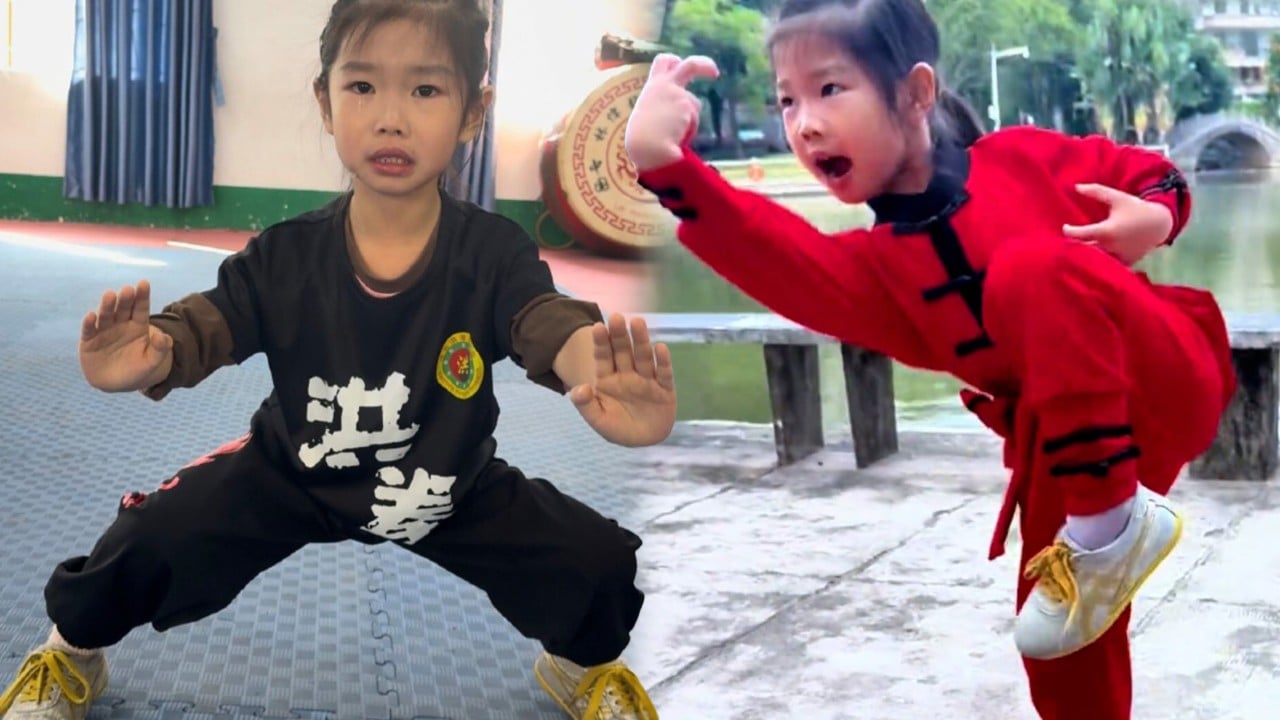
The pursuit of world-class proficiency in traditional Chinese martial arts (Wushu) by the age of five represents an extreme application of early-specialization theory. While media narratives often focus on the emotional or "miraculous" aspects of a child prodigy, a structural analysis reveals a deliberate engineering of human capital through high-intensity volume, psychological conditioning, and the strategic leveraging of the "sensitive periods" in neuroplasticity. The objective is not merely physical fitness but the rapid installation of motor patterns and a pain-tolerance threshold that serves as the foundation for professional-grade competition.
The Triad of Early Specialization Mechanics
Developing a five-year-old athlete to a tournament-ready standard requires the simultaneous optimization of three distinct variables: biomechanical plasticity, psychological desensitization, and technical volume.
Biomechanical Plasticity and the Windows of Opportunity
At five years of age, the human skeletal system remains largely cartilaginous, particularly in the epiphyses. This creates a temporary window where flexibility and range of motion can be expanded beyond adult physiological limits.
- Joint Laxity Optimization: Training at this stage focuses on maximal hip and spinal mobility. The objective is to achieve structural "over-range" before the onset of ossification.
- Neuromuscular Priming: The cerebellum and motor cortex are highly receptive to complex movement sequences. By drilling forms (Taolu) thousands of times, the practitioner moves from conscious execution to autonomous muscle memory, bypasses the "thinking" lag during high-speed performance.
- Proprioceptive Refinement: Martial arts require an advanced sense of body position in space. Early exposure forces the vestibular system to adapt to rapid rotations and inverted positions, which are significantly harder to master post-adolescence.
Psychological Desensitization and Pain Processing
The phenomenon of a young athlete training "to the point of tears" is often viewed through a lens of empathy, but from a strategic training perspective, it functions as a controlled exposure to high-stress stimuli.
The goal is the decoupling of the "pain signal" from the "stop response." By continuing to perform technical sequences while in a state of physical distress or exhaustion, the child develops a high threshold for cortisol and lactic acid accumulation. This creates a competitive advantage in tournament settings where the pressure and physical demands frequently exceed standard practice levels. This process involves a feedback loop where the emotional release (tears) occurs simultaneously with continued physical output, reinforcing the idea that emotional state is independent of technical execution.
The Volume Metric: Quantity as a Precursor to Quality
In the context of a five-year-old prodigy, the "talent" is often a function of total hours logged relative to peers. If a standard hobbyist child trains two hours per week, and a high-performance prospect trains twenty, the prospect accumulates a decade of "standard" experience every twelve months. This creates an insurmountable technical gap.
The Cost Function of Extreme Early Training
Any high-performance system involves significant trade-offs. The pursuit of an elite competitive status at such a young age carries inherent risks that must be managed through precise coaching.
Physiological Risk Factors
The primary bottleneck in early martial arts development is the risk of overuse injuries. Repetitive impact on undeveloped joints can lead to:
- Apophysitis: Inflammation where tendons attach to bone, common in high-impact jumping and kicking.
- Stunted Growth Potential: While moderate exercise promotes bone density, extreme caloric deficits or excessive mechanical loading can theoretically interfere with growth plates, though data on this specific to Wushu remains contested.
- Soft Tissue Fatigue: Without adequate recovery cycles, the risk of ligamentous strains increases, which can lead to chronic instability in the knees and ankles.
The Psychological Burnout Threshold
The "prodigy" model relies on external motivation—usually from parents or coaches—to drive the athlete through the initial years of training. The critical failure point usually occurs between ages 12 and 14, when the athlete’s internal agency begins to conflict with the established rigid training structure. If the athlete has not transitioned from "forced compliance" to "autonomous passion" by this point, the likelihood of total withdrawal from the sport increases.
Structural Components of Tournament Readiness
Preparing a five-year-old for a May tournament involves a specific "peaking" cycle that mirrors professional athletic preparation. This is not a generalized training program but a targeted intervention designed to produce a specific aesthetic and functional output.
Technical Precision and Form Aesthetics
In Wushu tournaments, scoring is heavily weighted toward the precision of the form. This includes:
- Stance Stability: The ability to hold deep, immobile positions (like the Horse Stance or Mabu) for extended periods. This requires significant isometric strength which is rare in five-year-olds, making it a key differentiator for judges.
- Snap and Power Generation: Judges look for the "crack" of the uniform, indicating high-velocity terminal limb speed. This requires a sophisticated understanding of kinetic linking—starting the power from the floor and transferring it through the hips to the fist or foot.
- Visual Focus (Shenfa): The coordination of the eyes with the movement. A prodigy must demonstrate an aggressive, focused intent that masks their age and suggests a higher level of maturity.
The Competitive Environment as a Stress Test
Tournaments serve as the ultimate validation of the training protocol. For a young athlete, the environment is a chaotic mix of noise, unfamiliar opponents, and high stakes. The training "to tears" in the home gym is essentially a simulation of this stress. By the time the child reaches the tournament floor, the physiological response to fear has been rehearsed so often that it no longer inhibits performance.
Macroeconomic and Cultural Drivers of the Prodigy Model
The emergence of these young athletes is not a random occurrence but the result of a specific cultural and economic landscape.
- Social Mobility: In many regions, elite athletic performance is a documented path to specialized schooling, university scholarships, or professional coaching careers.
- The "Face" Economy: The success of a child reflects the discipline and standing of the family unit. This creates a high-pressure environment where the child’s performance is a shared asset.
- Institutional Support: China possesses an extensive infrastructure of sports schools and private academies that specialize in the "concentrated" development of young talent, providing the equipment and peer groups necessary for such high-intensity training.
The Strategic Path Forward for High-Performance Youth Development
To sustain the trajectory of a five-year-old prodigy beyond the initial media cycle and the first few tournaments, the training must evolve from a model of "brute force volume" to "precision management."
The first priority is the implementation of a sophisticated recovery protocol. This includes nutritional optimization specifically designed for pediatric athletes and the integration of "active rest" days that focus on cognitive development rather than physical loading.
The second priority is the diversification of the athlete’s motor skills. While specialization is the goal, early over-specialization can lead to "motor ruts." Introducing complementary movements—such as gymnastics or swimming—can prevent repetitive strain and enhance the athlete's overall physical intelligence, making them more adaptable as their body changes through puberty.
Finally, the coaching staff must manage the transition from extrinsic to intrinsic motivation. This involves gradually allowing the child to take ownership of their training schedule and goal setting. A prodigy who reaches age ten without a sense of personal agency over their craft is a liability; a prodigy who views the tournament as their own personal stage is a long-term asset. The May tournament is merely a data point in a fifteen-year development cycle. The success of the "tears to tournament" model will not be judged by the medal won this month, but by the athlete's presence on a world-class podium a decade from now.
The athlete must now focus on the stabilization of the lumbar spine during high-kick transitions and the refinement of the transition between the Gongbu (Bow Stance) and the Xupu (Empty Stance) to ensure zero momentum loss during the 60-second tournament form.