In the quiet hours before dawn, history is rarely forged in the thunder of artillery. More often, it is written by the scratch of a dry ballpoint pen on heavy stock paper in a windowless room off Constitution Avenue.
Consider a man who has spent thirty years in the back channels of statecraft—call him Ambassador Vance, a composite of a dozen career diplomats whose hair went gray watching ceasefires dissolve into smoke. Vance knows the smell of a conference room after twelve hours of closed-door bargaining: cold coffee, ozone from overworked projectors, and the distinct, metallic scent of nervous sweat. He knows that maps printed in Washington rarely match the jagged reality on the ground in the Levant. Yet, right now, somewhere behind heavy mahogany doors, a blueprint for the day after tomorrow is being drawn.
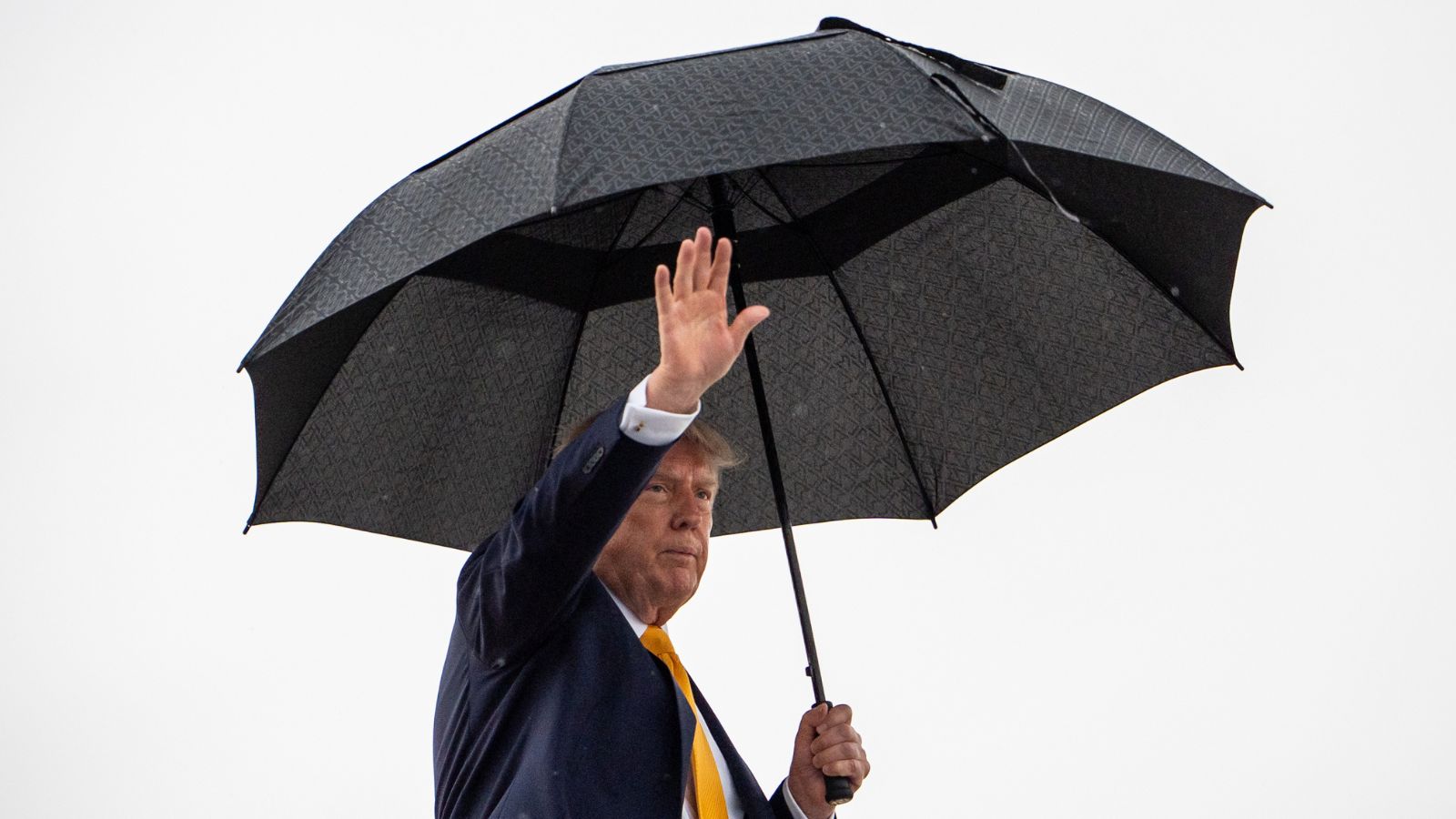
The Trump administration is quietly drafting a post-war Middle East plan.
To the casual observer scrolling through morning headlines, it sounds like another exercise in geopolitical fantasy. We have seen these blueprints before, rolled out with polished PowerPoint presentations and solemn press conferences, only to watch them unravel the moment they meet the chaotic friction of human history. But this time, the stakes feel heavier. The ground beneath Gaza, Lebanon, and Tel Aviv has not stopped trembling, and the architecture being sketched out in secret represents an attempt to cage a wildfire with wet string. Or perhaps, just perhaps, something sturdier.
To understand why this matters, you have to strip away the poll numbers and the cable news chyrons. You have to look at the invisible weight carried by a baker in West Jerusalem who checks the news before he turns on his ovens, and a father in Deir al-Balah who listens to the drone hum overhead while teaching his daughter how to draw a house with a green roof.
Policy is ultimately about people who have very few good choices left.
The Geography of Hope and Despair
Maps are dangerous things. They flatten mountains, erase cemeteries, and draw straight lines through human lives that refuse to be divided by a ruler.
When planners sit down to envision a post-war regional order, they are wrestling with an intractable puzzle. How do you govern a space where every acre is sacred to three faiths and scarred by three generations of unmourned grief? The emerging contours of the administration's blueprint reportedly point toward a patchwork solution—an archipelago of security arrangements, economic corridors, and heavily managed transitions of power. It is an attempt to construct a fragile stability backed by regional partners who have their own domestic survival to protect.
Let us be honest about the mechanics of power. Washington does not draft these plans out of pure altruism. Empires, even weary ones, calculate their footprints. The eternal calculus of American involvement in the Middle East has always swung on a pendulum between total exhaustion and frantic intervention. You pull back, the vacuum screams. You step in, the quagmire swallows you.
The current drafting effort acknowledges a brutal realization: the old status quo is dead and buried beneath rubble. You cannot return to October 6. You cannot simply rebuild what crumbled because the foundation itself was rotten.
Yet, the blueprint reportedly relies heavily on outside capital and regional integration—the idea that if you pave enough highways, build enough desalination plants, and tie economies together with trade agreements, people will eventually grow too busy making money to kill each other. It is a very American theory of human nature. It assumes that prosperity is the universal solvent for historical trauma.
Sometimes it works. Often it collides with human pride.
The Ghost in the Room
Walk through any market in Amman or Cairo, and you will feel the profound fatigue of the street. People are tired of being chess pieces in someone else’s grand strategy.
When a superpower drafts a post-war architecture, the missing voices are always the loudest. The document currently taking shape in Washington drafts terms for security forces, transitional governance, and reconstruction funds. But does it account for the sixteen-year-old boy in a tent camp whose education has been erased? Does it price in the intergenerational fury of a grandmother who has packed her life into a plastic bag twice in her lifetime?
Statistics tell us about caloric intake, housing deficits, and casualty counts. They do not tell us about the silence that falls over a dinner table when an empty chair is mourned without words.
This is where the divergence between a dry policy brief and reality becomes dangerous. If the new American plan treats the region as a blank slate—a sandbox for stabilization metrics—it will shatter upon implementation. Sustainable peace is never just an engineering problem. It is an emotional reckoning. It requires leaders who possess the rare, terrifying courage to tell their own hardliners uncomfortable truths.
We have seen glimpses of this pragmatic realism in past diplomatic pushes, but we have also seen them sabotaged by domestic politics and bad-faith actors on all sides. The architects of the current plan know this. They are operating under a tight political clock, acutely aware that American patience is thin and global rivalries—from Beijing to Moscow—are eagerly waiting to fill any void left behind.
What Lies Beneath the Ink
So, what does this actually look like on the ground if the plan moves from draft to execution?
Imagine a phased handover. Picture regional security monitors who do not wear American uniforms, patrolling borders while reconstruction money flows through tightly audited international trusts. Picture the slow, excruciating restoration of civil administration under technocratic oversight—people who care more about clean water than ideological purity.
It sounds clinical. It sounds antiseptic. But on the ground, antiseptic is a massive upgrade from burning phosphorus and falling masonry.
Critics will call it cynical. They will point out that any plan crafted in Washington is designed primarily to protect American interests and minimize entanglement while maintaining a thumb on the regional scales. They will not be entirely wrong. Statecraft is rarely charity.
Yet, to dismiss the effort entirely is to surrender to fatalism. To say that nothing can be built is to accept that the current cycle of destruction is permanent. And for those living inside the blast radius, permanent destruction is not an analytical category; it is a Tuesday afternoon.
The pen continues to move across the paper. Revisions are made. Paragraphs are struck out after a secure phone call from a capital six thousand miles away. A sentence about sovereignty is softened to appease an ally; a line about humanitarian access is tightened to satisfy domestic skeptics.
Outside the window, the sun rises over the Potomac, indifferent to the lives its policies will alter. But thousands of miles away, the sun rises over stone and dust, where real people wait to see if the words written in the dark will bring them a cage or a key.
History will judge this blueprint not by the elegance of its prose or the ambition of its metrics, but by a much simpler standard. Does it allow a child to grow up without ducking? Does it give a generation staring into an abyss something worth laying down their stones to build?
The ink is drying. The rest is left to the fire.